Hello, everyone.
This is Enta.
It's been hot every day, huh? lol
It's been like a steam room out here since this morning, and it feels like my stamina is going to wear out first.
Let's make sure to stay well-hydrated and get enough salt ^^
But that's beside the point.
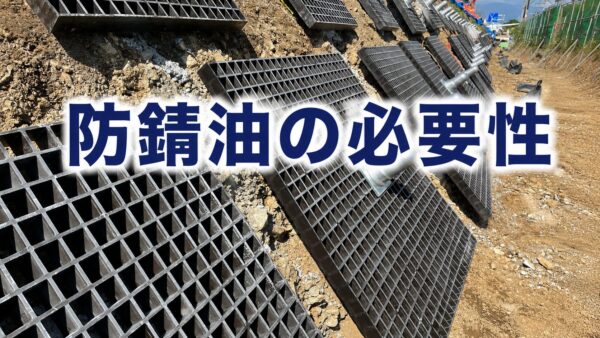
This time, we’ll be discussing the question: “Is anti-rust oil really necessary for the heads of rebar inserts?”
I've written quite a bit in the past about questions and issues regarding oil caps.
Today, I’ll revisit this topic using figures on the service life of galvanized steel and the lifespan of rust-preventive oil.
Do you know the limit of oil oxidation and degradation?
Have you ever heard of the “oxidation degradation limit” for oil?
Rust-preventive oil is a type of oil designed to protect metal surfaces from moisture, air, and dust, thereby preventing rust.
However, the oil itself doesn't last forever.
From what I've noticed, if you leave rust-preventive oil as is, it starts to turn blackish within about a week.
I think most admins probably know this from experience, lol (the pails of rust-preventative oil we used, lol).
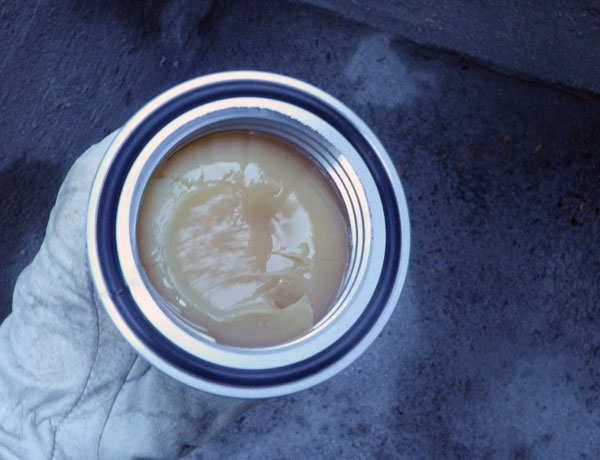
The photo below shows the oxidative degradation of rust-preventive oil arranged in a color gradient.
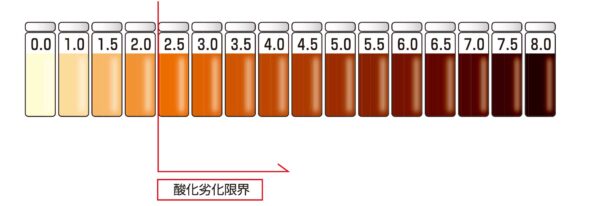
Depending on the conditions, after about five years in your hair, the color tends to fade quite a bit, doesn't it?
To begin with, each type of rust-preventive oil has a recommended duration of rust protection.
Anti-rust oils are classified by JIS standards and are categorized from NP-0 to NP-20 based on film properties and base oil; it is generally considered that the thicker the film, the longer the rust protection period.
In other words, it is not a material that guarantees “unconditional, lifelong protection” simply by applying rust-preventive oil; rather, it is a consumable whose lifespan varies depending on the type, film thickness, and environmental conditions.
It is said that the reason iron rusts in the first place is that oxygen and moisture combine, causing the iron to try to return to its natural, stable state as iron oxide.
Rust-preventive oil prevents rust by blocking oxygen and moisture from reaching the metal surface.
However, as the oil itself reacts with oxygen, heat, and dust and gradually oxidizes, this protective effect also gradually diminishes.
Some products, like volatile types, lose their active ingredients over time. (Like Kure 556, for example.)
That’s why I think it’s closer to reality to think of it not as “it’s over once it’s in,” but rather as “the countdown starts the moment it goes in.”
It is said that the effective lifespan of anti-rust oil applied to the head is about five years at most (KJS Ground Anchor Association).
After all, they're exposed to the blazing summer heat, and in the worst-case scenario, they're actually melting, right...
Oxidation progresses rapidly with heat.
According to a survey we conducted previously, 62% of respondents said they didn't need it.
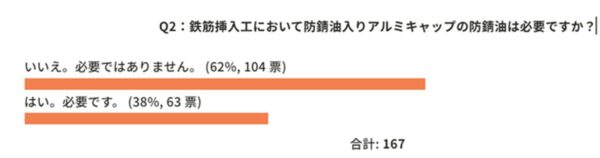
By the way, there's a survey button on the left side of this site.
We also conducted a survey in the past titled “Is rust-preventive oil necessary for rebar installers?” so if you’re curious about the results, feel free to check that out too lol.
Even among anchors, which are the most demanding when it comes to rust prevention, the approach to the head has changed.
Now, let's talk about ground anchor construction.
Among slope stabilization methods, ground anchors are the type that requires the most rigorous rust and corrosion prevention measures.
The reason is that PC steel, which is subjected to high tensile stress in the tendons, poses a risk of stress corrosion cracking or fracture as corrosion progresses.
For this reason, the Design and Construction Standards for Ground Anchors (JGS4101-2012, Japanese Geotechnical Society) also require reliable corrosion protection (Corrosion Protection Class II or higher) for anchors with a service life of two years or more.
The standard clearly states that special care must be taken because insufficient corrosion protection from the head to the tension section may result in fracture due to corrosion.
In particular, boundary areas—such as the back of the fastener or the connection point with the tension member—are prone to discontinuities in the corrosion-resistant structure, making them the areas most susceptible to corrosion.
That just goes to show how much Anchor cares about rust prevention around the head.
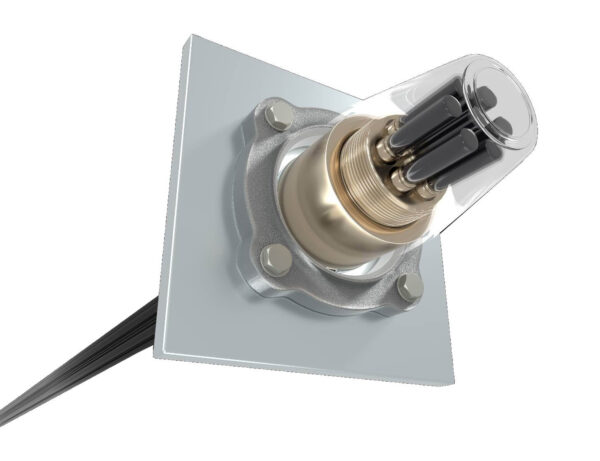
As a method for protecting the anchor head from corrosion, the standard document (Guidelines for the Design and Construction of Ground Anchor Works) states that “it is common practice to cover the head with a corrosion-resistant cap and fill the cap with a corrosion-preventive material, such as anti-rust oil.”
At this point, you might be thinking, “So Anchor uses rust-preventive oil after all,” but what I’m really focusing on is what comes next.
The same standard also states that the protective material filled into the head section “must be constructed of materials and designed in such a way that it does not leak, evaporate, or settle, and must be designed so that it can be replenished later.”
In other words, the manual itself is based on the assumption that the rust-preventive oil added will eventually evaporate or settle, and therefore anticipates that it will need to be replenished later.
In short, this means that the anti-rust oil for the head isn't treated as a "material that stays effective indefinitely once applied," right?
And recently, there has been a growing trend—albeit a modest one—suggesting that it might be better not to apply anti-rust oil to the anchor head.
Even the anchor heads—which are the most sensitive when it comes to rust prevention—are like that, so how much longer are rebar installers going to keep using rust-preventive oil on the heads? That’s the question I’m raising this time lol (How many times am I going to say this? lol)
The rebar used in rebar insertion work is HDZT77 galvanized and will not rust for 50 to 100 years.
How is corrosion protection handled on the rebar insertion (rock bolt) side?
Unless temporary structures require the use of bare (ungalvanized) rebar, hot-dip galvanized rebar is the standard for rebar installation work.
The amount of residue is oftenHDZT77is specified.
This is a classification under JIS H 8641 (hot-dip galvanizing) and corresponds to the former HDZ55 prior to the revision; in terms of zinc coating weight,550 g/m² or more, in terms of film thickness,77 µm or moreThis is the class.
This is one of the highest-grade specifications for galvanized coatings, originally designed for use in "harsh corrosive environments."
So, how long will it last at this level of adhesion?
The service life of hot-dip galvanizing can be estimated using the following formula, based on atmospheric exposure test data from the Japan Hot-Dip Galvanizing Association.
Service Life = Zinc Deposition Rate ÷ Corrosion Rate × 0.9
This formula is based on the assumption that rust begins to form on the base metal when approximately 10% of the zinc coating remains (according to the explanatory notes for JIS H 8641).
If we substitute the coating weight of 550 g/m² and the zinc corrosion rates for each environment into this formula, the results, based on the association’s data, are roughly as follows.
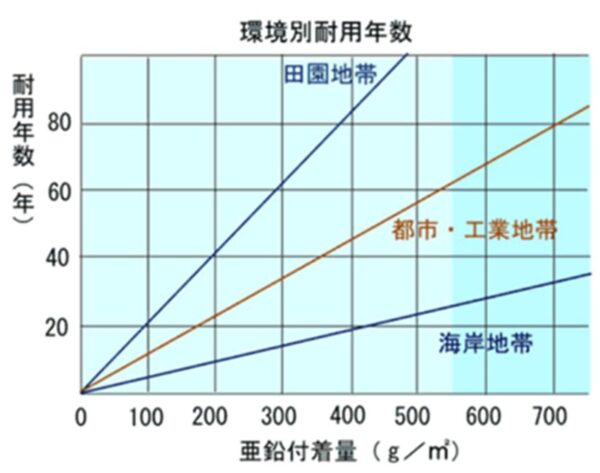
In rural areas, the corrosion rate is low, and the service life is approximately110 years。
Even in urban and industrial areas, approximately53。
Even in coastal areas, approximately45 years。
Many of the mountainous slope sites we work on are located in areas that resemble rural landscapes.
When you think about it that way, with HDZT77 galvanized rebar, depending on the conditions,For nearly 100 yearsThis calculation will never go wrong.
Even by a strict standard, as long as it's not raw material, at the very least50 yearsThe numbers show that it's on the firm side.
Incidentally, for large structures such as bridges, the thickness of the material means that the coating weight ranges from about 800 to 2,000 g/m², and their service life is considered to be virtually indefinite.
It is also said that, indoors, it lasts more than five times as long as it does outdoors in the same area.
Although the head of a rebar inserter is exposed to the outdoors, it doesn’t reach that level of exposure; even so, a coating of the HDZT77 class is capable of withstanding rust for several decades.
I made a simulator, so please give it a try lol
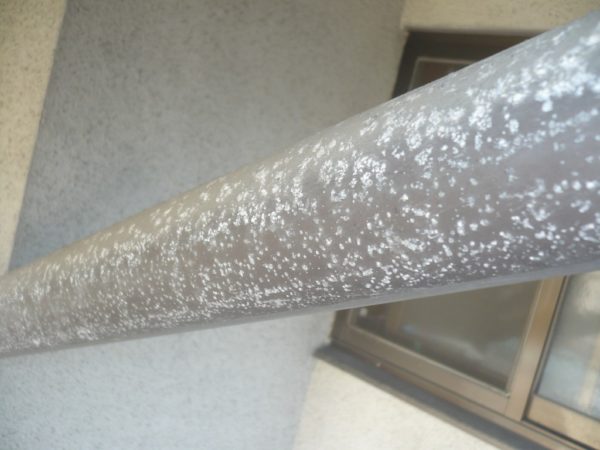
Why Spend About 2,500 Yen on a Short-Lived Rust-Preventive Oil? | Switch to an Oil-Free Cap
Let's summarize what we've covered so far.
The rebar used in rebar insertion work has a service life of 50 to 100 years with HDZT77 galvanization.
On the other hand, based on my experience, the rust-preventive oil on the head tends to degrade and discolor after about five years.
In other words, the rust-preventive oil will reach the end of its service life long before the rebar does.
So the situation is that they’re deliberately coating the ends of galvanized rebar—which lasts 100 years—with a short-lived oil that degrades in just five years.
This isn't just something I made up or my personal opinion, lol. It's a fact, lol.
In the field of rebar insertion and rock bolts as well, the head and the back of the head are protected by a dual anti-corrosion coating consisting of galvanization and a saturated polyester coating, and
There are construction methods that advertise, “No rust-preventive oil required,” aren’t there? (Although I don’t actually think it’s that necessary.)
According to that construction method, exposure tests have confirmed that the saturated polyester coating has a service life of over 50 years.
In other words, the fact that it is already possible to achieve long-lasting rust protection through plating and painting—without relying on oil—is a reality.
And yet... (Is it because of the manufacturer's inventory? Or is it the design consultant's fault!?)
In terms of design philosophy, they are fundamentally similar.
NEXCO’s Design and Construction Guidelines for Cut-Slope Reinforcement Methods have long stated that, for reinforcing bars used for permanent purposes, a corrosion allowance of 1 mm should be factored in based on the bar diameter. lol
Since this used to be made of raw material, a 1-millimeter tolerance was allowed, and this approach remains unchanged today.
In any case, the idea is to ensure long-term durability through plating and a corrosion allowance, not to expect a long service life from the rust-preventive oil applied to the head.
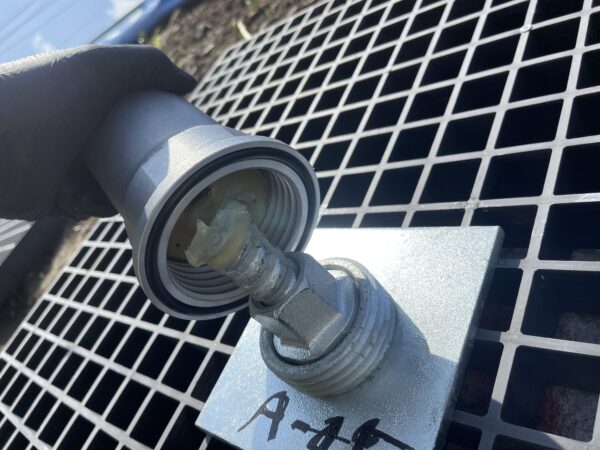
So, how much does that oil cap for the engine cost?
In terms of design unit price, the oil-filled head cap isAbout 2,500 yenIt costs about that much.
To be honest, the cost per bottle of oil isn't that high.
But I can’t help but think that, since rebar lasts 100 years, there’s really little point in spending money and time on oil that degrades in just five years every single time.
From a practical standpoint, filling the head with oil is quite a hassle, and the oil container ends up as waste on site.
I feel like the ones with oil are a little more expensive, lol.
By switching to oil-free caps, you can reduce both the effort required for filling and the amount of container waste.
From an environmental standpoint, there’s no doubt that it’s preferable not to bring unnecessary oil to the worksite.
In that case, switching to oil-free caps would simplify things and reduce both costs and effort.
And it's an eco-friendly cap, too!!
The environment!!! Here we goooooo!!
That's important, isn't it? lol
I’d especially like our design consultants to take another look at this.
Instead of just following the old drawings to the letter, I’d really appreciate it if you could take a fresh look at the rust-preventive oil for the head caps on the rebar inserts from scratch lol.
And one more thing!No more +sheath tubes+ or end caps!
((A completely pointless product) A pointless productDon't waste taxpayers' moneyThat's the gist of it^^
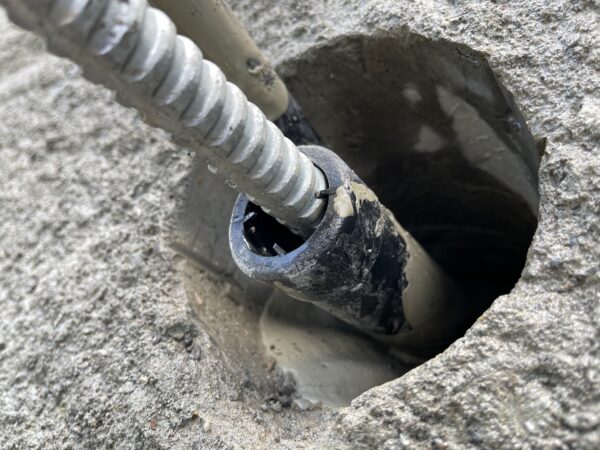
If you focus only on the front lines, you tend to brush things off by saying, “That’s just how it’s always been,” and if you focus only on the numbers, you can’t tell whether the measures are actually effective on the ground.
I believe that by comparing the actual site conditions with the design and scrutinizing these “specifications that have just sort of carried on” one by one,
I think this might be a shortcut to improving the quality of our work.
I don't mean to dismiss rust-preventive oil itself.
That used to be fine.
But I'm just saying that things are different now.
Use it thoroughly where it's effective, and remove it from places where it's not needed.
The point was, why don't we rethink that distinction based on the numbers—the service life of the plating and the lifespan of the oil? lol
The government agencies have a point on this issue.
I think that, rather than relying solely on contractors, taking a close look at the actual work sites is what Japan’s civil engineering sector needs going forward.
Since government agencies are already becoming increasingly out of touch with the realities on the ground, it is the contractors who are now responsible for maintaining (ensuring) overall quality.
See you later.
A Discussion of Galvanizing Standards, Thickness, and Coating Weight