



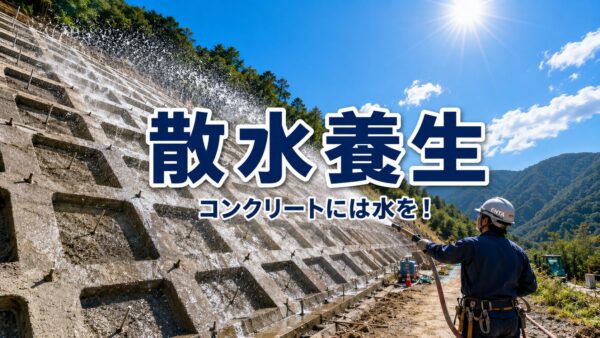
Why Do We Spray Water on Concrete? | An Explanation of Curing for Sprayed Concrete and Formwork for Beginners
Hello, everyone. This is Enta. We’re now in the second half of July, and it’s already unbearably hot on construction sites during the day, isn’t it? ^^ Concrete is just like people—if you leave it alone at this time of year, it loses moisture rapidly. But enough of that. In this post, I’ll be discussing “Why it’s a good idea to water concrete”…
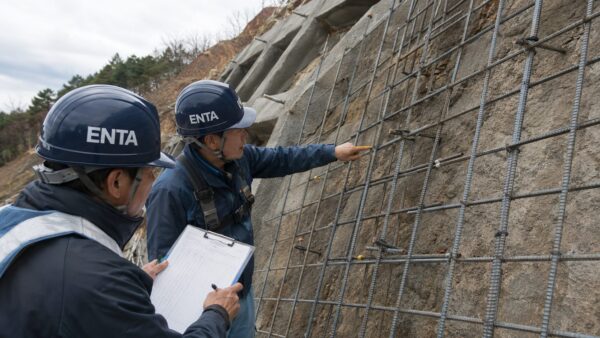
Why Are Lap Joints in Reinforcing Bars Unsuitable? | Offset Provisions in the Concrete Standard Specifications and Workarounds
Hello, everyone. This is Enta. This happened a while back, but I was on-site at a construction project overseeing an assembly inspection when the person in charge pointed out, “Oh, this is a T-joint,” and the whole site went dead silent lol. Since T-joints are generally prohibited under the Japan Society of Civil Engineers’ Standard Specifications for Concrete, it’s only natural that when one is found…

Basics of Surface Moisture Content | Explaining the Four States of Aggregate Moisture Content and On-Site Mix Design Adjustments
Hello, everyone. This is Enta. When you’re working on a slope and think, “The mortar feels unusually runny today,” the standard practice is to suspect the sand’s surface moisture content before questioning the mix design. (I even suspect the workers’ water-to-cement ratio, lol.) Basically, even if you think you’ve followed the mix design specified in the mix chart—say, “W/C=50%”—the sand might contain…

Tips for Calculating and Ensuring Reinforcement Cover | A Slope Construction Supervisor Explains Minimum Cover and Reinforcement Clearance in Formwork Construction Using Real-World Examples
Hello, everyone. It’s Enta here. Around this time of year, just before the rainy season starts, things are kind of slow at work. Since I’m often out on site, I get a lot of questions. Recently, one of the younger guys asked me, “Enta-san, how do you actually handle overlapping?” It’s a good question, lol. But I couldn’t come up with an answer right away…
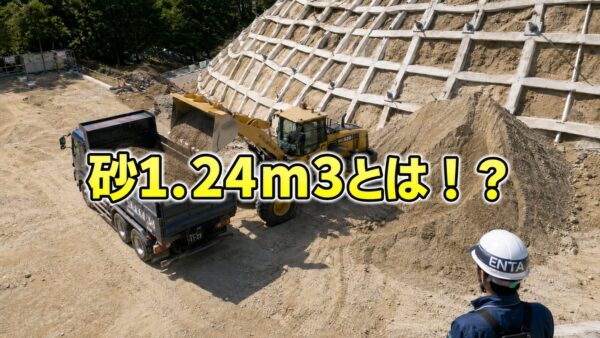
What Does 1.24 m³ of Sand for Sprayed Mortar Mean? | A Veteran Slope Engineer Thoroughly Explains Loose Volume and Absolute Volume
Hello, everyone. This is Enta. Every once in a while! I get asked, “What does ”1.24 m³ of sand’ mean in the mix ratio chart for sprayed mortar?” Lately, specifications just say “1:4 sprayed mortar,” and the 1.24 m³ figure…
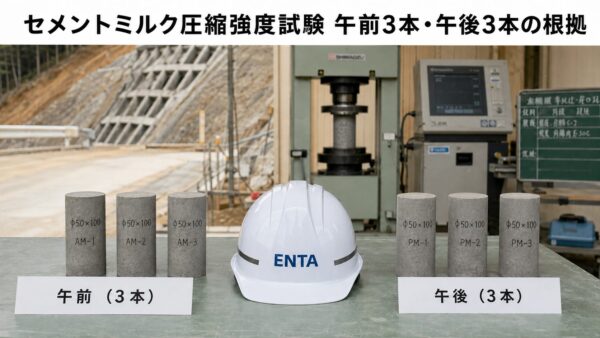
Standards for Cement Milk Compressive Strength Tests | Why Three Samples in the Morning and Three in the Afternoon, and Flatness According to JIS A 1108
Hello, everyone. This is Enta. I’m often asked about the rationale behind the “three samples in the morning, three in the afternoon” schedule for compressive strength tests on cement slurry used in rock bolt and ground anchor construction. Younger site supervisors sometimes ask, “Wouldn’t it be safer to take 12 samples a day?”…
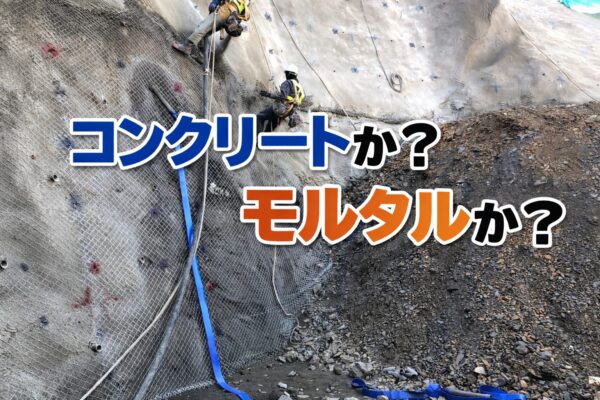
Sprayed Concrete or Sprayed Mortar? (Part 3)
Hello, everyone. This is Enta. Do you do spray work? lol This time, I’ll be talking about concrete and mortar sprayers. Concrete or Mortar for Slope Construction? (Part 1) Concrete or Mortar for Slope Construction? (Part 2) Concrete Spray and Mort…

A Comparison of Theoretical and Actual Values for Frost Damage Prevention in Sprayed Concrete
Hello, everyone. This is Enta. How to maintain a constant ambient temperature during winter curing; the criteria for mixing cement slurry with hot water based on the final mix temperature; when it comes to winter construction, mixing with hot water is the best option, right!? The other day, I wrote about the final mix temperature of mortar as a measure against freeze damage…
Concrete or Mortar for Slope Construction? (Part 2)
Hello, everyone. This is Enta. Concrete or Mortar for Slope Construction? (Part 1) In this post, I’ll discuss why concrete isn’t used for slope formwork. Let’s review the mix designs. Item Mortar Concrete Main Materials…