Hello, everyone.
This is Enta.
Last month, I visited a galvanizing plant.
My former boss changed jobs and became a director at a materials supplier, and I was given a tour of their factory.
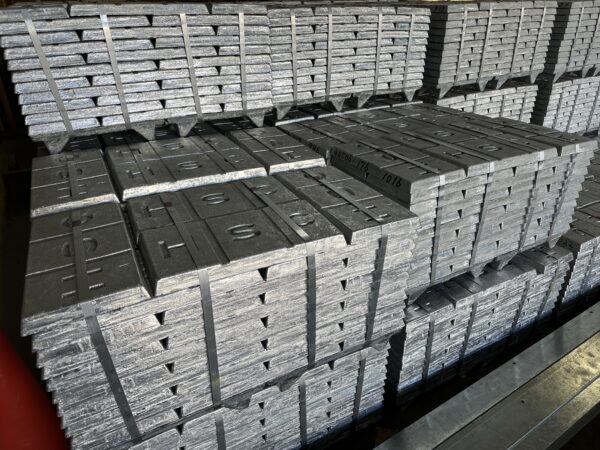
As for the zinc material shown in the photo above, I hear that one bundle (enough to tie it up) costs about 500,000!!!!
It seems that zinc materials are also becoming more expensive right now, and the cost of plating is reportedly rising.
It's a tough time when everything is so expensive.
There are quite a few steps involved in the galvanizing process, and
Degreasing → Rinsing → Pickling → Rinsing → Fluxing → Plating → Finishing
It seems there are actually a few more steps involved.
It seems to take quite a bit of time and effort.
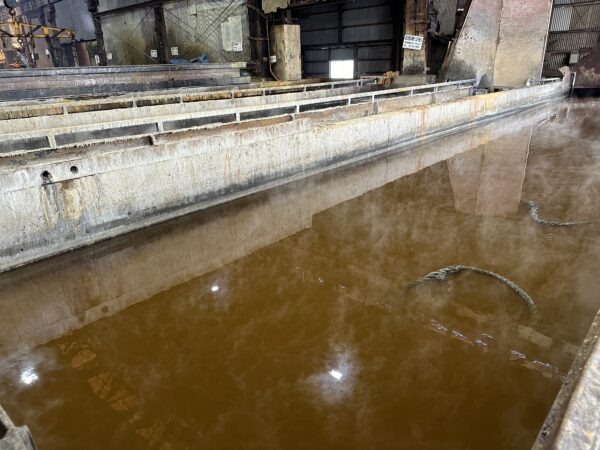
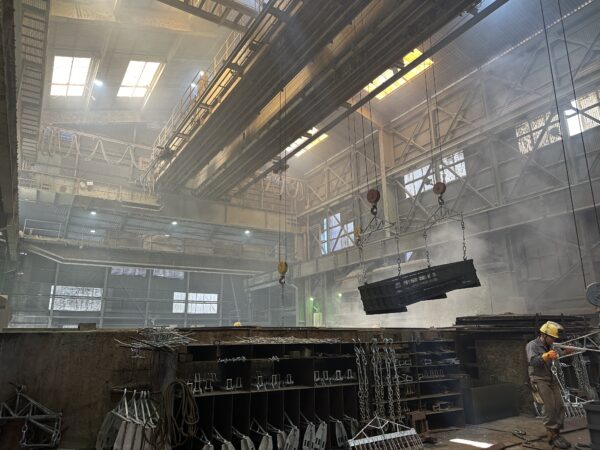
The photo above shows an acid washing tank.
Since this company can plate large objects, they were handling some really massive items.
Even if it's rusty, the rust will be completely removed during the processing.
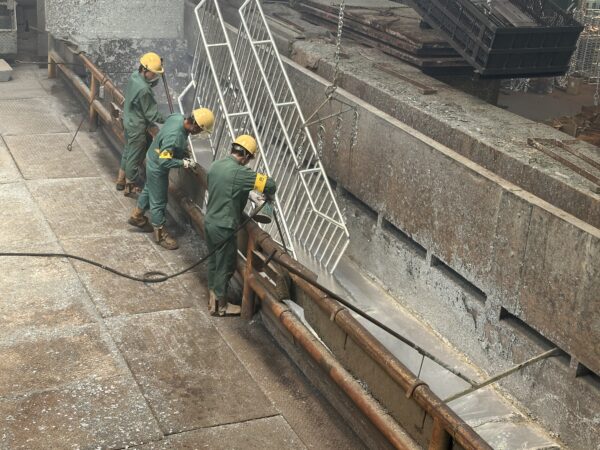
It is slowly lowered into the plating bath and then slowly raised out of it.
He said the furnace temperature was around 450 degrees.
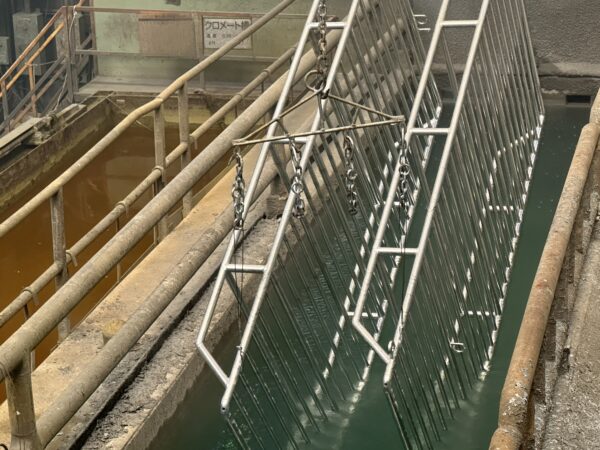
It's like putting it in a cooling pool to set it, isn't it?
Once it has cooled, it will proceed directly to the finishing process.
It seemed as though the finishing process was being carefully checked and completed by hand.
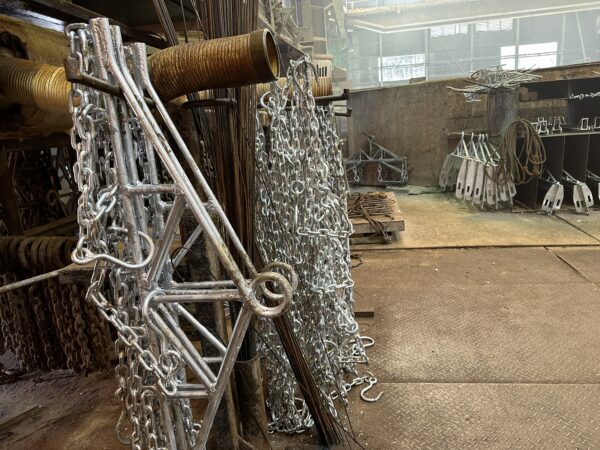
Since the jigs differ depending on the part or product, I hear they make new jigs whenever a new product arrives.
Do you know how long galvanized coatings generally last?
Service life = Zinc coating weight (g/m2) ÷ corrosion rate (g/m2(Year) × 0.9
Apparently, it can be calculated using this formula.
Basically, the same applies to the galvanized rebar we use.
The amount of plating adhering to the rebar in the rebar insertion process is listed as HDZT77.
This number, 77, refers to the thickness.
That's 77 μm!
Huh?
Right? lol
First of all「"μ" What's this?
Right?
This is called a “micro.”
So,1 μm = 1 micrometerThat's right.
I hear that 1 μm is "10 to the power of -3 mm," lol, so that's 1/1000 of a millimeter.
0.001 mm
That’s how it works.
In light of the above,
HDZT77 × 0.001 mm = 0.077 mm
That’s how it works.
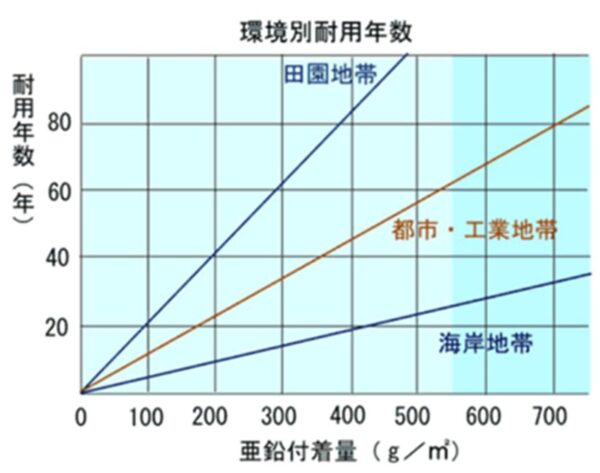
The table above showing the number of years of service is based on the amount of buildup, so it can be a little confusing, right?
The table below shows the data by thickness.
| Table 2—Relationship Between Film Thickness and Adhesion (See Explanatory Table 1 of JIS H 8641) | ||||||
| Coating Thickness [This Standard] | Adhesion [Old Standard] a)] | |||||
| Type Symbols | Coating Thickness (μm) | Types | Symbol | Adhesion (g/m)2) | ||
| HDZT 35 | 35 or older | 1 Type A | HDZ A | 250 or more b) | ||
| HDZT 42 | 42 or older | Category 1, Type B | HDZ B | 300 or more b) | ||
| HDZT 49 | 49 or more | 2 Types 35 | HDZ 35 | 350 or more | ||
| HDZT 56 | 56 or more | 2 types, 40 | HDZ 40 | 400 or more | ||
| HDZT 63 | 63 or more | 2 Types 45 | HDZ 45 | 450 or more | ||
| HDZT 70 | 70 or older | 2 types, 50 | HDZ 50 | 500 or more | ||
| HDZT 77 | 77 or more | 2 Types 55 | HDZ 55 | 550 or more | ||
| 注 a) The old standard specifies the adhesion levels for two types. | ||||||
| 注 b) 1 The amount of species deposited is calculated by multiplying the average plating film thickness of HDZ A (35 μm) or the average plating film thickness of HDZ B (42 μm) by the density of the plating film, 7.2 g/cm3 As such, this shows the value derived from this. | ||||||
Japan Hot-Dip Galvanizing Association (General Incorporated Association)
Revisions to JIS Standards Concerning Hot-Dip Galvanizing
The HDZT77 standard specifies that the zinc coating weight must be 550 g/m² or more.
Applying this to the above,
Coastal Areas: 25 years and up
Urban and Industrial Areas: 1960–
Rural Areas: 100 Years and Up
That’s how it works.
And this data is for a hollow structure.
Since, like us, it is embedded in concrete—such as in grout—its lifespan is immeasurable.
On top of that, they’ve even thoughtfully left a 1 mm corrosion allowance. The rebar installed by this rebar installer is seriously the best lol.
It won't rust lol (I feel like I can say that with confidence.)
However, this means that the likelihood of rusting increases significantly if you use sheaths or similar items.
You don't need a sheath pipe for rebar insertion!
Plating is actually pretty complex, so once you start looking into it, there’s no end to it lol.
However, it’s important to keep up with the latest developments as an engineer.
For now, I think I’ll be fine as long as I remember that the last digit in the HDZT 77 plating specification refers to the deposit thickness, lol.
See you later.
Corrosion Resistance of Hot-Dip Galvanizing
Research Society for Galvanized Steel Structures
DRB Construction Method Study Group (Tentative) Information Session