Hello, everyone.
This is Enta.
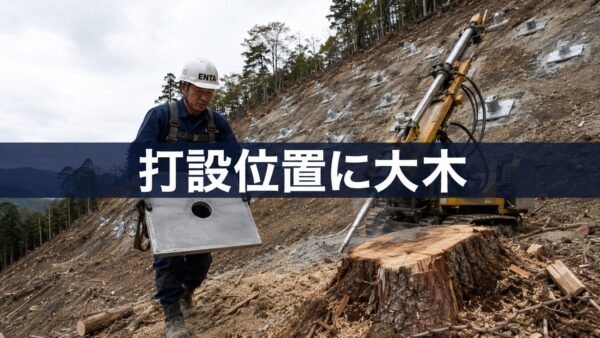
A large tree stump is sitting right in the way at the installation site for the ground anchors.
This kind of thing happens from time to time when you're working on-site.
If you're working with formwork, one option is to simply assemble the formwork directly over the tree roots and proceed with construction.
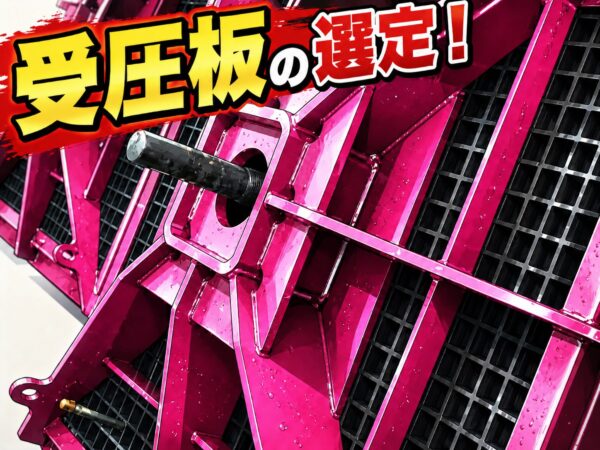
But that's not the case with pressure plates.
In this post, I’ll explain how to use a load-bearing plate when a large tree is located directly beneath the intended pouring site.
First, cut the roots as close to the base as possible.
If you ask a lumberjack to cut down a tree, they will usually cut it so that about 50 cm remains at the base.
This is a matter of the scope of a lumberjack's job; cutting down trees is a lumberjack's job, but uprooting trees or cutting their roots is not part of a lumberjack's job.
Excavation is our job—we handle it on-site.
I used to think, “Back in the day, they’d cut it right down to the roots!” lol
Since a standard blade would wear out quickly on a chainsaw, we use a blade specifically designed for cutting tree roots in cases like this.
Since the roots are wrapped around stones, a regular blade would wear out right away.
Use it to cut the roots along the slope.
Generally, we don't perform root canal treatment in cases like this.
If you uproot the tree, the slope may become unstable or a large hole may form, making cleanup afterward very difficult.
The golden rule is never to remove tree roots from a slope.
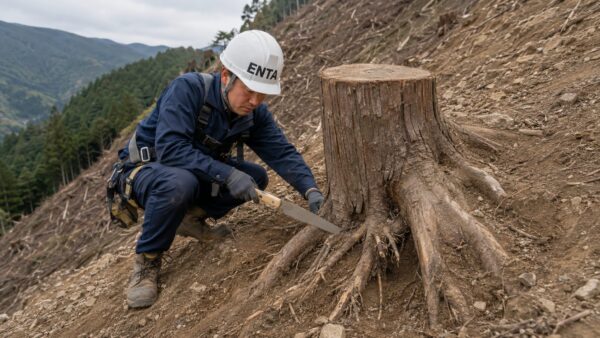
Drill a hole using a specialized root-cutting bit
If the stump can be cut off at the same angle as the slope, it can be treated as a cut slope without any further action.
Also, while people often assume that it’s impossible to drill holes in wood, in reality, it’s just difficult to do—but drilling itself is possible.
Ground anchor bits are great for hard bedrock, but they’re absolutely terrible at handling soft, fibrous materials like wood lol.
Even so, if you hold it down with several metric tons of force while cutting, it will take time, but you can cut through it.
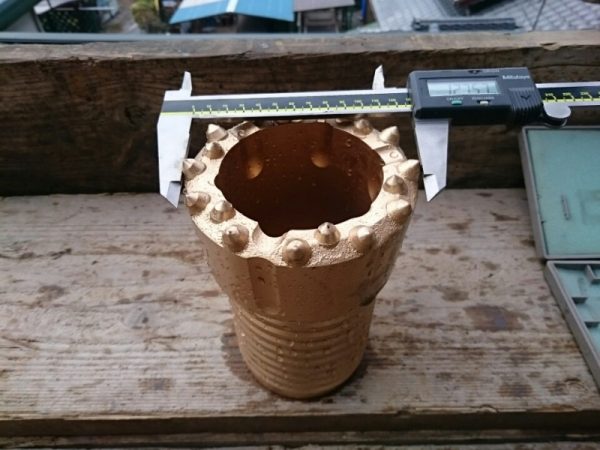
What we use in situations like this is a bit made specifically for root cutting by modifying a bit that’s scheduled for disposal because its tip is worn out.
Since I don't use them all the time—in fact, I only use them occasionally—I try to repurpose old ones by modifying them.
Also, since bits like this aren’t sold anywhere, we’ll have to machine them in-house.
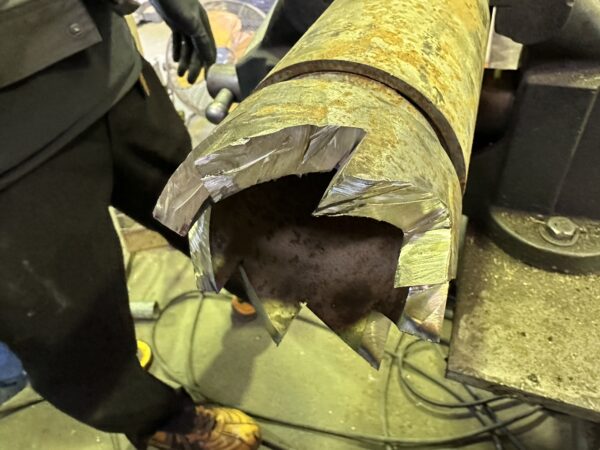
Drilling into the root area often causes the soil surrounding the root to be dislodged, so some backfilling or ground preparation is necessary after drilling.
If you hit a root that’s lodged with a stone while drilling, you might not be able to drill any further, but at that point, you just have to force it through lol
Just press it!! lol
Under the load-bearing plate, create a subbase using sandbags filled with improved soil.
Once the anchor holes have been drilled and the anchors have been installed, the next step is to install the load-bearing plate.
For load-bearing slabs, lowering them about 10 cm below the slope—including the stump—will make construction easier.
In addition, during tension work, sandbags filled with improved soil are laid across the entire lower surface of the load-bearing plate to a thickness of approximately 10 cm.
The reason for using the same material across the entire surface is simple: we want the load applied to the pressure plate under tension to be distributed as evenly as possible using material of as uniform a thickness as possible.
We use UV-resistant sandbags filled with stabilized soil. This helps prevent differential settlement.
We pack the items into the bags with some extra space, so they aren't crammed in too tightly and can withstand being slightly crushed by the pressure caused by compression.
If the pressure plate is installed and tensioned in this state, the installation itself can proceed without any problems, even if the root remains.
Whether it's for slope stabilization or earthwork, using improved soil (a mixture of soil and cement) in sandbags makes just about anything possible!
Improved soil is the best choice for UV sandbags. By adjusting the amount you put inside, you can shape them into all sorts of forms, and they’ll harden over time.
This improved sandbag is a bit of a trick, so be sure to keep it in mind ^^
What about the risk of the roots rotting and becoming hollow?
We often get asked on-site, “Won’t the roots rot eventually and create a hollow?”
Tree roots do not wither away immediately; in fact, when consulting various literature and reports, I found some studies indicating that it takes anywhere from several years to several decades—and in some cases, as long as 30 to 60 years—for stumps and roots to completely decompose into the soil.
However, there can be significant variation depending on the type and thickness of the tree, as well as the moisture content of the soil. Reports indicate that some trees may decay within a few years, while others continue to produce suckers even after several decades; therefore, please consider this timeframe as a general guideline.
And even if the roots were to rot away, they wouldn’t simply disappear—they would just return to the soil.
Since it’s a fact that the volume gradually decreases during that process, it’s important to build a solid foundation of sandbags beneath the load-bearing plate.
Construction sites with trees may seem like a hassle, but as long as you follow the proper steps, it’s by no means a particularly difficult job.
Ultimately, it’s important to give careful thought to these two aspects—drilling and preparing the substrate—and then proceed as usual.
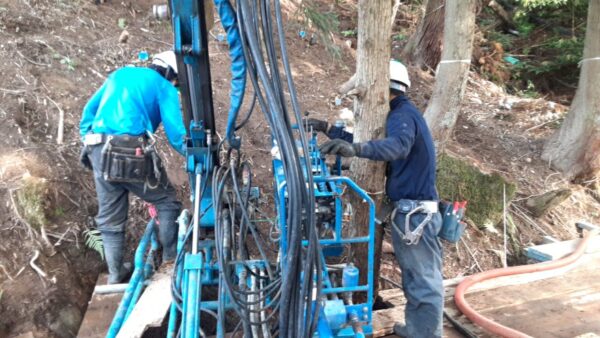
They can do it because they drill holes just like usual, even in a place like this that’s full of trees.
If I wanted to.
Of course, it’s also important to make sure you have enough money on hand.
See you later.
Simply by preventing trees from growing on slopes, you can reduce the risk of cracks and landslides!