



Why Do Slope Maintenance Workers Travel Such Long Distances? A Look at Annual Mileage and Vehicle Conditions
Hello, everyone. I’m Enta. I’ve been driving for about three hours, thinking to myself, “Isn’t the distance we slope workers travel just crazy?” so I figured I’d write about it lol. Our sense of distance is out of sync with the rest of the world. Generally speaking, a one-hour commute by car…
What Is Sprayed Mortar Work? | Essential Knowledge and Optimal Spray Thickness for Private Homes and Commercial Projects to Avoid Mistakes
Hello, everyone. This is Enta. Lately, I’ve been seeing a lot of videos about sprayed mortar on YouTube. While it’s great that there’s more information out there, that also means incorrect information can spread along with it. Previously, a general construction company asked me, “Mortar…”
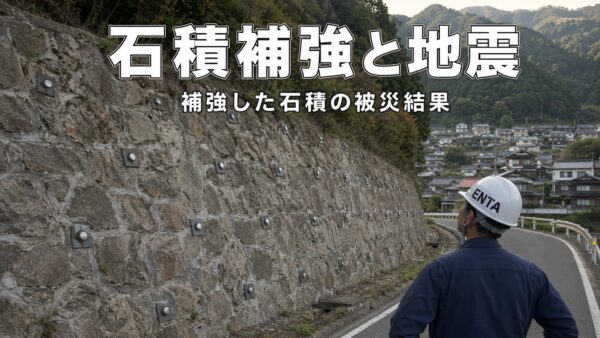
July 28, 2026: Lessons Learned from the Kumamoto Earthquake on the Effectiveness of Stone Masonry Reinforcement | Why Structures Did Not Collapse: Insights from Inspection Results of the Moldam Method (For the General Public)
Hello, everyone. This is Enta. With Obon just around the corner, I imagine many companies have wrapped up their projects for now. As for us, it all depends on the general contractor—we’ll see how it goes. lol Anyway, moving on—this time, I’d like to talk about one of the areas affected by the 2016 Kumamoto Earthquake where the stone retaining wall was reinforced using the Moldam method…
Material Quantity Calculations for Formwork Construction | A Complete Guide to Calculating Quantities of Lath, Wire Mesh, Rebar, Formwork, Anchors, Mortar, and Sand Using Sample Calculations
Hello, everyone. This is Enta. A while back, I went on and on for seven posts—from “Part 1” to “Part 7”—explaining how to calculate materials for formwork. lol The series covered: reinforcing mesh, vertical beams, horizontal beams, formwork, anchors, cement, and sand. Even though I wrote it myself, halfway through…
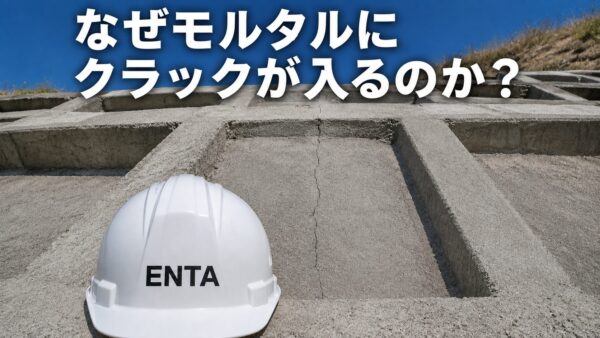
Why Do Cracks Form in Mortar? | Examining the Causes of Cracks in Formwork and Sprayed Mortar from the Perspectives of Mix Design and Curing
Hello, everyone. This is Enta. I came across a job site where there were fine cracks in the joints of the retaining wall. A layperson who was with me (not a slope contractor) asked, “Is this okay?” I explained the reasons on the spot, but later I thought, “If I summarize this on my blog, people will understand…”
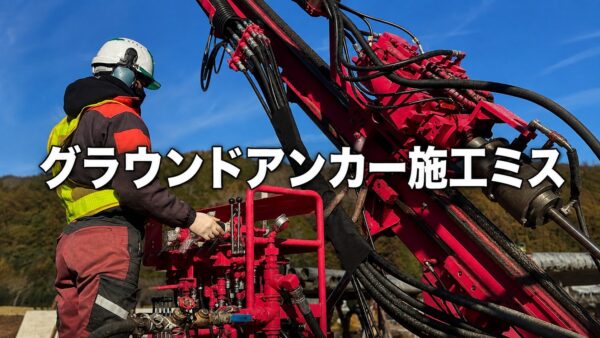
Where Are the Mistakes in Ground Anchor Installation? The Complete Guide | How to Create Anchors That Won’t Come Loose: Drilling, Grouting, Tensioning, and Head Finishing
Hello, everyone. This is Enta. I wrote a series on construction errors involving ground anchors on this blog back in 2018, and I rewrote it again in 2023, but to be honest, both versions ended up feeling a bit half-baked, lol. This time, when I reread my old posts, I thought, “Wait, this…”
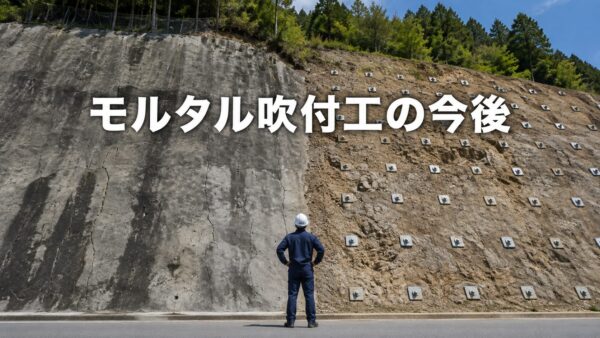
The Future of Sprayed Mortar Construction: Limitations of Sealed Systems Revealed by the Kumamoto Earthquake and Countermeasures for Open Systems
Hello, everyone. This is Enta. August this year has been just as sweltering as ever, so I’m sharing my thoughts on how the key to success on site is working during the cool morning hours. Ice slurry is absolutely the best!!!! I think this is now a must-have for summer slope work lol (at least for now). But anyway, the other day in Reiwa 8…
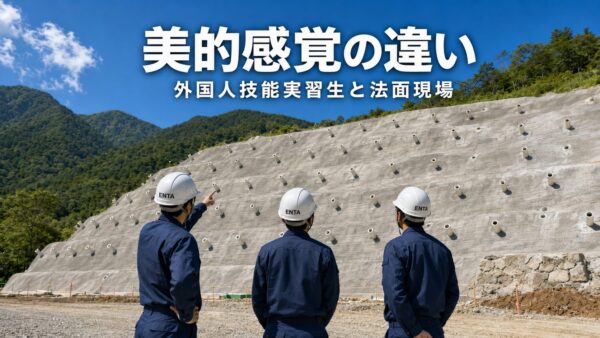
Differences in Aesthetic Sensibilities Between Foreign Technical Interns and Japanese People | A Lesson in “Harmony” Learned from a Drain Pipe on a Slope
Hello, everyone. This is Enta. The slopes in August are scorching hot first thing in the morning, so my work clothes with built-in fans are running at full blast. It’s that time of year when the battery runs out before my body does, lol. It’s seriously killing me, lol. Anyway, this post isn’t about technical stuff—it’s about something I run into every time I work on the slopes with foreign technical trainees…
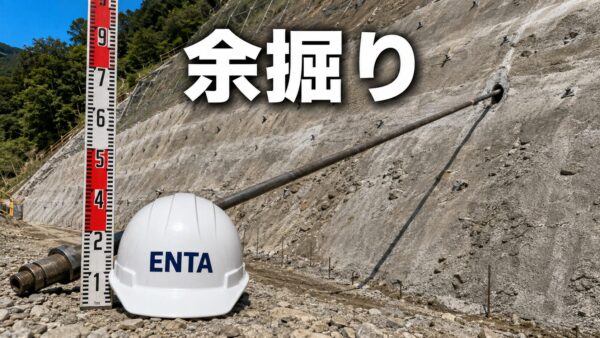
What Is "Over-Drilling" in Core Drilling? | Learning About Core Drilling Length from a Site Where Reinforcing Bars Couldn't Be Inserted Due to Slime
Hello, everyone. This is Enta. Someone asked me, “Why are you drilling 3.1 meters when the design calls for 3 meters?” That’s a good question. I used to wonder the same thing myself, lol. But anyway, today I’d like to talk about “over-drilling” during the drilling process. When drilling for rebar installation (rock bolt installation) or anchor installation…