



Hello, everyone.
This is Enta.
It's already the second half of July.
For several days in a row, temperatures have easily exceeded 35 degrees.
I'm going all over the place by myself for site surveys, and it's seriously exhausting!!!
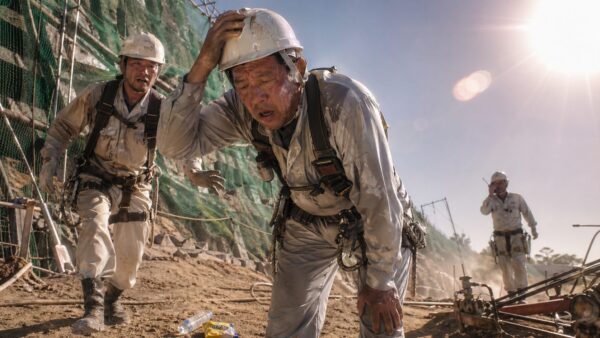
The worksite is truly hell.
But that's beside the point.
This time, I’m going to talk about fan-equipped clothing—a topic I bring up every year without fail.
"Making sure they wear fan-equipped clothing no matter what"—this can actually cause people to collapse from heatstroke.
You might be thinking, “Here she goes again, exaggerating,” but this isn’t just something I made up, lol.
It's clearly stated both on the manufacturer's website and in documents from government agencies.
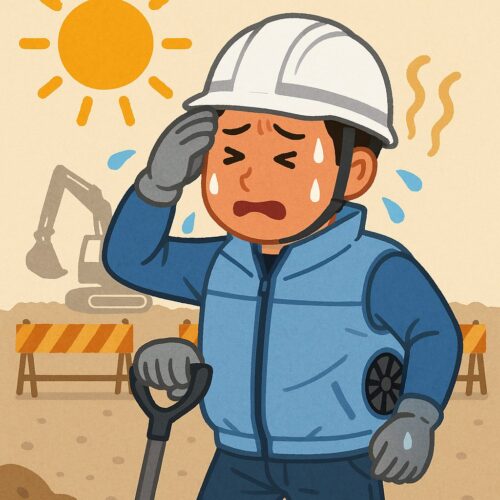
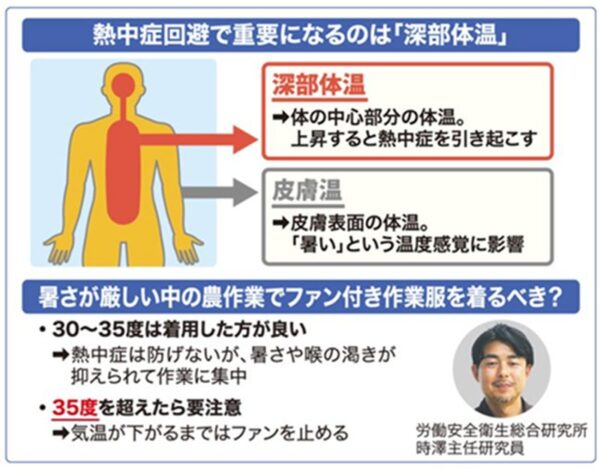
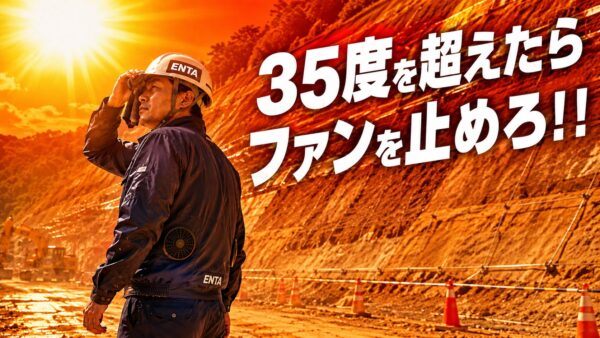
When the temperature exceeds 35 degrees, clothing with built-in fans can actually be counterproductive.
The reason fan-equipped clothing keeps you cool in the first place is that the breeze blows away sweat, which then cools your body through the heat of vaporization.
It's the same principle as sprinkling water on the ground.
However, when the temperature exceeds 35 degrees and the humidity is high, this sweat does not evaporate properly.
If evaporation doesn't occur, evaporative cooling won't happen, so it won't get cooler.
On the contrary, it is believed that this can actually raise your body temperature, as it causes outside air—which is hotter than your body temperature—to continuously flow into your clothing.
That's what they call a "backfire," isn't it?
According to data from manufacturers of fan-equipped clothing, it is said that when **the temperature exceeds 35 degrees Celsius and the humidity exceeds 70%**, it becomes difficult to feel cool.
That's what the company that makes it says.
"Having cool skin" and "preventing heatstroke" are two different things
This is the most important part.
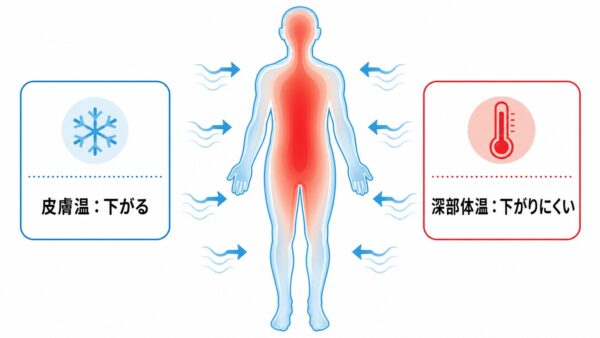
According to a study by the National Institute of Occupational Safety and Health, simply running a fan while wearing dry undergarments did little to suppress the rise in core body temperature.
Since the surface temperature of the skin drops, you feel "cool."
However, it seems that the core body temperature—or deep body temperature—actually doesn't drop much.
In other words, even while you’re convinced that “it’s cool, so I’ll be fine,” heat may actually be continuing to build up inside your body.
In fact, there were news reports about a person who died of heatstroke while working on a farm while still wearing work clothes equipped with a fan.
Just because you're wearing clothing with a fan doesn't mean you're safe, does it?
A Study on Reducing Heat Stress for Older Workers†
Something Extra for Work Clothes with Built-in Electric Fans
—The Cooling Power of "Uchimizu" Innerwear—
"Fan-Equipped Clothing Required" at General Contractor Construction Sites and Reflected Heat from Slopes
The problem is that major general contractors have a rule requiring workers to “always wear ventilated workwear” on their job sites.
If you were to collapse from heatstroke while wearing fan-equipped clothing, people would probably just say, “It’s not the fan-equipped clothing’s fault—it’s a matter of personal responsibility,” wouldn’t they?
However, as I’ve written so far, I believe there’s a very real possibility that, depending on the circumstances, the fan-equipped clothing itself could be a contributing factor.
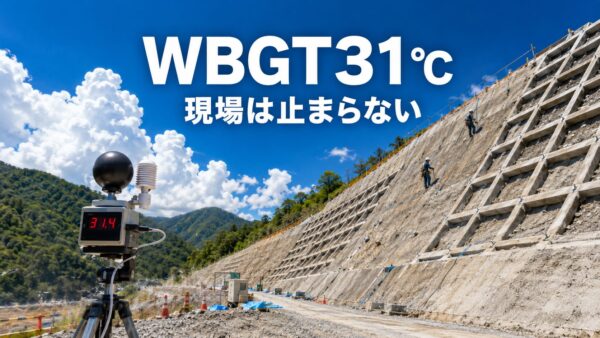
Especially on days when the temperature exceeded 35 degrees.
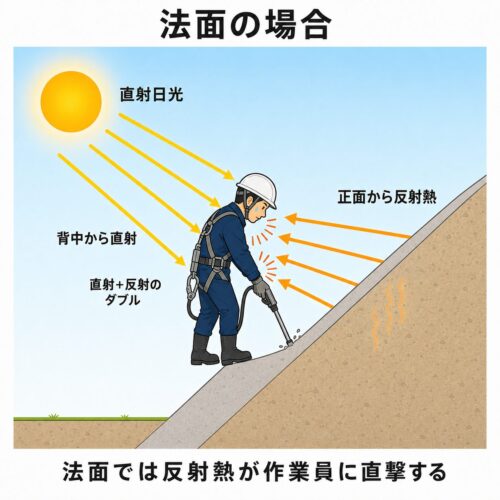
What's more, our main battlefield is the slope.
The heat reflected off the slope and the asphalt on the flat area below makes it even hotter than working on level ground.
Even though it's the same 35 degrees, it feels completely different.
Incidentally, the Occupational Safety and Health Regulations were amended in 2025, making heatstroke prevention measures mandatory for employers.
In other words, we’re no longer in an era where we can simply tell people to “take care of themselves” on the assumption that they’ll end up collapsing.
We would like the general contractor to be flexible in its approach as well.
I'm not saying that clothing with fans is bad.
This gear will definitely come in handy in the early morning, on windy days, or on days with low humidity.
However, simply "wearing it" doesn't guarantee safety.
If the temperature exceeds 35 degrees, assess the situation and take off your clothes, find some shade, and replenish your fluids and electrolytes.
I believe that our ability to make that judgment is what keeps us safe.
Don't rely too heavily on clothing with built-in fans; please use them wisely depending on the situation.
And these days, there are plenty of fan-equipped garments that use ice packs or Peltier elements, so if you take advantage of those, it’s still bearable...
I'd like to see it, but I'd really appreciate it if you'd cut me some slack around that point, lol.
If that happens, I think it's fine to just cancel it lol
In return, the contract price would need to be increased by at least 30 percent; based on my rough calculations, I think a 15 percent increase would be necessary to account for the drop in work efficiency.
See you later.
Japan Agricultural News: Work Clothes with Fans—Use with Caution During Extreme Heat



I'm wearing a climate-controlled suit at 38 degrees.
There are several mesh pockets on the inside of the air-conditioned suit, and there are hanging straps (belts) on the left and right sides of the front. You can place Ice-Non packs on your back or chest, or hang mesh bags there.
You'll place 2–3 150-gram or 300-gram Ice-Non packs on the front and back of your chest; they'll last for about an hour and a half. You'll continue working while replacing the Ice-Non packs.
The fan set to the second-lowest of the four levels is sufficient.
In my case, the battery lasts about two days when I work seven hours a day, so I don't have to worry about replacing it while I'm working.
It feels especially nice when that cool sensation from the nape of your neck spreads all the way to the back of your head.
I started using it this year, and with this intense heat, it’s become something I can’t live without.
It's pretty tough if you don't use an ice pack, isn't it?
I think an ice pack is a must.
We provide this to all our employees as well.
Well, changing the ice pack is a hassle, isn't it?
This is Air-Conditioned Clothing Co., Ltd.
Our registered trademark “Air-Conditioned Clothing” is being used. Since “Air-Conditioned Clothing” is not a generic term, please use the generic name instead. Please correct the relevant sections promptly.
We will be switching from air-conditioned workwear to "workwear with built-in fans."
・Where the term refers to a generic name, it has been changed to "workwear with fans," "EF Wear," etc.
・Remove "air-conditioned clothing" from tags and search keywords
・Add a note indicating that the term is a registered trademark wherever it is mentioned as a proper noun referring to your company and its products.
Please note that sections quoting the titles of news articles or posts from your company’s official social media accounts have been left as is to ensure the accuracy of the quotations.
I believe that when the temperature reaches a point where air-conditioned workwear (work clothes with built-in fans) can no longer provide adequate cooling, workers should not be required to work outdoors.
While this is not easy given the various circumstances, I simply want all clients and the industry as a whole to recognize that we are now in an environment where we must approach construction projects with a sufficient margin of time.
No matter how many precautions we take, we can’t defy the physical limitations that come with aging, and I think there are quite a few people who end up collapsing every year as a result.
I believe this is an issue that requires us to develop countermeasures as a matter of urgency.