

Hello, everyone.
This is Enta.
Lately, I’ve been spending more time poring over blueprints and invoices than planning on-site work, lol.
At times like this, I find myself spending more time thinking about “money matters” than the actual construction work.
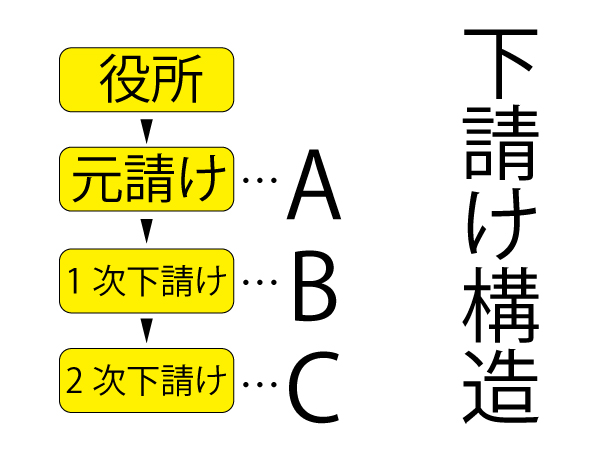
This time, I’d like to step away from technical topics for a bit and write about “the relationship between prime contractors and subcontractors.”
Cutting costs, having costs cut, and unit prices when the project schedule runs over… I think these are the very issues that cause the most frustration for the people actually working hard on the job site.
Since I’ve worked on both the prime contractor and subcontractor sides, I’ll try to honestly share the real thoughts of both parties.
I’ve worked as both a prime contractor and a subcontractor.
"Have you ever been cut off by a general contractor because they said the numbers didn't add up?" It's happened to us, lol.
On the other hand, there have been times when I’ve been the one to end things. (Because the workmanship was shoddy.)
When I was an office worker, I used to visit job sites as an employee of a major company acting as the prime contractor, and now I sometimes work on sites for my own company as a subcontractor.
So, I’ve been let go as a subcontractor, and I’ve also let others go.
I've even terminated a contract as the general contractor.
I actually think it’s a pretty unusual position to be in.
So, when I look back now on my time as a general contractor and ask myself, “Why did we drop that company?”… To be honest, it’s just that I didn’t like them, lol.
I really like artisans.
He's good at it, too.
It feels great, too!
But the management was unreasonably strict about money (for no good reason), and that's what I didn't like.
That's all there is to it. Human emotions are surprisingly like that, aren't they?
It's one of those "I kinda hate this lol" kinds of things, isn't it?
On the other hand, there are some things I just can't bring myself to hate, so it's kind of a hassle... lol
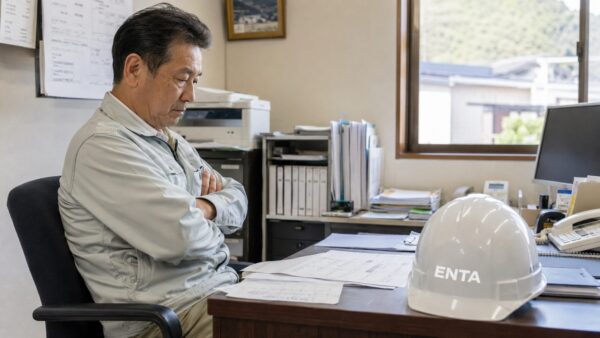
A story about a dispute I had with a subcontractor’s president back when I was a general contractor
This story dates back to when I was still a company employee, working on-site as a representative of a major contractor.
To be honest, back then I felt that as long as I could stay within my own project’s budget, that was good enough.
That’s because the budget was set a little on the high side (i.e., we built in a buffer), so as long as it stays within that buffer, outsourcing the work won’t hurt me personally.
So I was watching it with a pretty smug attitude, thinking, “Well, I guess I could let this part slide,” lol.
Looking back now, I realize I was a little off track at that point, lol (though I suppose it was just a youthful mistake).
However, from the perspective of a subcontractor’s owner, it’s a different story.
They, for their part, want to maximize their own profits by even one yen.
That's why they keep nitpicking every single condition we put forward, going back and forth about this and that.
Back then, I secretly thought to myself, “What a hassle this boss is,” lol.
But now that I think about it, this is actually a perfectly reasonable point, isn't it?
We each have our own sense of justice (i.e., interests) that we must protect.
From a business owner’s perspective, it’s actually quite reasonable for the other side to initiate negotiations.
But then again, I was just a kid back then, lol.
The other company's president is a leading figure in the subcontracting sector of this industry, with far more experience than I have.
When it comes to on-site presence, connections, and experience—they’re ahead of us in every way.
So, that’s when you get told, in a really condescending way, “Do this, do that” by someone like that.
So, being the young person I was, I pressed him, saying, “No, you’ve got to give me some evidence for that.”
I try to push back with logic—"The quantity is this, the unit rate is that, and the blueprints show it this way!"—but the other side just won't play by those rules lol.
He really pushes his way through, relying on his experience and position.
So, every single time, we’d end up having heated arguments at the site office, lol (I really thought it was such a hassle).
So, what happens in situations like this...
In the end, my boss ends up stepping in.
And then, with a “Well, well,” I try to smooth things over… or rather, I just end up letting them have their way, lol.
I ended up really disliking that CEO, and the meeting ended with me looking sullen.
But as for my boss, he went out for drinks with that CEO and they’re making up as if nothing ever happened, lol.
It’s like, “Wait a minute—what happened to the stance I was taking just a moment ago?”
What really pisses me off is that after that whole mess, the budget for my department gets cut by a few % lol
In the end, the ground we had managed to push back ends up going to them.
To make matters worse, my superiors even told me, “Write up a report explaining why the budget was cut.”
Deep down, I was thinking, “That’s something you (and the boss) decided, isn’t it? lol Why should I be the one to write it?!”
With that in mind, they draft the document, listing plausible reasons such as changes in on-site conditions or the government agency’s circumstances.
But honestly, it’s not really about any change in government agencies or anything like that, lol. It’s just the result of power dynamics, you know? lol. It’s like, “Huh?” lololol.
This happened almost 30 years ago, lol.
……I still haven't forgotten that company (or the CEO's face) lol
It was that bad, lol. I'll never forget what was done to me—I'm sure everyone feels the same way, right? lol
But you know, I can only say this now, but I think our poor planning played a big part in that dispute.
If it looked like there might be changes, I should have discussed them with the subcontractor’s president beforehand—either verbally or in writing.
If we’d put things like “If these conditions change, we’ll adjust the unit price this way” and “If the quantity changes, we’ll settle the accounts this way” in writing before the dispute arose, things wouldn’t have gotten so heated.
Since we tend to move forward with a "Well, it'll probably be fine" attitude based on our own convenience, when changes actually come up, the party with the stronger position ends up pushing them through.
Ever since I realized that, I’ve made it a point to hold meetings with subcontractors whenever there are changes not covered in the standard contract, and to document them in writing as much as possible.
After that, the number of problems dropped significantly.
I don't get told what to do by my superiors at the subcontracting company anymore, and we've even become a little friendly, lol.
Well, I still haven't forgotten that CEO who gave me such a hard time back then, though lol.
What I learned from this incident is, ultimately, just a very simple and obvious lesson: “Put it in writing first.”
But whether or not you can pull off this seemingly simple move is what determines whether the relationship between the general contractor and the subcontractor leads to a troubled job site or a smooth one.
These days, I guess I’d just record it on a voice recorder or something like that.
It's fine to record it on a voice recorder, transcribe it, and email it to the other party, right?
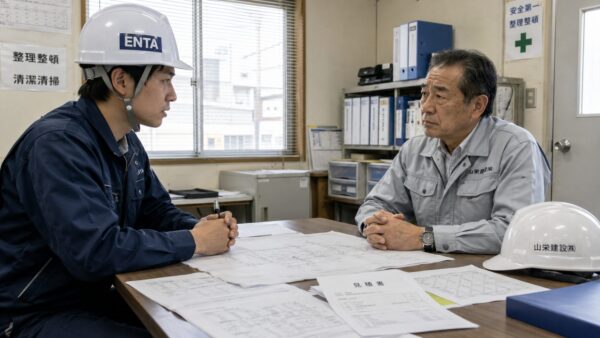
It stands to reason that if the construction period triples, the unit price will no longer be feasible.
Now that I’m a subcontractor, the typical scenario where I get cut off by the general contractor is when we get into a dispute over “compensation for project delays.”
These days, it’s pretty rare not to get paid for taking on extra work or for regular tasks, isn’t it?
Honestly, I think any general contractor that isn't solid in that area is in serious trouble lol.
So, let's talk about the extension of the construction period and the unit price.
Since this is easier to understand with numbers, I'll use a simple example.
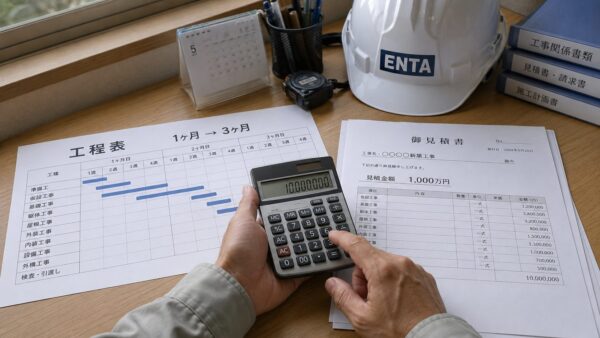
For example, let's say you submit a quote for "construction work costing 10 million yen over one month."
This unit price was established based on mutual agreement and the understanding that the work would be completed within one month.
However, suppose this were extended to three months.
Assuming the initial gross profit was 20%, if that period extends to three months, we’d want at least 24 million—and ideally 30 million.
That is, if you want to maintain the original profit margin, of course.
Why is that?
It’s precisely because we complete a large volume of work all at once in a short period that we can keep unit prices low, but if the volume of work per session decreases, the cost per unit goes up, right?
Furthermore, there is also the “opportunity cost” of losing out on other jobs that might have been available during that extended period.
After all, we have to keep securing a team (people and machinery) for that site.
But then the general contractor told me, lol, “We’ve already finalized the budget, so we don’t have any money to spare.” …Wait, that’s just your company’s problem, isn’t it? lol
The subcontractor was completely left out of the loop, and I couldn't help but laugh lol
Well, since there's no point in arguing about it, I just say, "That's not quite right, is it?" and we start discussing it.
By the way, at this site, the retention money—10%—was just left deducted the whole time. For three whole years, lol.
To be honest, I couldn't believe my eyes, but let's just set that aside for now.
(I hear that under the Construction Industry Act, designated construction companies are required to make payment within 50 days of receiving a request for handover. Is this company in violation of the Construction Industry Act?)
So, in the end, after that job was our last one, we heard through the grapevine that they wouldn’t be using our company anymore, so from our perspective, we feel like we were “cut off.”
I thought we were on the same page, but I guess the other person didn't feel the same way.
We’ve always approached this as a mutual relationship, offering advice on everything from design and construction methods to construction management, as well as sharing information about other job sites, but
From their perspective, we're just a subcontractor, lol.
That's just how it is with subcontractors—I guess that's the way of the world.
Well, since there's another person involved, I don't intend to say anything about it.
What I want to say here—more than anything about the retention funds—is that “if the assumptions underlying the unit price we initially agreed upon no longer hold, we need to face the issue head-on and renegotiate.”
If you don’t do that and just let them push you around by saying, “It’s already been finalized, so there’s no way,” the subcontractor will end up getting squeezed dry.
Well, that would be just too cruel.
Subcontractors can be easily let go. But we’re also in an era where they’re “chosen.”
To be honest, subcontractors can be let go in a heartbeat.
I actually think that's fine.
After all, we're at a disadvantage here.
In companies of a certain size, the site supervisor has the authority to select contractors, but in smaller companies, it’s often the foreman who makes that decision.
So, approaching that person to get them to refer business to you is a common practice in this industry.
On the other hand, if that person comes to dislike you, you might stop getting work.
However, in this era, what are commonly referred to as "blue-collar" workers...
With the labor shortage, we’ve entered an era where even general contractors are “chosen.”
In that case, even subcontractors can’t get any work unless they’re selected.
I think that, precisely because we’re the ones being cut, the key lies in whether we can make clients feel, “Even if it’s expensive, I want to hire this company”—whether through our technical skills or our planning.
Consequently, it is inevitable that general contractors with particularly poor payment records will be weeded out in the future.
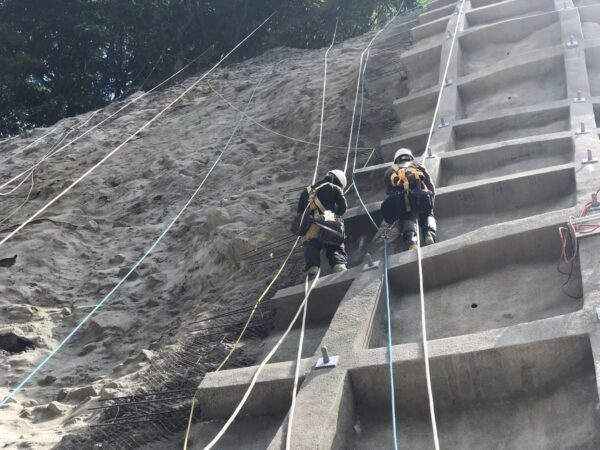
In that case, we want to create our own system that ensures subcontractors make a profit.
I’ve been writing about all the back-and-forth negotiations up to this point, but the bottom line is that the construction industry today is structured in such a way that only the general contractor makes big profits.
And that's perfectly fine!
That's because the risks borne by the general contractor are on a completely different level compared to those of subcontractors!
Contracts with clients, construction schedules, quality, safety management, relations with neighbors, and liability in the event of an accident… Ultimately, the general contractor bears all of this responsibility.
Of course, there is also a risk of non-payment.
For subcontractors, payment is based on work completed, while general contractors face the risk of cash flowing out rapidly—such as 40% as an advance payment before construction begins and 60% after completion—which is terrifying!
Since there are huge profits at the end of that risk, I think it makes perfect sense for the general contractor to make a hefty profit.
Even from the perspective of a subcontractor, that’s how I feel. (Since I used to be a general contractor, I understand this particularly well.)
So, getting to the main point here—what’s really bothering me isn’t that the general contractor is making a profit.
The general contractor takes on the risk and makes a profit.
This is great.
That's not the issue.
The problem is that it’s “along the way” that those profits trickle down to the bottom line.
It takes quite a long time for the money to reach the subcontractors at the very bottom of the chain, and as it passes through third- and fourth-tier subcontractors, the amount keeps shrinking.
It makes perfect sense that the general contractor, who takes the risks, reaps the profits, yet only a fraction of that money reaches the workers on the front lines who are taking those risks and working hard.
This is what really bugs me.
Given how things have been in Japan up until now, it might be one thing, but considering the current global situation and the state of Japan, it’s really dire, isn’t it?
The Ministry of Land, Infrastructure, Transport and Tourism says, “We want to ensure that the labor cost rates are passed on directly to workers,” but personally, to be honest, I don’t think it’ll be that easy lol.
"What am I going to do if that happens!???"—that's what I was thinking. This is just a simple idea, and from here on out, it's kind of half my own wild imagination, but please bear with me as I ramble a bit lol.
For example, a system in which only companies that specialize in subcontracting can register and obtain “construction rights” for that type of work.
Whether it’s a general contractor or a major firm, they always have the bottom-tier subcontractors handle the direct labor costs for that specific type of work.
And we’ll make sure that, at least in that area, subcontractors can reliably turn a profit.
I think it would be great if we could create something like that.
The general contractor is in charge, right? lol (I'm just writing whatever suits me, but it's all just nonsense, lol)
However, when I think about how this system works, I immediately run into a problem.
Even if you say, “Have them quote the direct labor costs,” unless the subcontractor can provide a solid basis for what those costs should be, it’ll just end up going back to whatever the general contractor says anyway lol.
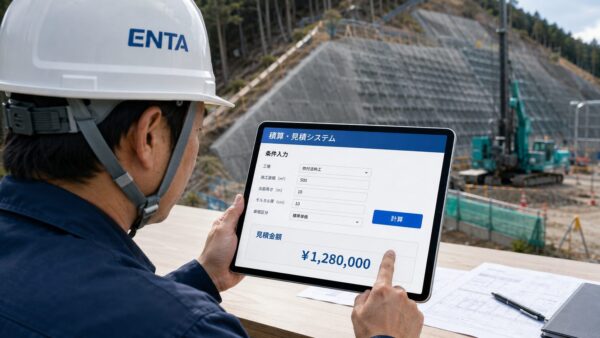
So, the key to this system is probably “calculating money.”
If there were a system that allowed anyone to calculate costs and estimates online, then—to put it bluntly—it wouldn’t matter which prefecture you’re in, would it?
Once you specify and enter the site conditions, the design cost pops up instantly.
Subcontractors, who until now have left “estimates and construction costs entirely up to the general contractor,” will be able to prepare accurate estimates on their own.
I think this is actually a pretty big change.
That way, you’ll be able to state the value of your work yourself, backed by sound reasoning.
You might be thinking, “Can it really work that well? lol.”
I think so too lol
But I'll figure that out after I try it, lol... Although, I guess I should really be thinking about a "marketable construction method" first, lol.
The order's all messed up lol
In any case, I think that even if we were to develop a system like this, it would take about five years for it to become widely adopted.
So, I guess this is something that’s going to take about the next 10 years or so.
It’s a long-term process, but if no one takes the initiative, we’ll never establish a system where subcontractors can actually make a decent profit.
It makes me wonder, “Am I going to keep doing the exact same thing forever—just like I did 30 years ago when I first started working on slopes?”
Since I’m lucky enough to have been born in this era and to be working in this industry, I want to do everything I can.
It’s not exactly a sensational story, and it’s been a long, 10-year process, but I sincerely hope it will contribute, even in a small way, to the slope stabilization industry.
I really want to help create an era where grassroots slope contractors like us can truly shine!!
We’re in an era where relying solely on general contractors or major companies just isn’t enough.
This one got a little too long, and the ending got a bit messy, but I hope you'll continue to support me lol
See you later.
Verbal Agreements Are Not Enough for Securing Subcontractors | The Importance of Contracts