Hello, everyone.
This is Enta.
It's gotten really hot all of a sudden, hasn't it?
It's still a great time of year to make the most of your air-conditioned clothing, so let's take advantage of it!!
But that's beside the point.
In this post, I’ll write about “secondary thinking.”
The other day, I read something in a book that made me think, “Oh, that makes sense,” and I wondered, “What if we applied this to slope stabilization?”
"Huh? What's that?!"—that's kind of how I feel about it, but once you think about it, it actually makes sense, so please hear me out lol.
I think there are people who often make judgment errors on the job, and it seems this is usually the reason why they make those mistakes.
I think anyone who’s been working in the field for a long time has had the experience of something that “seemed to be resolved on the spot, but turned into a big deal later.”
This is about a mindset that can help prevent that from happening.
The Difference Between Primary and Secondary Thinking
"First-order thinking" is a pattern of thinking where the thought process stops at A→B.
"It's raining today, so the scaffolding is slippery" → "Continue working with caution."
That's it.
Secondary thinking goes as far as A→B→C→D.
"It's raining today, so the scaffolding is slippery" → "Continue working with caution" → "This slows us down, causing delays in the schedule" → "We end up rushing toward the end and making reckless moves."
Once you've read that far, your approach will change.
This means we can make the decision to rearrange the schedule during the first half of the day and postpone dangerous tasks until after the rain stops.
Anticipate the consequences—and the consequences that follow those consequencesThat's the point.
In his book *The 20 Most Important Lessons in Investing*, investor Howard Marks writes,
Apparently, they use this distinction between "primary thinking" and "secondary thinking."
This is a story from the world of investing, but I thought it applied directly to on-the-ground decision-making as well.
In investing, the saying “Stocks that everyone thinks are good are already priced in” seems to be a classic example of second-order thinking.
When applied to a construction site, it’s often the case that the very construction methods and processes that everyone assumes are safe are, in fact, the ones that no one is actually checking.
![[Diagram Showing the Branching Between Primary and Secondary Thinking]](https://norimen.net/wordpress/wp-content/uploads/2026/07/59985826b3ffd96f7bdf88bb2895c2b9.jpg)
Moving quickly back and forth between the concrete and the abstract
Apparently, to engage in second-order thinking, you need the ability to switch back and forth between the concrete and the abstract quickly.
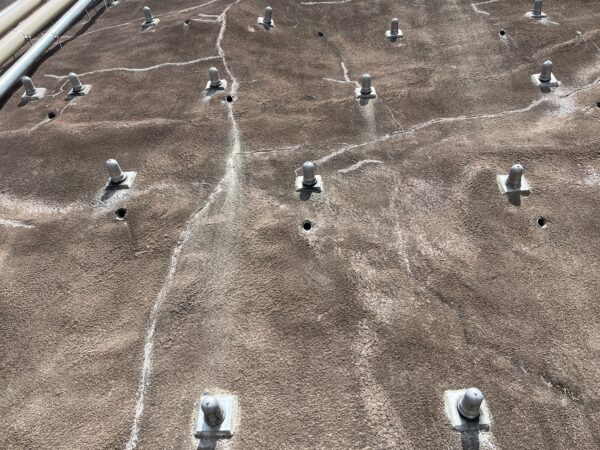
For example, the color of the slime that comes out when you drill a hole.
This is specific information about "the current status of the first casing right in front of us."
However, experienced professionals, when they see this color, immediately elevate their thinking to an abstract level—that of “the general characteristics of the bedrock throughout the mountain” (such as, “That’s clay,” or “That’s soft rock”).
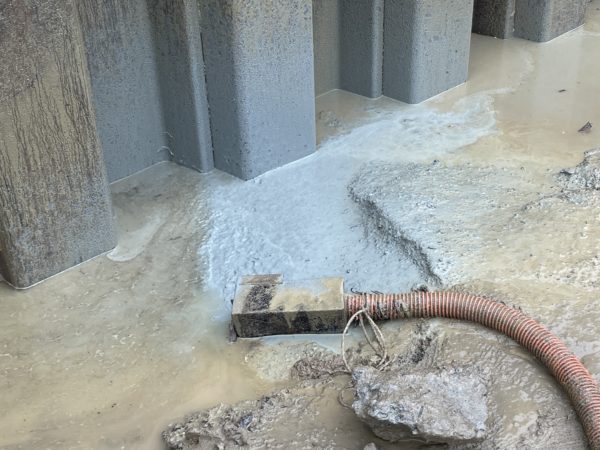
"This section of soft rock is relatively soft, but sediment has seeped in starting from the second borehole... it’s even softer." → "This might be boulders (roll stones)—the ground seems loose, too." → "Well, let’s try using a thicker grout mixture tomorrow." Anticipating the possibility of significant grout leakage.
It's a back-and-forth between the concrete, the abstract, and the concrete.
The faster someone is at this, the quicker and more accurate their on-site decisions will be.
Slow learners tend to treat each individual instance right in front of them as a separate event, which delays their ability to recognize the overall trend.
Just implement it without thinking about it lol
I don't think this is just a matter of years of experience; I think the difference lies in whether you're constantly aware of how things fit into the bigger picture.
It's what they call "not seeing the forest for the trees," isn't it?
Get a sense of the big picture first, then tackle each one individually.
The first thing you should do when you arrive at a job site isn’t to start digging the first well right away, but to familiarize yourself with the geological conditions and groundwater conditions of the entire site.
It would be great if it were finished by the day before, if possible lol
You could try visualizing it by looking at the columnar diagram of the design.
If you have a clear overview of the situation, the moment an anomaly occurs in the first unit, you can conclude, “This could affect the remaining units as well.”
If you don't see the bigger picture, you'll just end up thinking, "It was just a weird slime that happened to appear in the first one."
Even when observing the same phenomenon, the speed and quality of judgment can vary greatly.
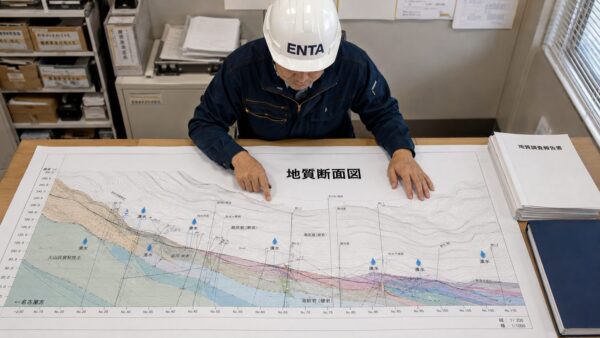
Before starting work at a new site, make it your top priority to set aside time to thoroughly review the drawings and documentation from cover to cover.
Sometimes I’m urged to “start drilling right away,” but,
If you skip that step, there’s a good chance you’ll run into all sorts of problems later on.
That kind of information is important for quickly identifying the quirks of a particular worksite.
In the end, I realized that "secondary thinking" isn't about talent—it's about habits.
The habit of asking myself, “If I do this, what will happen next?” every time. (Doubting myself)
People who have been doing this for years gradually become the ones others rely on in the field.
People who are always thinking have such deep experience!
I’m not there yet—I can’t do this in every situation—but I think I’ve developed a habit of switching back and forth between the concrete and the abstract as much as possible, lol.
How about you all?
I think it goes without saying that veterans in that field (trade) should be able to do that!
It means they’ve reached a level where even the foremen can handle the job site with ease.
Let’s anticipate the consequences of our actions—and even the consequences that follow—so we can carry out construction safely and efficiently on-site!
See you later.