

Hello, everyone.
This is Enta.
When I go out to conduct a site survey of a slope, there’s always something that gives me a headache even before I get to the location where the drilling rig will be set up.
The question is, “How are we supposed to get this from the ground all the way up there?”
But that's beside the point.
For ground anchor and rebar insertion projects, workers must first transport the drilling rig from where the vehicle is parked to the scaffolding at the top of the slope before they can finally get started.
While the ease of proceeding varies greatly depending on the extent to which temporary structures are specified in the blueprints, the transportation methods actually chosen on-site can be narrowed down to six in total.
Today, I’ll consolidate these six approaches into a single guide and discuss the pros and cons of each, as well as common pitfalls you might encounter on the job.
① Lifting with a mobile crane | It’s the standard approach, but there are quite a few job sites where it doesn’t work.
The first option that comes to mind is a mobile crane, commonly known as a tow truck.

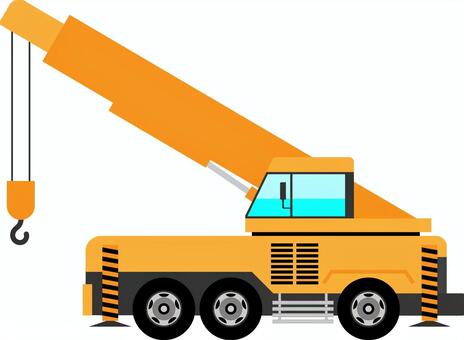
That said, if you assume “It’ll be a tow truck again” before you even get to the scene, you’ll often end up in a tough spot lol.
There is generally a common pattern at job sites where mobile cranes do not function properly.
The access road itself is too narrow for vehicles to enter, and the ground at the planned installation site is too soft to extend the outriggers,
The surrounding trees are in the way and prevent the boom from swinging; the lifting capacity of the crane that can be arranged is insufficient for the size of the machine;
It can only be suspended vertically and cannot be suspended diagonally forward; due to the height of the slope and its gentle gradient, the working radius is insufficient,
To begin with, vehicles can't even reach the site—the road's longitudinal grade is too steep.
Generally, one or more of these factors—or a combination of them—will lead to the conclusion that it “cannot be used.”
The first thing you should check—above all else—is whether there is sufficient width for the access road.
Another aspect that is often overlooked is the sensitivity of the sensors installed on large mobile cranes.
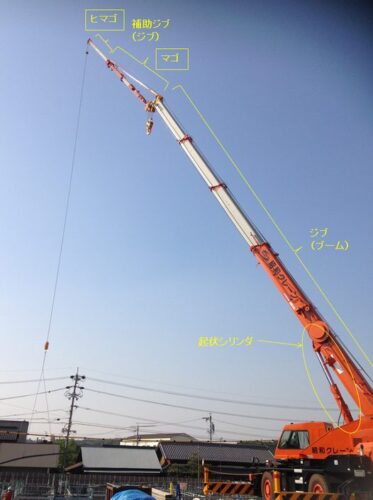
The sensors are concentrated around the boom, so even a slight touch from a branch can cause a malfunction or damage—it’s best to think of it as a more delicate machine than it looks, lol.
It’s not uncommon for a single overhanging branch along the approach route to block the way and prevent you from proceeding any further.
Only after confirming these three factors—the weight, overall length, and access route of the drilling rig—can you determine whether a mobile crane is a viable option.
Sometimes a 25-metric-ton crane is just casually sketched into a consultant's plan, lol.
② Lifting via a cableway (log loader) | The only place where it can be lifted or lowered is directly below the main cable
Ropeways are used at job sites where cranes cannot reach or where there is no access road at all.
The system works by stretching a single main wire across the top of the slope, along which the load moves back and forth.
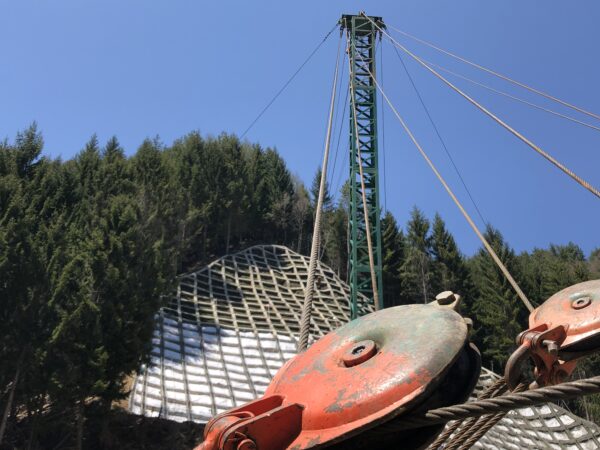
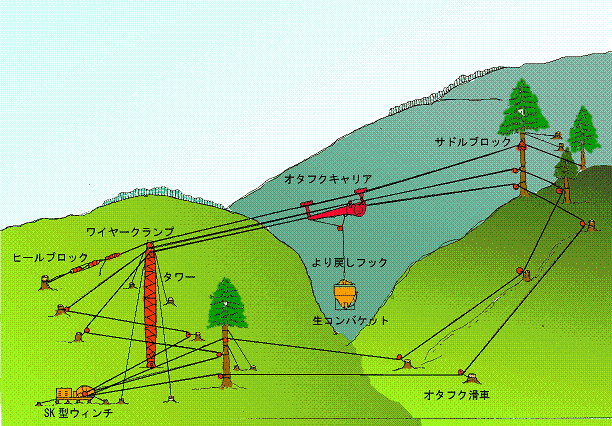
On the power side, there is a large winch, which is used to move the carrier toward the mountain side or the valley side.
The key point is that the winch cable is divided into two separate lines: one for moving the carrier back and forth, and the other for raising and lowering the hook.
The actual unloading process proceeds in the following order: the carrier is moved directly above the machine; the hook is lowered and hooked onto the drilling rig’s lifting ring; the hook is hoisted; the carrier is moved toward the mountainside; and once it reaches the scaffolding at the top of the slope, the hook is lowered.
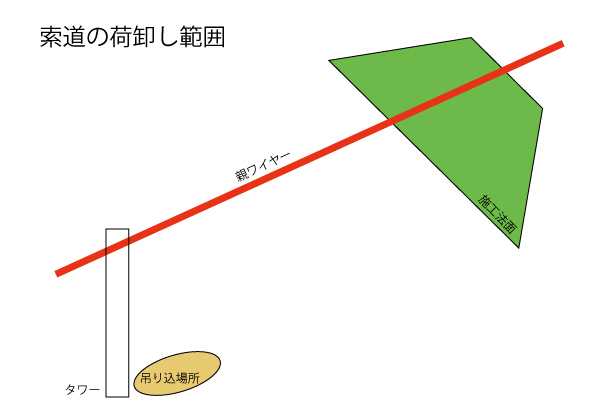
The biggest constraint on cable cars is,You can only unload cargo directly underneath the main wire.That's the point. Work can only be done while the wire is taut.
Since the main wire cannot be moved sideways easily, it is typically secured and installed near the center of the work surface, and the standard procedure involves distributing the load to the left and right from that point using manual labor or small transport vehicles.
To be honest, the steeper the slope at a job site, the more dangerous it is to lower heavy loads, so our true desire is to divide the load into as many smaller pieces as possible.
The tension is especially intense right as you lower it.
I've actually hoisted and lowered a rotary percussion machine weighing nearly 3 metric tons, but I don't think anyone who hasn't experienced it can really understand that feeling lol (It's super scary!)
Clients and design consultants are quick to say, “Just use a cableway,” but when you actually try to set it up, the constraint of having to install it directly beneath the main cable ends up dictating the entire construction plan.
For this reason, installing heavy objects—such as support plates—at a ropeway construction site takes much more effort than one might imagine.
③ Transporting Heavy Loads at a Cableway Site | Solving the Problem with a Combination of Transport Vehicles and Crab Cranes
This section discusses in detail how to move heavy objects, such as load-bearing plates, at cableway construction sites.
First, there’s one basic premise we need to keep in mind:Suspended load of the cableway itselfThat's it.
My impression is that the cable systems I see on job sites are mostly either 5.1-metric-ton or 2.9-metric-ton capacity.
With a 5.1-metric-ton lifting capacity, large machinery can be lifted with some margin to spare; however, 2.9-metric-ton lifts are actually more common, and considering the safety factor, the practical upper limit for actual operation is approximately 2.5 metric tons.
Let’s consider, for example, a case where a single 500-kg lightweight steel pressure plate is installed.
Even though it’s considered lightweight, it’s not light enough to be moved by human strength alone.
So, first, we use the cableway to lower a transport cart—one that’s as compact as possible and capable of carrying load-bearing plates—onto the scaffolding.
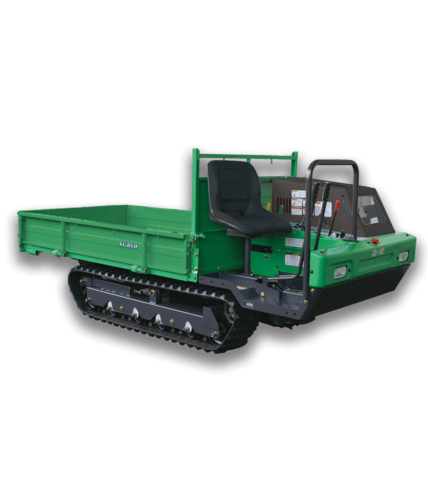
The process involves placing the so-called rough-terrain transport vehicle on the scaffolding, loading it with load-bearing plates, and transporting it to the installation site.
Many small off-road transport vehicles are lighter than they appear, making them well-suited for applications such as shuttling back and forth on scaffolding at cableway construction sites.
Next, we'll need a crab crane to suspend the load-bearing plates on the scaffolding.
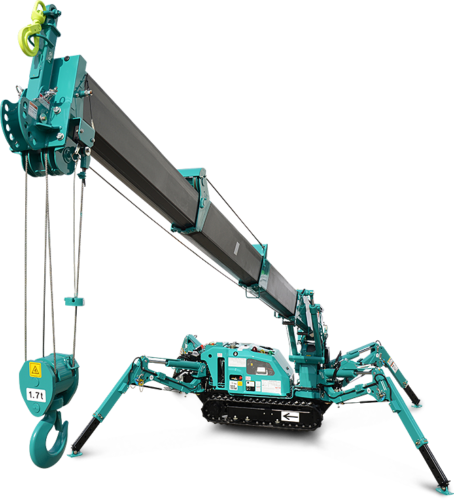
Since crab cranes are heavy relative to their lifting capacity, choosing the wrong model can increase the load on the scaffolding.
For reference, there are models in the 1.7-metric-ton lifting capacity class with a total weight of around 1,290 kg, and this serves as a general guideline for maneuverability on scaffolding.
On a cableway construction site, if you don’t consider temporary construction plans in tandem with the selection of work types from the very beginning, you’re in for a rough time.
If you look only at the unit price and decide, “Since it’s cheap, let’s use formwork,” or “Since it’s cheap, let’s use a load-bearing panel,” it’s not uncommon for temporary construction costs to balloon later on, resulting in a higher overall cost.
These temporary costs, which only become apparent during construction, are difficult to factor into the initial estimate and tend to be borne by the general contractor.
It would be greatly appreciated if this burden could be factored in to some extent from the design phase onward.
④ Hauling by Monorail | The Trap of a Logging Width That People Can Pass Through but Machinery Cannot
The monorails often seen at mandarin orange orchards are also a valuable means of transportation at slope construction sites.
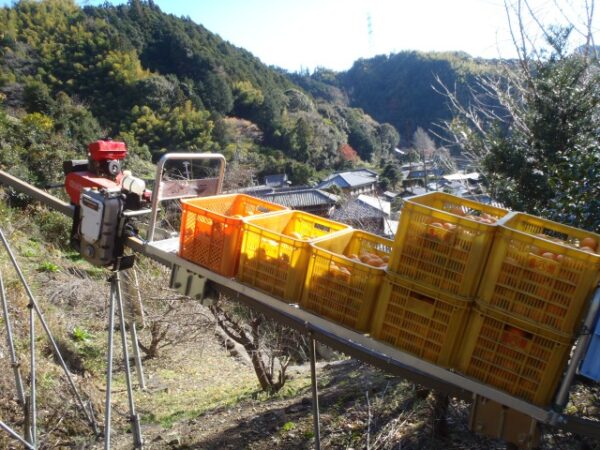
Even the smaller models can carry a load of approximately 500 kg, and they are often installed in a way that encircles the slope being worked on.
However, regardless of the manufacturer, the maximum climbing angle is generally limited to around 45 degrees, so depending on the terrain, route planning often results in a significantly longer detour to reach the job site.
In my experience, we often can only reach the outer edge of the slope or the area immediately surrounding it, and we can’t get as close to the construction site as we’d like.
At rebar insertion job sites, the most common type is the single-axle (single-rail) model with a maximum load capacity of 500 kg.
The plan is to attach scaffolding to the monorail's terminal station and then move the machinery sideways from there to position it at the construction site.
The load capacity varies depending on the number of rails (1-axle, 2-axle, 3-axle), and while some models come with optional dump beds or cranes, the reality is that the lease costs are pretty steep lol.
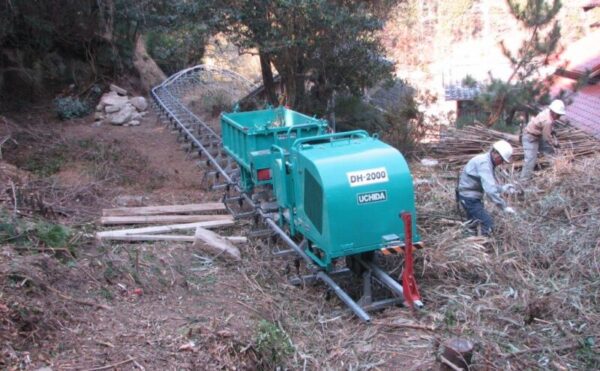
Monorails may seem simpler than cable cars, but they’re actually quite challenging to operate.
In particular, with the single-axis type, the bogie is only about 600 millimeters wide, and there are frequent instances where the width of the drilling machine extends beyond this limit.
Since monorail contractors base their tree-cutting operations solely on “the width required for the monorail to pass through,” they often deem it acceptable to leave some obstructing trees standing, which can lead to situations where, later on, it becomes impossible to pass even a drilling machine through the area.
Based on experience, if you're transporting a drilling rig through a forested mountain area, securing a clearing width of at least 1.2 meters will go a long way toward solving the problem.
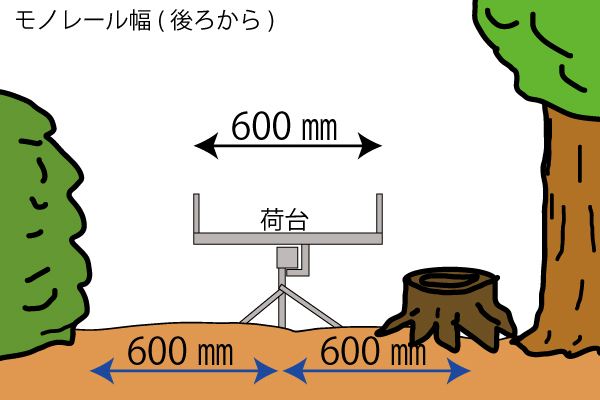
When transporting long items such as scaffolding materials, having extra width makes it easier to maneuver around curves and improves workability when routing materials like spray hoses along the rails.
Since monorail transport carries a significant risk of accidents, ensuring a wider clearing around the tracks is effective in terms of both maintaining visibility and ensuring safety.
It would be helpful if, during the design phase, the area designated for tree removal could be about twice the width of the monorail’s cargo platform, as this would reduce the need for revisions regarding the handling of obstructing trees.
⑤ Cantilever Scaffolding and Ramps | How to Hoist Machinery Using a Chiller Hole
There are also sites where the working radius of a mobile crane falls just 10 meters short—it’s a real shame.
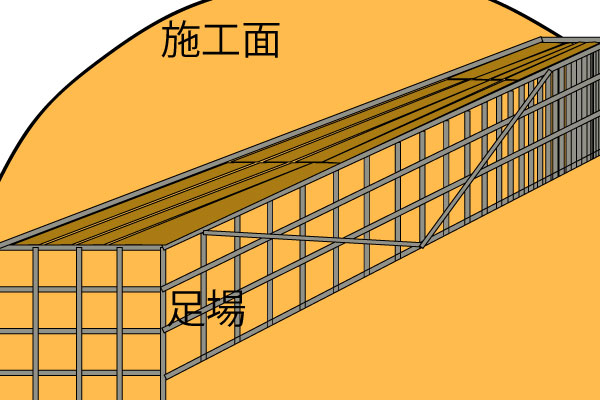
In cases like this, it’s surprisingly often faster to use cantilever scaffolding than to go to the trouble of setting up a cableway or monorail.
Furthermore, scaffolding is easy to incorporate into design quantities, which has the added benefit of minimizing out-of-pocket expenses for contractors.
So it's an amendment to the contract, lol.
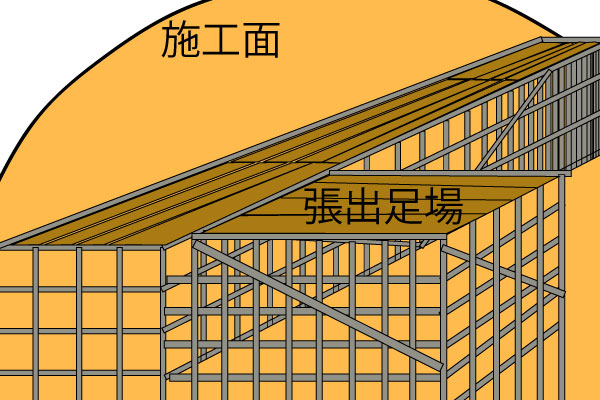
If you can't cover the elevation difference all at once, install a ramp on the scaffolding side to raise it in stages.
Imagine gaining elevation in a zigzag pattern: an upward slope to the right → a landing → an upward slope to the left → a landing.
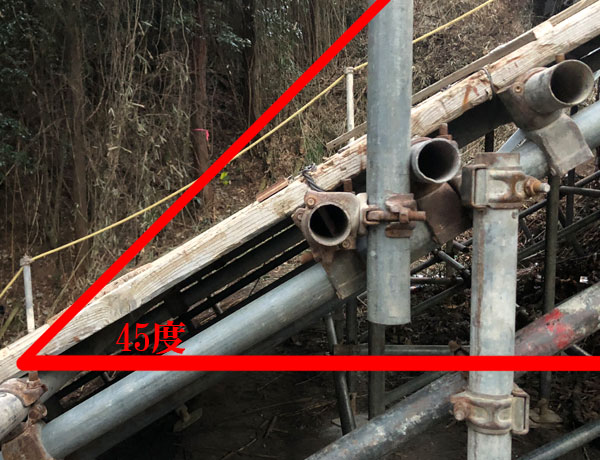
I’ve moved machinery at an angle like this before, and to be honest, it was pretty scary, so I’ve made it a personal rule to keep the angle at 25 degrees or less.
The product used for lifting is called "Chill Hole."
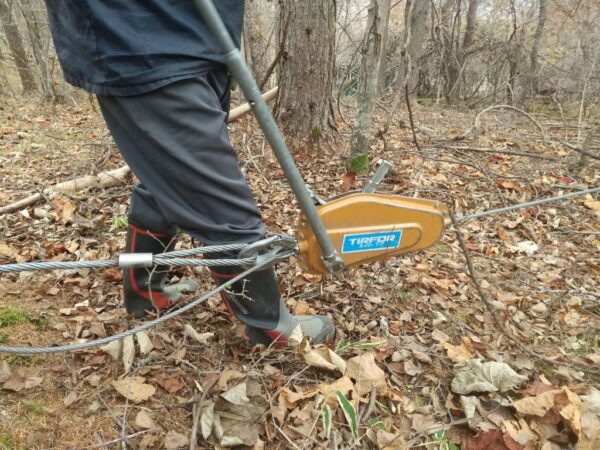
It can tow loads of up to about 3 metric tons, so it can handle most drilling rigs.
Many large drilling rigs are equipped with a side-to-side movement function, allowing the machine itself to climb up a slope.
In that case as well, using Chill Hall as a supplementary measure will ensure a safety margin in the unlikely event of a slip.
It’s a huge help to the construction team when the design consultants incorporate this combination into the plans in advance.
That said, I don't think the consultants would know about this kind of transfer either, so please talk to them about it lol.
Super Chill Hall S-15 Silver (2.5-metric-ton horizontal pull)
⑥ Direct Hoisting | The Last Resort Using a Scaffold and Chain Block
On rare occasions, there are construction sites that are so narrow that there isn’t even enough space to build a ramp.
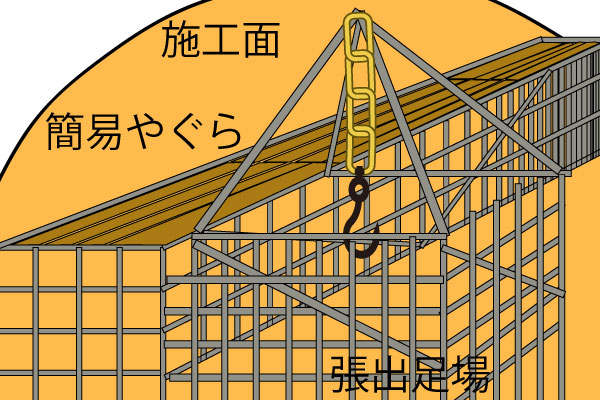
In such cases, the last resort is to lift the machine straight up vertically.
We'll set up a simple scaffold and use a chain hoist to lift the machine.
An absolute requirement for this method is to erect a scaffold that is strong enough to support the weight of the machine itself.
I've only used this method twice myself in the past.
We chose this as a last resort when we faced a situation where a mobile crane physically couldn’t fit or reach the site.
The most important factor to consider with this method is the rigidity of the scaffold structure.
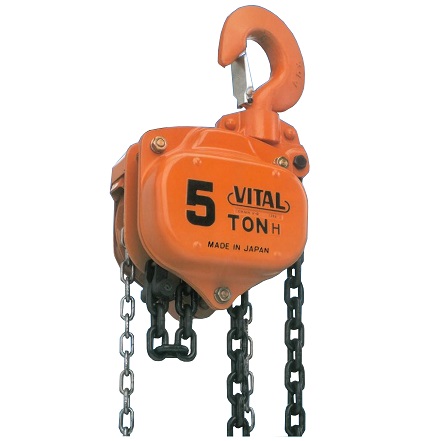
When selecting a chain hoist, we make sure to choose one with a capacity of about twice the actual lifting load.
While hoisting, we insert a single pipe under the machine every 1 meter to ensure that, in the unlikely event of a fall, it will stop at that height.
It goes without saying that people must not be allowed in the work area, and that safety harnesses must be worn at all times.
When it comes to the lifting wire on the chain block side, choosing one that’s as thick as possible and brand new makes a world of difference in terms of peace of mind.
It’s safer in the long run to pace yourself so that it takes about a full day to complete the task, taking your time without rushing.
Since this type of work is difficult to quantify in terms of cost, it would be helpful if you could estimate the amount of scaffolding on the higher side or include the movement of machinery up and down as a separate work item.
When operating a drilling rig weighing more than 1 metric ton, the strength of the chain block mounting points on the derrick is particularly important.
Since assembling single pipes into a triangular frame raises concerns about structural strength, it is safer to assemble them into a square frame and use 100H-class structural steel in combination.
How to Choose Among the 6 Methods | Comparison by Criteria
I’ve compiled the information covered so far into a list to make it easier to use when making decisions on-site.
| Method | Approximate Load Capacity | Suitable Conditions | The Biggest Weakness |
|---|---|---|---|
| Mobile Crane | Depending on the model, from several metric tons to— | A site where access routes and a suitable foundation can be secured | If even one of the following is missing—road width, ground conditions, vegetation, or work radius—it cannot be used. |
| Cableway (Log Hauler) | 2.9-metric-ton and 5.1-metric-ton lifting capacities are the most common | A steep slope with no access route for a crane | Unloading is restricted to directly below the main wire, limiting flexibility. |
| Monorail | The 500-kg class on a single axle is the mainstream option | Terrain that allows for circulation around slopes; relatively lightweight materials | Constraints due to a climbing angle of around 45 degrees; the cutting width does not match the machine's width |
| Cantilever Scaffolding + Chill Hole | The Chill Hall can tow vehicles weighing up to about 3 metric tons. | A job site where the crane's operating radius is just a little too short | An increase in the amount of temporary scaffolding and ramps can easily affect the construction schedule. |
| Direct Hoisting (Scaffold + Chain Hoist) | Depends on the strength of the scaffold | A job site where the lot is extremely small and no other solutions can be implemented | It takes time, and the costs are difficult to reflect in the estimate |
As you can see from this table, the primary criterion for determining priority is not “load capacity” but rather “whether an access route and suitable ground conditions can be secured.”
If that requirement can be met, a mobile crane is the only option and the matter can be settled quickly; however, if it cannot be met, you’ll have to choose between a cableway, a monorail, scaffolding, or direct hoisting, and your options will be significantly limited.
In the end, we have no choice but to work backward from the on-site conditions.
I've listed six methods here, but that doesn't mean there's always just one right answer.
Road width, ground conditions, slope height and gradient, the number of trees in the way, and the budget.
Through this combination, the options available on-site are naturally narrowed down.
The important thing is not to finalize your plans based on the assumption that you'll be using a mobile crane from the very beginning.
During the survey phase, if you get into the habit of inspecting the site while keeping multiple options in mind—such as “Under these conditions, a cableway would be a practical solution this time” or “No, we should be able to reach it with scaffolding and a ramp”—you’ll avoid having to scramble to set up temporary structures later on.
Since there are many aspects of selecting this type of temporary equipment that are difficult for the design team to foresee,
I believe that having the construction team provide information early on is the best way to prevent unnecessary out-of-pocket expenses.
See you later.
Is It Illegal to Raise a Crane’s Outriggers? | Considerations for Leveling a Crane on Sloped Ground