Hello, everyone.
This is Enta.
Construction Methods for Technical Intern Trainees (Part 1): Slope Cleaning Work
Construction Methods for Technical Intern Trainees (Part 2): Lath Installation
Construction Methods for Technical Intern Trainees (Part 3): On-Site Spray Application for Formwork
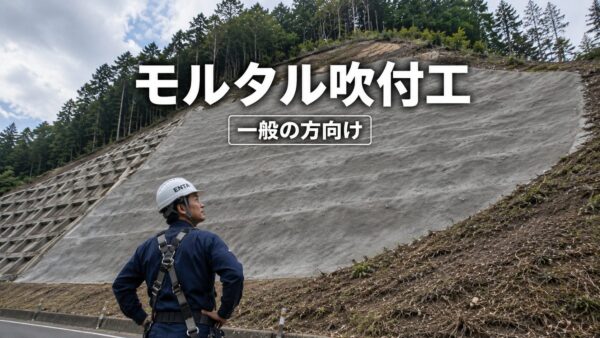
Following up on the previous post, this one is about mortar sprayers and concrete sprayers.
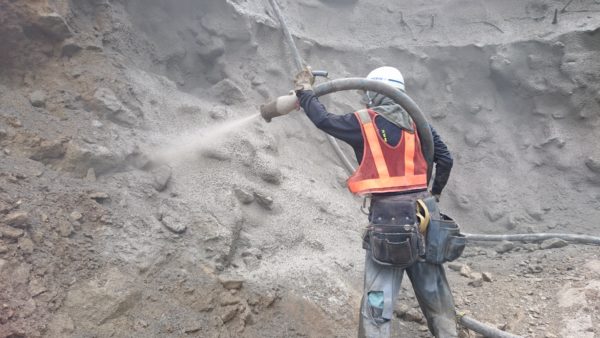
The purpose of sprayed mortar and sprayed concrete is to prevent the weathering of natural bedrock.
This construction is designed to prevent rainwater from seeping into the bedrock and soil layers of the natural ground due to wind and rain.
Therefore, since this is strictly a surface-level measure from a legal standpoint, it has no power to prevent collapse.
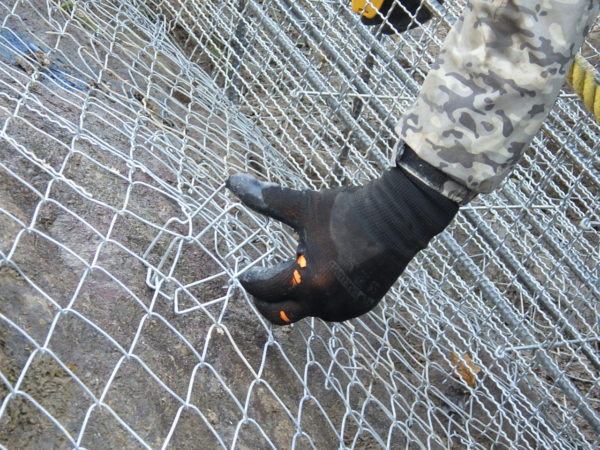
The use of reinforcing mesh and rebar creates overall structural integrity, making it a structure that is resistant to partial collapse.
■ Sprayed Mortar Contractor
| Thickness (cm) | Uses | Soil Type | Places of Application |
|---|---|---|---|
| 3 | Temporary | Anywhere | Anywhere |
| 5 | Temporary or Permanent | Within the Frame, Bedrock, and Sediment | Anywhere |
| 7 | Main Facility | Bedrock | County Road |
| 8 | Main Facility | Bedrock | County Road |
| 10 | Main Facility | Bedrock | National Highway or Cold Regions |
| 15 | Main Facility | Bedrock | National Highway or Cold Regions |
■ Shotcrete Worker
| Thickness (cm) | Uses | Soil Type | Places of Application |
|---|---|---|---|
| 3 | ―― | ―― | ―― |
| 5 | ―― | ―― | ―― |
| 7 | Main Facility | Bedrock | Prefectural and National Highways |
| 8 | Main Facility | Bedrock | Prefectural and National Highways |
| 10 | Main Facility | Bedrock | Prefectural and National Highways or Cold Regions |
| 15 | Main Facility | Bedrock | Prefectural and National Highways or Cold Regions |
-
3 cm thick: May be used only with mortar for temporary applications. Not used with concrete. (With or without wire mesh)
-
5 cm thick: Mortar can be used for temporary or permanent structures (such as bedrock), but concrete is not used.
-
At least 7 cm thick: Both are used for their intended purposes. Bedrock is the basic requirement.
-
At least 10 cm thick: Used in harsh environments such as cold regions and national highways.
-
Concrete tends to be used in applications where higher durability is required than with mortar.。
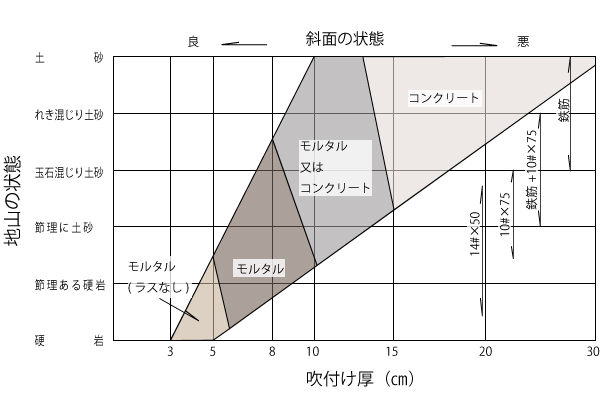
Although there are basic design criteria, the selection is made with a certain degree of flexibility.
Although the design calls for shotcrete, it is often changed to mortar spraying due to considerations regarding the construction yard and construction efficiency.
According to the design mix, the sprayed concrete work requires a cement content of at least 360 kg/m³, and
Since the cost of sprayed mortar work is 420 kg/m³, the design price for sprayed mortar work is higher, making it more likely to be revised.
Spray Coating Thickness Measurement
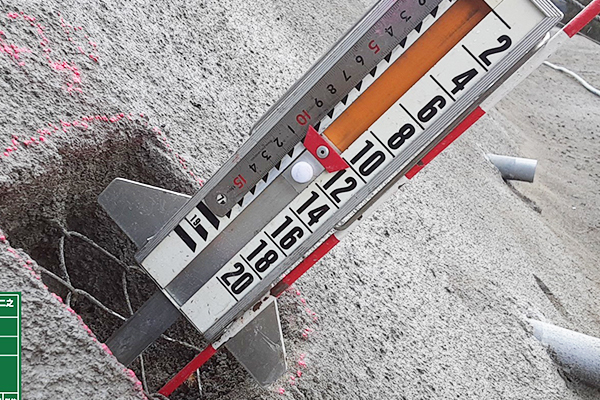
Measuring the thickness of the sprayed mortar or concrete is one method of quality control for sprayed mortar and concrete work.
One location for every 200 m² of total area; if the total area is 200 m² or less, there must be at least two locations.
Although there are specifications that allow for a negative value, you should always ensure that the spray thickness is met.
Spacers are used to ensure the correct spray thickness.
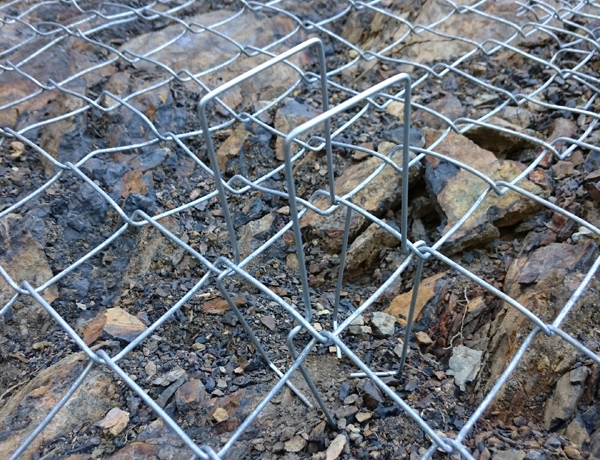
The PC spacers are manufactured to be 1 mm thinner than their specified thickness.
If you conceal the spacers properly, it will match the designed thickness.
The most important thing when applying sprayed mortar is not to apply it thicker than the specified thickness!
The reason is that it costs money.
The thickness specified in the design is sufficient.
If the design specification is 10 cm and 11 cm is sprayed, 1 cm is wasted.
1 cm worth of materials and labor costs will be wasted.
Be sure to check the spacers carefully and apply the spray coating exactly as designed.
Applying the coating evenly and smoothly requires skill, but applying it to the exact specified thickness also requires skill.
Let's take our time and get used to it.
See you later.
Construction Methods for Technical Interns (Part 4) – Mortar Spraying & Concrete Spraying
Hello, everyone.
My name is Enta.
Construction Methods (Part 1) – Clearing the Slope
Construction Methods (Part 2) – Installing Steel Mesh
Construction Methods (Part 3) – In-Situ Sprayed Mesh Frame
This time, we'll continue to explore shotcrete and sprayed concrete.
The primary function of shotcrete and concrete application is to prevent the weathering of the bedrock.
The construction is intended to prevent rainwater from seeping into the rock or soil.
However, since this is only a surface treatment for the slope, it is not capable of preventing major landslides.
Installing steel mesh or reinforcing steel will provide overall structural integrity and reduce the risk of localized landslides.
■ Mortar Spraying (Mortar Sprayer)
| Thickness (cm) | Purpose | Soil Type | Applicable Locations |
|---|---|---|---|
| 3 | Temporary | Anywhere is fine | Anywhere is fine |
| 5 | Temporary or Permanent | Within the frame, bedrock, soil | Anywhere is fine |
| 7 | Official | Original Stone | Provincial Road |
| 8 | Official | Original Stone | Provincial Road |
| 10 | Official | Original Stone | National Highway or Cold Region |
| 15 | Official | Original Stone | National Highway or Cold Region |
■ Concrete Spraying (Concrete Sprayer)
| Thickness (cm) | Purpose | Soil Type | Applicable Locations |
|---|---|---|---|
| 3 | ―― | ―― | ―― |
| 5 | ―― | ―― | ―― |
| 7 | Official | Original Stone | Provincial Roads, National Highways |
| 8 | Official | Original Stone | Provincial Roads, National Highways |
| 10 | Official | Original Stone | Road/Highway or Cold Zone |
| 15 | Official | Original Stone | Road/Highway or Cold Zone |
- 3 cm: Applies only to temporary mortar. Does not apply to concrete. (With or without mesh)
- 5 cm: Temporary or permanent mortar (aggregate), not concrete.
- 7 cm or more: Both are intended for formal use and require a stone background.
- 10 cm or more: For use in harsh environments such as highways or cold regions.
- Concrete: Typically used in applications that require greater durability than mortar.
Although there are basic design specifications, the actual thickness can be adjusted flexibly depending on the construction conditions.
Although the design calls for shotcrete, due to site conditions or efficiency considerations, the method is often changed to mortar spraying.
Concrete spray: cement ≥ 360 kg/m³
Mortar mix: Cement ≥ 420 kg/m³ → Higher design cost → Easier to convert to mortar.
Measuring Spray Thickness
Construction shape management includes measuring the thickness of the sprayed layer.
1 location per 200 m². If the area is less than 200 m², then ≥ 2 locations.
Ensure that the design thickness is sufficient and does not fall below the specified requirement.
Spacer PCs are typically thinner than the design thickness of 1 mm.
If the spacer is completely covered → it is the correct design thickness.
The most important thing when spraying mortar: don't make the layer too thick!
Because if it's thicker → costs go up.
As long as it meets the design thickness, that's fine. If the design calls for 10 cm but you spray 11 cm, that 1 cm is wasted.
Materials + labor: 1 cm will be wasted.
Check the spacer carefully and spray according to the design specifications.
Applying a smooth, even coat requires technique, and getting the thickness just right also takes skill. Keep practicing little by little.
See you later!
Developed for the Ship Development Training Program (Part 4) – Mortar Spraying and Concrete Pouring
Greetings to everyone.
I am anta.
SEP Development Training (Part 1) – Drain Cleaning Operations
SEP Development Training (Part 2) – Mesh Paths
SEP Development Training (Part 3) – Removing Frames from a Website
Mortar and Concrete, Once Again Please provide information on the .
Mortar and Concrete Sprayer The main purpose is to protect to protect the surface from erosion .
Rain, wind, dust, and mud remain intact, so they are left on the surface to prevent damage from rain and wind.
Therefore, These are merely surface-level safety measures , but they have no direct effect on preventing the spread of the virus.
By using Jali and Ribar, we have to create a uniform appearance, and to prevent damage from heavy rainfall .
■ Mortar Chidkav
| Circumference (cm) | Experiment | Types of Clay | Scope of Application |
|---|---|---|---|
| 3 | Temporary | Wherever | Wherever |
| 5 | Temporary or Permanent | Inside the Frame, Roof, Floor | Wherever |
| 7 | Permanent | Main Roof | State Road |
| 8 | Permanent | Main Roof | State Road |
| 10 | Permanent | Main Roof | Highway or Remote Area |
| 15 | Permanent | Main Roof | Highway or Remote Area |
■ Concrete Chipping
| Circumference (cm) | Experiment | Types of Clay | Scope of Application |
|---|---|---|---|
| 3 | ―― | ―― | ―― |
| 5 | ―― | ―― | ―― |
| 7 | Permanent | Main Roof | State Roads, Highways |
| 8 | Permanent | Main Roof | State Roads, Highways |
| 10 | Permanent | Main Roof | State/ Highway or Chiso Area |
| 15 | Permanent | Main Roof | State/ Highway or Chiso Area |
- 3 cm: Mortar is used only for temporary applications . Concrete is not used. (Whether it is mesh or not)
- 5 cm: Mortar—temporary or permanent p (on the roof), concrete is not used.
- 7 cm or more: For permanent use in Dubai. A roof is required.
- 10 cm or more: This area or highway in harsh environments.
- Concrete: I want something that sticks better than mortar in such situations.
Although there are design criteria, in practice, there are some .
Even though the design calls for concrete, the car I make adjustments to the layout based on the site conditions are adjusted accordingly.
Concrete Spraying: Cement ≥ 360 kg/m³
Mortar Mixing: Cement ≥ 420 kg/ m³ → Higher cost → Structural changes .
Measurement of Chidaka-mo-tai
A Method for Construction Control is the measurement of moisture content.
One space for every 200 m², If the area is within 200 m², there must be at least 2 locations.
Even if the design meets the minimum standards, Make absolutely sure these points are covered .
PC spacer design: 1 mm thicker than the standard It is made smaller.
If the spacer is hidden, then in the design has gone off the rails.
The Most Important Thing About Mortar Mixing important point: Design it to be more open than the mortar !
That's why expenses go up.
Based on the design, the cutting process has been implemented.
Even if the design calls for 10 cm, if you make it 11 cm, is wasted.
That 1 cm results in material and labor costs is wasted.
According to the Spacer Herer design, It must be cut out.
Even though it looks simple, the design is a type of shell that’s designed to be easy to open is a kind of challenge. Please practice.
Let's go on a ferry ride!
Construction Procedures for Technical Interns (Part 4) – Spraying Mortar and Concrete
How are you all doing?.
I'm Enta.
Construction Procedures (Part 1) – Slope Cleaning
Construction Procedures (Part 2) – Installing Wire Mesh
Construction Process (Part 3) – On-site Framework Spray
Today, we'll continue our discussion on spraying mortar and concrete.
The primary purpose of spraying mortar and concrete is to protect the bedrock from weathering.
This is done to prevent rain from eroding the soil or rocks on the slope.
Since this is only a surface treatment, it will not prevent the soil from eroding completely.
If wire mesh or rebar is used, the structure will be more stable and the risk of a localized landslide will be reduced.
■ Mortar Spray
| Kapal (cm) | Gamit | Uri ng Lupa | Location |
|---|---|---|---|
| 3 | Pansamantala | No Matter Where | No Matter Where |
| 5 | Pansamantala or Pangmatagalan | Within the frame, rocks, earth | No Matter Where |
| 7 | Pangmatagalan | Batuhan | Provincial Road |
| 8 | Pangmatagalan | Batuhan | Provincial Road |
| 10 | Pangmatagalan | Batuhan | National Road in a Cold Place |
| 15 | Pangmatagalan | Batuhan | National Road in a Cold Place |
■ Concrete Spraying
| Kapal (cm) | Gamit | Uri ng Lupa | Location |
|---|---|---|---|
| 3 | ―― | ―― | ―― |
| 5 | ―― | ―― | ―― |
| 7 | Pangmatagalan | Batuhan | Provincial/National Road |
| 8 | Pangmatagalan | Batuhan | Provincial/National Road |
| 10 | Pangmatagalan | Batuhan | National Road in a Cold Place |
| 15 | Pangmatagalan | Batuhan | National Road in a Cold Place |
- 3 cm: Mortar is used only for temporary applications. Concrete is not used. (With or without wire mesh)
- 5 cm: Mortar can be temporary or permanent (stone). Concrete is not used.
- 7 cm pataas: These are intended for long-term use. Please purchase the amount you need.
- 10 cm pataas: Used in harsh environments such as national highways or cold climates.
- Concrete: It is used in places where greater strength is required than mortar can provide.
There are some basic designs, but they can be modified depending on site conditions.
Even when concrete is specified in the design, it is often replaced with mortar for logistical or efficiency reasons.
Sprayed concrete: cement ≥ 360 kg/m³
Mortar spray: cement ≥ 420 kg/m³ → more expensive → that's why it's often used.
Measuring the Thickness of the Spray
One method of quality control is measuring the thickness of the spray.
1 location per 200 m². If the area is less than 200 m², there must be at least 2 locations.
A negative tolerance may be allowed, provided that the design thickness is maintained.
The PC spacer is 1 mm thinner than the design thickness.
When the spacer is in place → the thickness is just right.
The most important lesson about mortar spray: Don't spray beyond the design thickness!
Why? Because it's an extra expense.
The design thickness is sufficient.
The design was 10 cm, but after spraying it, it became 11 cm—so 1 cm was wasted.
It wastes materials and labor costs.
Be sure to use the spacer and spray according to the design.
Applying an even, smooth spray takes skill, but getting the right thickness takes skill, too. Let's practice.
See you again!
Work Methods for Technical Trainees (Part 4) – Mortar & Concrete Spraying
Hello, everyone.
Saya Enta.
Work Methods (Part 1) – Slope Clearing
Work Methods (Part 2) – Installing Wire Mesh
Work Methods (Part 3) – On-Site Frame Spraying
In this article, we'll discuss sprayed mortar and concrete.
The primary function of sprayed mortar and concrete is to prevent weathering of the bedrock.
This is done to prevent rainwater from seeping into the soil or rock on the slope.
However, this is only surface protection, and it is not enough to withstand a major landslide.
By adding wire mesh or reinforcing bars, the structure becomes more cohesive and resistant to localized damage.
■ Semprotan Mortar
| Thickness (cm) | Usage | Soil Type | Implementation Locations |
|---|---|---|---|
| 3 | Meanwhile | Anywhere | Anywhere |
| 5 | Temporary or permanent | In the context of, rocks, soil | Anywhere |
| 7 | Permanent | Basic Batuan | Provincial Road |
| 8 | Permanent | Basic Batuan | Provincial Road |
| 10 | Permanent | Basic Batuan | National or regional roads in cold regions |
| 15 | Permanent | Basic Batuan | National or regional roads in cold regions |
■ Sprayed Concrete
| Thickness (cm) | Usage | Soil Type | Implementation Locations |
|---|---|---|---|
| 3 | ―― | ―― | ―― |
| 5 | ―― | ―― | ―― |
| 7 | Permanent | Basic Batuan | Provincial/National Roads |
| 8 | Permanent | Basic Batuan | Provincial/National Roads |
| 10 | Permanent | Basic Batuan | National or regional roads in cold regions |
| 15 | Permanent | Basic Batuan | National or regional roads in cold regions |
- 3 cm: Used only for temporary mortar. Concrete is not used. (with or without wire mesh)
- 5 cm: Mortar can be used temporarily or permanently (on rock). Concrete is not used.
- 7 cm and up: Both are used for permanent purposes. Rock is the primary requirement.
- 10 cm and up: Used in harsh environments such as national highways or cold regions.
- Beton: It is better suited for applications that require higher durability than mortar.
There are basic design guidelines, but adjustments are often made based on on-site conditions.
Although it is designed for sprayed concrete, it is often switched to mortar for reasons of efficiency and site conditions.
Sprayed concrete: cement ≥ 360 kg/m³
Sprayed mortar: cement ≥ 420 kg/m³ → higher price → often switched to mortar.
Spray Thickness Measurement
One method of quality control is to measure the spray thickness.
1 measurement point per 200 m². If the area is less than 200 m², then a minimum of 2 measurement points is required.
There is a negative tolerance limit, but the design thickness must always be met.
The PC spacer was made 1 mm thinner than the specified thickness.
If the spacer is completely sealed, it means the thickness is as designed.
The most important thing when spraying mortar: Do not exceed the specified thickness!
That would increase the cost.
The thickness specified in the design is sufficient.
If the design calls for 10 cm but it’s sprayed at 11 cm, then that 1 cm is wasted.
That means materials and labor costs are being wasted.
Use spacers and apply the spray according to the specified thickness.
Spraying neatly takes skill. But spraying according to a design also takes skill. Let's learn together.
See you again!
Construction Methods for Technical Interns (Part 4) – Mortar Spraying & Concrete Spraying
Hello everyone,
This is Enta.
Construction Method (Part 1) – Slope Cleaning
Construction Method (Part 2) – Wire Mesh Installation
Construction Method (Part 3) – On-Site Framework Spraying
In this article, we will continue our discussion of mortar spraying and concrete spraying.
The primary purpose of mortar and concrete spraying is to prevent the weathering of natural rock surfaces.
It is applied to prevent rainwater from penetrating the rock or soil surfaces.
Since this is only a surface treatment, it has no ability to directly prevent landslides.
By adding wire mesh or rebar, the structure becomes more cohesive and resistant to partial collapse.
■ Mortar Spraying
| Thickness (cm) | Usage | Soil Type | Applicable Location |
|---|---|---|---|
| 3 | Temporary | Anywhere | Anywhere |
| 5 | Temporary or Permanent | Within the frame: rock, soil | Anywhere |
| 7 | Permanent | Primarily rock | Prefectural Road |
| 8 | Permanent | Primarily rock | Prefectural Road |
| 10 | Permanent | Primarily rock | National highways or cold regions |
| 15 | Permanent | Primarily rock | National highways or cold regions |
■ Concrete Spraying
| Thickness (cm) | Usage | Soil Type | Applicable Location |
|---|---|---|---|
| 3 | ―― | ―― | ―― |
| 5 | ―― | ―― | ―― |
| 7 | Permanent | Primarily rock | Prefectural/National Roads |
| 8 | Permanent | Primarily rock | Prefectural/National Roads |
| 10 | Permanent | Primarily rock | National highways or cold regions |
| 15 | Permanent | Primarily rock | National highways or cold regions |
- 3 cm: For temporary use with mortar only. Not for use with concrete. (With or without mesh)
- 5 cm: Mortar can be used temporarily or permanently (on rock). Concrete is not used.
- 7 cm and above: Both are used for permanent purposes. Rock is a basic requirement.
- 10 cm and above: Used in harsh conditions, such as on national highways or in cold regions.
- Concrete: Used in areas that require greater durability than mortar.
Although there are basic design requirements, the actual application is flexible depending on the site.
Although concrete spraying may be specified in the design, it is often changed to mortar spraying due to site conditions and efficiency considerations.
Concrete spraying: cement ≥ 360 kg/m³
Mortar spraying: cement ≥ 420 kg/m³ → higher price → more likely to be chosen.
Spray Thickness Measurement
One of the quality control methods is measuring the thickness of the sprayed layer.
One location per 200 square meters. If the area is less than 200 square meters, take measurements at two or more points.
Although there are negative tolerance standards, the design thickness must always be maintained.
PC spacers are manufactured 1 mm thinner than the specified thickness.
If the spacer is completely hidden, then it meets the specified thickness.
The most important thing when spraying mortar: Do NOT spray more than the specified thickness!
Why? Because it increases the cost.
The design thickness is sufficient.
If the design is 10 cm but you spray 11 cm, 1 cm is wasted.
That 1 cm means wasted material and labor costs.
Use spacers properly and spray according to the design.
Spraying a flat surface takes skill, and spraying to the exact thickness specified in the design also requires skill. Let’s master it together.
See you next time!