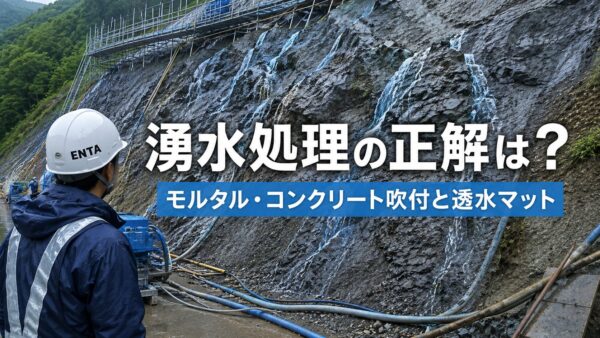
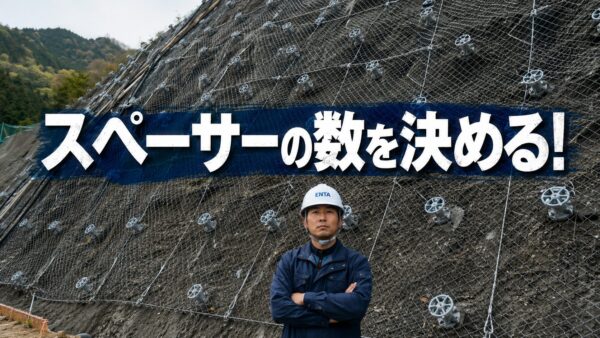
Whenever there's a spring, people tend to call it a "permeable mat" right away.
Hello, everyone. This is Enta.
On job sites where mortar or concrete is being sprayed, if water is seeping out of the natural ground, people sometimes say, “Shouldn’t we lay a drainage mat here?”
I understand how you feel.
Applying mortar directly to a spot where water is leaking will just cause more trouble down the road, won't it?
If they swell up and fall off, crack, or develop white efflorescence from calcium after you blow on them, it’ll be a hassle to explain later lol.
However, there’s one thing I’d like to consider here,The goal is not simply to lay the permeable matThat's the point.
The goal is to figure out how to drain the water from the natural ground.
How can we ensure that sprayed mortar and sprayed concrete adhere firmly to the natural ground?
Here it is.
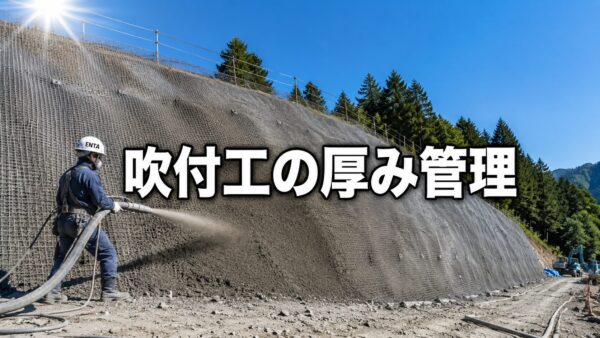
Mortar spraying and concrete spraying are construction methods in which materials are sprayed onto a target surface using compressed air (known as “shotcrete” overseas); these methods can be applied to vertical and overhanging surfaces.
In other words, this is a construction method where the ability to select the right materials and ensure they bond well with the natural ground surface are crucial.
It is extremely important to ensure that it is firmly secured to the natural ground.
So, what’s most frightening about a spring is not so much the fact that “there’s water” itself, but rather,
Creating pathways or spaces for water between the natural ground and the mortarThat's what I think.
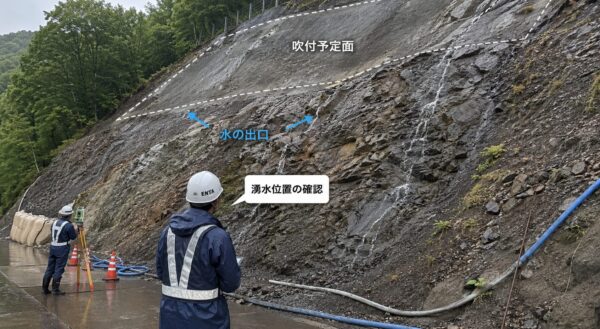
Basically, it comes down to whether you can get a tight fit.
Sprayed mortar and sprayed concrete are generally used as construction methods to cover the surface of natural rock and prevent weathering and minor rockfalls.
It’s important that the mortar and concrete adhere properly to the natural ground! (I’m saying this twice because it’s so important lol)
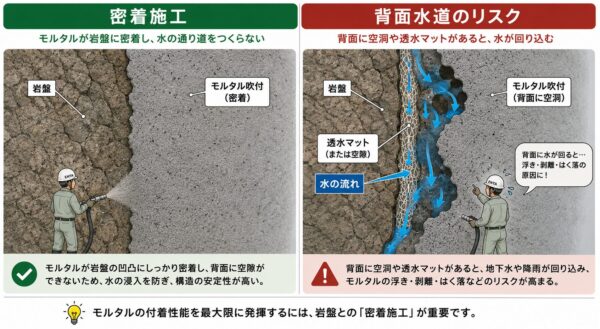
If there is a void between the natural ground and the sprayed concrete, it will become a water path.
What happens when the water level rises?
Water flows toward the side with lower pressure.
Joints in the natural rock, the underside of loose stones, inside the mat, and gaps on the back of the sprayed surface.
If a current forms in such a place, even if it looks well-finished from the outside, the underlying bedrock may gradually erode behind the scenes.
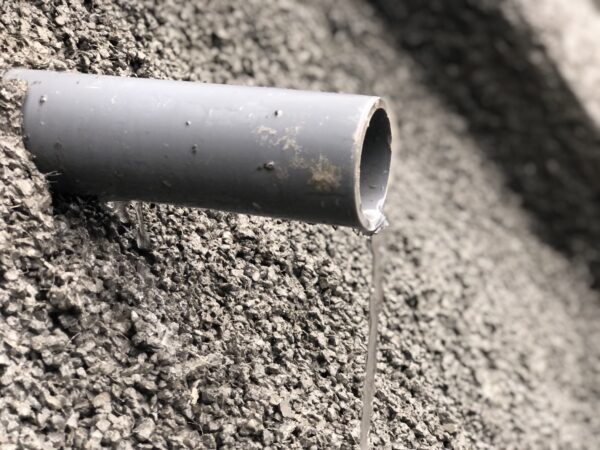
Therefore, if the spring water is only trickling and the bedrock is hard enough that the material won’t be washed away during spraying, decide on the water outlet first, and
The correct approach is to blow the concrete so that it adheres closely to the natural ground while allowing excess water to escape through drainage pipes or partial water diversion.
However, this depends on the conditions at the site.
Water volume, spring pressure, geology, joint orientation, winter freezing (environmental conditions), and the presence or absence of existing drainage systems. It would be wrong to conclude that “tight sealing is the correct solution” without considering these factors.
Use a rapid-setting agent, apply multiple thick layers, treat the spring seepage points first, or change the spraying order.
While there are options like this, it also depends in part on the craftsman's experience and skill.
It's not that the permeable mat is bad
I don't want you to get the wrong idea—I'm not saying that permeable mats are bad.
The idea of catching the water at the surface and directing it downward or to the side is reasonable.
In particular, when spring water seeps out over a wide area rather than from a single point, when the surface of the natural ground is constantly wet, or when direct spraying would wash away the material, it may be necessary to consider creating a drainage layer.
However, laying a mat intentionally creates a “drainage layer” between the natural ground and the mortar or concrete.
I hope this leads to an exit, but it's hard to tell with water, isn't it?
I made it, but it’s not uncommon to end up going the other way… lol
Measures must be taken to prevent water from pooling inside.
This is especially scary in cold regions.
Water expands when it freezes.
In addition, frost heave is more likely to occur when water supply, freezing temperatures, and soil and rock pore conditions align; as ice lenses grow, they exert upward pressure on pavement and structures.
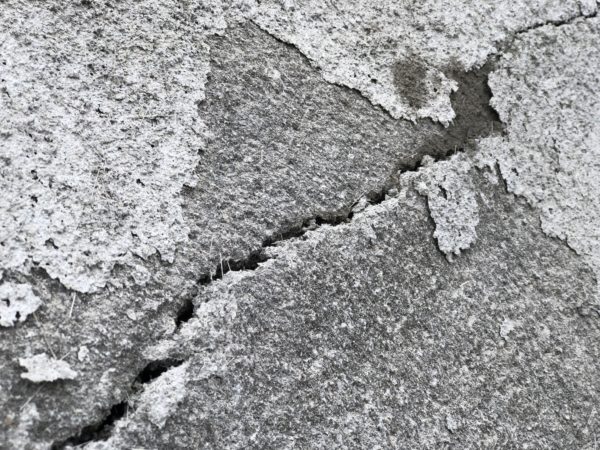
Water can similarly remain on the back side of the sprayed slope, and if it freezes and thaws repeatedly, this could very well cause cracks or delamination.
So, if you're going to use a permeable mat, rather than focusing on the "area to be covered,"Where to put the water in, and where to make sure it flows outYou should decide that first.
Decisions should be based on the volume of spring water and the shape of the surrounding terrain.
If it were me, I’d start by dividing the spring water into three parts.
The first type is water that comes out in small droplets. It’s the kind that trickles out from joints and cracks in the bedrock.
The goal here is to allow the water to escape through drain pipes or drainage materials without blocking the outlet, while ensuring the surrounding area is as tightly sealed as possible.
Rather than forcing a permeable mat to cover a large area, treating smaller spring outlets results in a neater finish and minimizes damage from freeze-thaw cycles. This is especially important in cold regions.
The second type is water that spreads across the surface. The entire surface becomes wet, making it difficult for the sprayed material to adhere.
If you try to do this using direct spraying alone, the material may get washed away during construction, or the initial adhesion may be unstable. You need to consider a permeable mat, a rapid-setting agent, and temporary drainage as part of the plan.
Also, if you dig out the mat area slightly to allow water to drain away and ensure it has sufficient thickness, it will be less prone to cracking even in areas prone to frost damage.
Third, water that feels pressurized. It gushes out when you poke a hole in it, increases suddenly after rain, and is cloudy. In this case, I’m hesitant to just dismiss it as a problem with the spray system.
You should also examine the water flow within the natural terrain, the upper catchment area, the poor condition of the existing drainage system, and the risk of landslides on the backside.
According to conventional wisdom on slope stability, rainfall, groundwater, and rising pore water pressure all affect slope stability.
At sites with high pore water pressure, it’s dangerous to focus only on surface treatment without also considering the drainage plan.
After all, since it will be sealed with mortar and concrete, there is a possibility that the pore water pressure will increase.
It's not a question of "permeable mat or tight-fitting," but rather,We'll thoroughly drain the water from the mountain using drainage drilling and other methods!
In cold regions, don't leave any water behind
At construction sites in cold regions, the approach to spring water treatment is slightly different.
In the summer, you might think, “Well, it’s flowing, so it’s fine,” but in the winter, that water freezes.
The outlet of the drain pipe freezes.
The bottom edge of the mat freezes. Water remains on the back of the sprayed coating. Then the freeze-thaw cycle begins.
If this continues to occur, it will lead to cracks, delamination, and peeling at the edges of the sprayed mortar and concrete.
Therefore, in cold regions, it’s not just a matter of “water flowing,” but also—Are the exits still clear, even in winter?I'll take a look.
Will the drainage outlet at the bottom get buried in snow? Will it become blocked by ice? Will the diverted water pool on the small terraces? Do the number and locations of the drainpipes correspond to the actual watercourse?
Listen to the sound of water at the site, look at the cracks in the rocks, and check them again after it rains.
If possible, take photos before and during construction.
Ultimately, when it comes to dealing with spring water, the key factors are “how to carry out the work” and “where the water was observed.”
Whether you lay a permeable mat or not, it all comes down to the water outlet in the end.
If you blow on it while leaving that part unclear, the neater the slope looks, the harder it will be to identify the cause later on.
Since it's a construction method that hides everything...
You can't fool anyone when it comes to the final treated water.
Where to apply pressure, where to release pressure, and where not to touch when using the spray technique.
I believe that whether or not we can make this decision on-site will have a significant impact on the final outcome of the spring water treatment in a few years.
See you later.
Treating Ground Anchor Heads When Groundwater Levels Are High | Preventing Rust with Caulking