

Hello, everyone.
This is Enta.
The other day, a Vietnamese employee at Enta who held a Specific Skilled Worker Type 1 visa obtained a Specific Skilled Worker Type 2 qualification!

He has always been a very hard worker and has been giving it his all ever since he came to Japan as a technical intern.
And then I got married, had a child, and earned my second license this year!
He's the best employee the company could ask for!!
Rights Under the Specified Skilled Worker (Category 2) Program
I think many of you aren't quite sure what the Specific Skilled Worker Category 2 visa is like, so I'll write about just how great it is.
First of all, the rights are completely different.
| Item | No. 1 | No. 2 |
|---|---|---|
| Period of Stay | A maximum of 5 years in total | No upper limit (can be renewed indefinitely) |
| Accompanied by Family | Not allowed | Eligible (spouse, children) |
| Obtaining Permanent Residency | Difficult to meet the requirements | May meet the requirements |
| Support Plan | Host Companies Must Comply | Not needed |
| Japanese Language Exam | Required | Exemption |
Since the Specific Skilled Worker (Category 2) visa can be renewed indefinitely, it is possible to obtain permanent residency if certain conditions are met.
This is the biggest draw for foreign skilled workers.
There are “two hurdles” to obtaining Specific Skilled Worker Category 2 status
First, let's outline the structure.
To obtain a Specific Skilled Worker Category 2 (Construction Sector) visa, you must meet the followingSatisfy both conditions at the same timeIt is necessary.
(1) Pass the skills test
② Gain practical experience as a team leader or foreman
You cannot submit your application unless you have both of these.
You can't do it with just one of them.
Even if you pass the exam, you're out if you don't have enough practical experience.
Even if you have plenty of practical experience, if you fail the exam, you're out.
In other wordsDual-WieldingWe have to go on the offensive.
This is the major difference from Specific Skilled Worker Category 1.
The Challenge of the Exam: Pass Rates Range from 13 to 421 TP3T, All in Japanese
The Specific Skilled Worker Category 2 Assessment Exam for the construction sector (administered by JAC—the Japan Construction Skills Human Resources Organization) is,
Written Exam + Practical ExamThis double feature consists of the following two films, each of which75% or higherYou pass if you achieve this correct answer rate.
So, what is the actual pass rate?Approximately 13–421 TP3TThat's right. (It's a really wide range, though...)
You could even say it's an exam where more than half the people fail, lol.
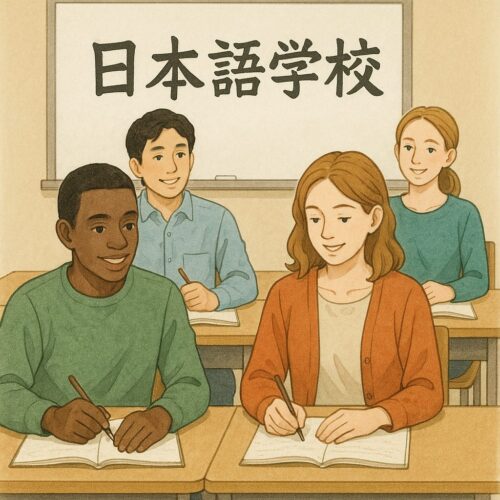
And all the questionsJapanese Onlywill be included in the exam.
While the Specific Skilled Worker Category 1 exam could be taken in the candidate’s native language, Category 2 offers absolutely no support in languages other than Japanese. (Well, there are furigana and it is written in hiragana.)
Not just the level of "being able to read and write kanji," butBe able to understand technical terms in Japanese and answer questions about themA certain level is required.
Read, think about, and write about civil engineering expertise in Japanese.
That's quite a high hurdle for foreigners, isn't it?
It's tough if you don't have a solid grasp of your job.
The Barrier of Practical Experience: Experience "as a team leader" is required
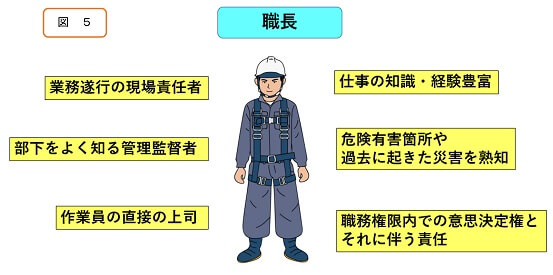
Along with the skills test, the practical experience requirement is another major hurdle.
Just having "on-the-job experience" isn't enough.
"Experience managing production processes while supervising multiple workers as a team leader or foreman"is required. (Well, this part does include the government’s ideal, lol.)
The specific number of days varies by job category, but for job categories covered by the Construction Career Up System (CCUS) competency assessment standards,Number of workdays equivalent to Level 3 (Foreman + Crew Leader)...is a rough guide.
In terms of slope systems,"Skilled Worker for Road and Other Slope Protection Work"This is an example of that. (It was just established last year, though.)
Job categories for which there are no CCUS competency assessment standards are:At least 3 years (645 days) of employmentis required.
What can prove that isAccumulation of Employment History in CCUSThat's it.
It's a good idea to do this at sites with CCUS.
There aren't many sites like that right now, though lol
That said, it seems you can get it if you already have Level 1 (and the company provides proof?)
Passing the CCUS Level 3 exam makes it easier to prove your practical experience.
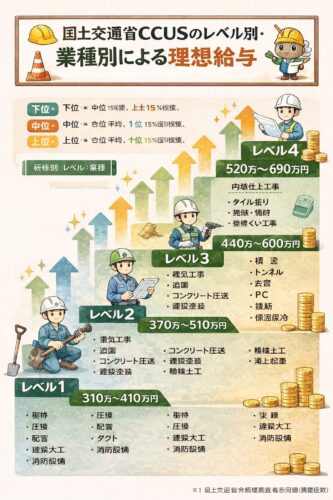
CCUS has a skills assessment system for technicians, with levels ranging from 1 to 4.
- Level 1 (White Card): Entry-Level Technician
- Level 2 (Blue Card): Mid-level Skilled Worker
- Level 3 (Silver Card): Foremen and Team Leaders
- Level 4 (Gold Card): Individuals with advanced management skills
The practical experience requirement for Item 2 is thisEquivalent to Level 3That's it.
So, if you can officially obtain a Level 3 certification (level assessment), all you need to do is submit a copy of the “Notification of Ability Assessment (Level Assessment) Results,” and
Apparently, there will be no need to prepare detailed employment history certificates or tax returns.
Proving your work experience just got a whole lot easierTherefore, it’s best to get a head start on applying for CCUS level certification.
Preparations Host Companies Should Make
If you’ve hired a foreign national under the Specified Skilled Worker Category 1 program but plan to help them advance to Category 2, there are steps you should take right away.
① Accumulate as comprehensive a record of CCUS work experience as possible
② Intentionally assign them to work sites where they can gain experience as a team leader or foreman
③ Integrate Japanese language education
The exam is in Japanese only. If you don’t improve your Japanese proficiency during the five-year Specific Skilled Worker (Category 1) period, you’ll hit a wall once you start studying for the exam.
The period of stay for Specific Skilled Worker Category 1 isUp to 5 years. If I let those five years pass without doing anything, I’ll have to return to Japan without being able to switch to Status No. 2.
Only those who prepare properly can get No. 2.That's how the system works.
It’s certainly not the kind of thing where “anyone can pass if they try hard enough,” but if companies provide solid support,It's not like it's a certification you can't get。
We’d love for our top employees to get their Type 2 certification and really go all out in Japan, wouldn’t we?
How are the technical interns and specific skilled workers at your company doing?
See you later.