

Hello, everyone.
This is Enta.
This is a story from when I was in Nepal the other day. I was talking with the company president who was with me about the future of technical intern trainees and my past experiences in Japan.
In that sense, technical interns are kind of like apprentices, aren't they?
And that's how the conversation went...
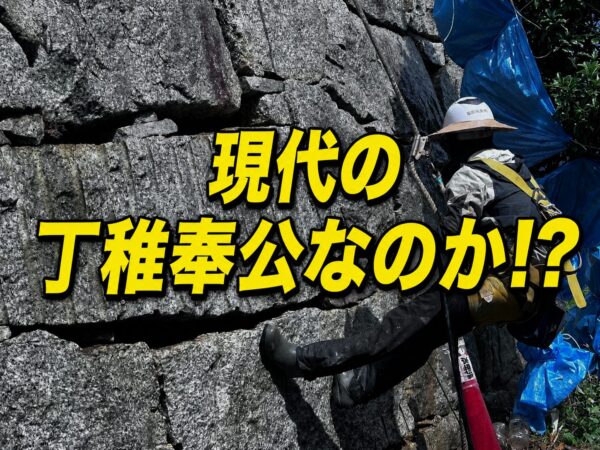
"Dechibōkō"—you know what that is, right?
You know that thing you see in period dramas—where you move in with a shop or a craftsman’s family, get paid almost nothing, and get worked to the bone while learning the trade? lol
So, it just occurred to me.
"Huh? Doesn't this look a lot like the Technical Intern Training Program?"

But that's beside the point.
This time, let’s take a break from the topic of construction and talk about “apprenticeships” and “technical interns”—they seem similar, but what’s the difference?
So, I’d like to share my personal thoughts on how the technical intern training program might change in 2027.
What exactly was an apprenticeship in the first place?
First, there’s apprenticeship.
An apprenticeship was a system that existed from the Edo period through the early Shōwa period, in which young people lived in the homes of merchants or artisans and learned the trade or craft while performing various chores.
When it comes to famous people, Konosuke Matsushita of Matsushita Electric (now Panasonic) is probably the most representative figure! (A true giant.)
Salary?
There are almost none.
To be precise, it seems that in reality, the employer took care of their clothing, food, and housing, while they received irregular payments amounting to little more than pocket money (according to online research).
I can only go back to my parents' house a few times a year.
I work from morning till night.
Even so, it is said that at the time, finding a place to work was considered a stroke of luck.
Why?
It was because they could learn the trade, and if they were lucky, they could open their own shop through a “noren-wake” arrangement.
Konosuke Matsushita was a man who started out as an apprentice at a brazier shop and a bicycle shop when he was nine years old, and built his fortune from there.
In other words, the apprenticeship system had two sides to it: it was both a form of “exploitation through unpaid labor” and a “stepping stone to gaining skills and becoming independent”!
Looking back now, it’s an astonishing mechanism, but it makes perfect sense, doesn’t it?
The point is that technology doesn't come for free.

Why Did Apprenticeships Become "Illegal"?
Apprenticeship labor would be illegal in Japan today.
We were telling this story to some Nepalese people, and as we were talking, we looked it up and found out about it for the first time ourselves lol.
It seems that Article 69 of the Labor Standards Act, which came into effect in Showa 22 (1947), is the issue here.
If you break down the text of the provision, it essentially means the following:
"Employers shall not overwork workers—whether they are called apprentices, trainees, or trainees in training, or by any other name—solely on the grounds that they are seeking to acquire skills."
In other words,
"Since I'm teaching you the skills, you don't get paid."
"Since this is part of your training, you should work for free."
So this one has finally given out.
"If you're so eager to teach people these skills, pay them the minimum wage first."
That seems to be the intent of this law. (It’s hard to find the right words when it comes to this part...)
In short, this means the government has banned “cheap labor under the pretext of skills training.”
This part is super important.
Please keep this in mind.
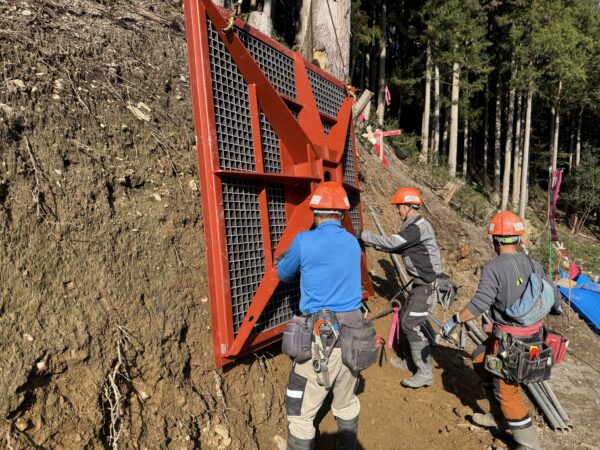
Don't technical interns look a lot like this?
Let's take a look at technical interns here.
The Technical Intern Training Program was originally launched under the pretext of “contributing to developing countries.”
"The idea is for them to learn Japanese technology and take it back to their home countries," he said.
The actual process.
・Young people from other countries come to Japan
・Learning technical skills on the job in Japan
・Get paid
・Send part of that salary to their parents back home
・Eventually learn the skills and return to their home country, or stay in Japan to earn a living
………。
Huh?
Does this look familiar to you?↑↑↑w
"Work While Learning the Skills"
"Leaving home and working hard while living on-site"
"Send the money I earn to my parents"
It totally has the vibe of a modern-day apprenticeship, doesn't it? lol
What's more, they say that if the trainees work hard and send money home, their parents back in their home country can live comfortably.
It’s exactly like that classic story where an apprentice works hard and eventually returns home in triumph, isn’t it!
We were talking about the trainees' futures, and the conversation turned to, "This is just like an apprenticeship here!!"
The key difference is that you get paid.
However, there is one crucial difference.
Technical trainees actually get paid, lol (Well, duh, lol).
The minimum wage applies. (But the reality is that people won’t come to work for the minimum wage.)
So this is where Article 69 of the Labor Standards Act comes into play, isn't it?
Since “you get paid,” it isn’t considered “illegal” like an apprenticeship.
To put it another way, if you don’t even pay the minimum wage, it’s not a technical internship or anything of the sort—it’s simply illegal exploitation.
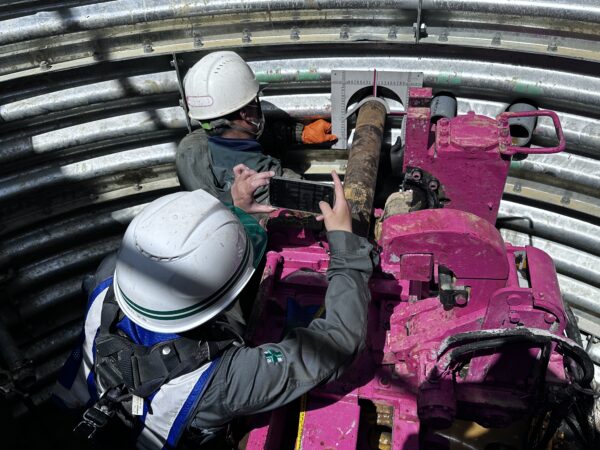
We get paid. But the “structure” is still similar.
But to say that everything is solved just because we’re getting paid—well, to be honest, it’s not quite that simple.
The Technical Intern Training Program has long been the subject of various criticisms.
"High number of disappearances," "In reality, they are being used as cheap labor," "slavery," "human rights violations"
I think anyone in this industry has heard comments like this at least once.
In other words, while we’ve crossed the line of “getting paid,” the question remains: “Isn’t this just cheap labor under the guise of learning a skill?”
In fact, we’re still facing the same issues that led to the practice of apprenticeships being outlawed.
This is actually the part that bothers me the most.
In a workplace like ours, foreign workers really do work hard.
They're hardworking, and everyone is really trying their best to learn the job!
But when it comes to whether the receiving side is truly serious about having that person “seriously bring Japanese technology back home”... honestly, I think there are a lot of companies where that’s questionable.
We run a slope stabilization company. Do you guys do this overseas?
Are there any developing countries that are setting anchors?
When you put it that way, I do have my doubts.
"We're asking you to come in because we're short-staffed."
"Japanese people don't go into this industry, but foreigners work hard, so that's a big help."
"I don't have high expectations for young Japanese people."
There are actually quite a few companies where this is the real story. Unfortunately.
In that case, even if the program is billed as “acquiring skills for international contribution,” in reality, it comes very close to being a “modern-day apprenticeship.”
The point is that if there’s no intention to teach the skills, all that’s left are the negative aspects of the old apprenticeship system.
That said, a recent trend is that the top performers—those who have transitioned from foreign silk trainees to the “Specified Skilled Worker” status—are now serving as foremen.
Companies are rapidly passing on their technologies to them.
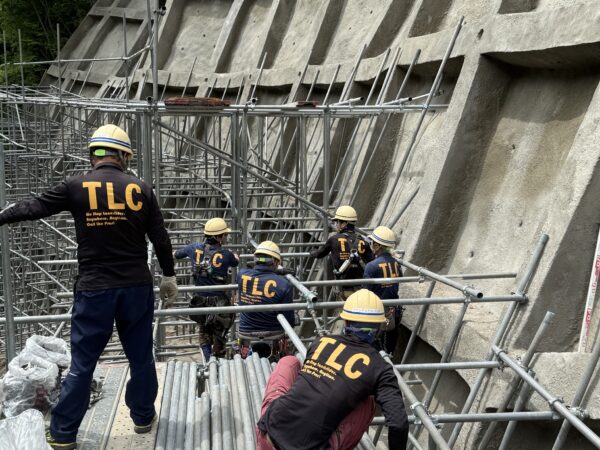
In 2027, this “modern-day apprenticeship” will be reevaluated
Actually, it has already been decided that the Technical Intern Training Program will be abolished.
It has been officially decided that the amended law will be enacted in 2024, the Technical Intern Training Program will be abolished, and the system will transition to the new “Skills Development and Employment Program.”
The effective date is April 1, 2027.
This was decided at the Cabinet meeting on September 26, 2025. Well, I suppose it’s because of the strong public criticism.
That said, the voices of outsiders who have nothing to do with our industry or technical interns have been amplified by the media’s biased reporting, and
I kind of get the feeling this might be a situation where we have no choice but to make a change...
So, what exactly is changing with this child-rearing leave system? To put it simply...
・Abandoning the "international contribution" that was merely a pretext, and focusing instead on "recruiting and developing talent"
・To allow for "transfer of registration" based on the individual's own wishes, subject to certain conditions
In other words, we are clearly shifting course from the previous approach of “learning the skills and returning to their home countries (at least in theory)” to one of “properly training them in Japan so they can become productive members of the workforce here.”
Apprenticeship offered a path to independence through “noren-wake” (branching off from the master’s business).
With career development employment, there’s an option called “transfer,” which allows you to choose a new workplace on your own. (Since job types can be a good or bad fit for different people, I think this is a great system.)
So the general approach is, “Don’t keep people tied down in jobs that aren’t a good fit for them indefinitely.”
It really makes you reflect on how history just keeps going around in circles, changing form but always coming back to the same place, doesn't it?
Ultimately, it comes down to whether those on the receiving end are prepared to accept it.
The reason why apprenticeships became illegal is simple.
"Don't exploit people by making them work long hours for low pay under the pretext of teaching them a skill."
That's all.
I believe the root cause of the criticism directed at technical interns is essentially the same.
"Aren't they exploiting people under the guise of contributing to the international community?"
And starting in 2027, the "work-based education" system will do away with that very premise,
This system is designed to directly address the goal of “properly developing players and turning them into effective contributors.”
Basically, what you're saying is, don't try to pull the wool over our eyes and make us do nothing but menial tasks!
Unfortunately, it is true that there are some unscrupulous businesses out there.
At sites like ours, where we work on slopes, we're going to face an even greater labor shortage going forward.
As I’ve mentioned before, while the number of disasters continues to rise, the demand for slope stabilization work shows no signs of slowing down.
But the number of people who can do it is steadily decreasing.
That's why we absolutely need the help of foreign workers now.
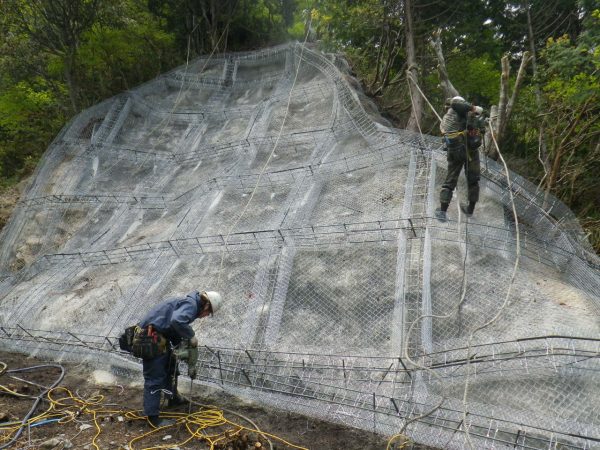
Even when it came to apprenticeships, while there were some bad places to work, there were also places like the one that nurtured Konosuke Matsushita.
Ultimately, no matter how the system changes, I think what really matters in the end is the resolve of those of us on the receiving end.
Whether they take their skills back home or choose to stay in Japan, we want to create a workplace where they feel, “I’m glad I learned this at that company.”
I’m not really in a position to talk down to anyone either, though, lol.
But then again, I realized that creating that kind of work environment is the key to the construction industry’s survival going forward.
What do you all think?
See you later.