Hello, everyone.
This is Enta.
Did you know?
Shin-Ent's Slope Management School has been getting more global lately, and it's being translated into various languages and shared all over the world lol.
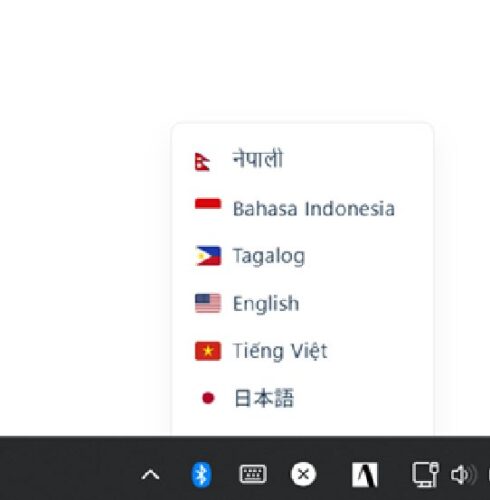
You can select a language at the bottom right!
Nepali
Indonesian
Tagalog
English
Vietnamese
It really happened just the other day, though.
The reason is quite clear: the parents of our technical intern trainees are reading our blog!!!!
That's so exciting, isn't it?
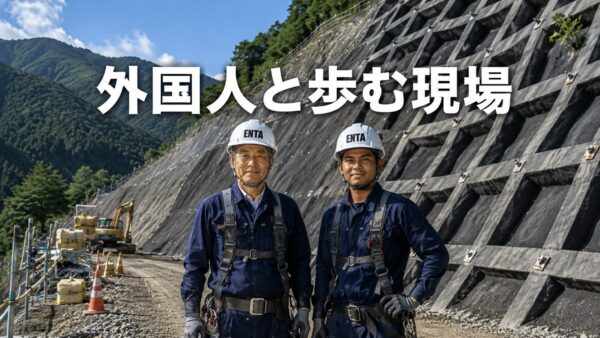
Previously, when I went on my second home visit, I was asked to post more photos of my son at work.
After all, as parents, you’d naturally want to see what kind of workplace your son is working in now that he’s moved overseas, right?
Especially my mom keeps telling me to post lots of stuff, lol.
But that's beside the point.
But my goal isn't just to post photos.
What I really want you to know about are the construction methods and standards used in Japan.
Standards for formwork construction, standards for rebar installation, various measurement methods, and “Why are we doing this?”
I've tried to make it so that if you read the blog posts in order, you'll get a general idea of what's going on in this area.
The number of foreign workers is going to keep increasing.
I hope that you’ll work on-site with a solid understanding of Japanese construction practices, even if it’s just a little.
The number of foreign workers is really increasing rapidly.
I'm not just saying this based on my own feelings.
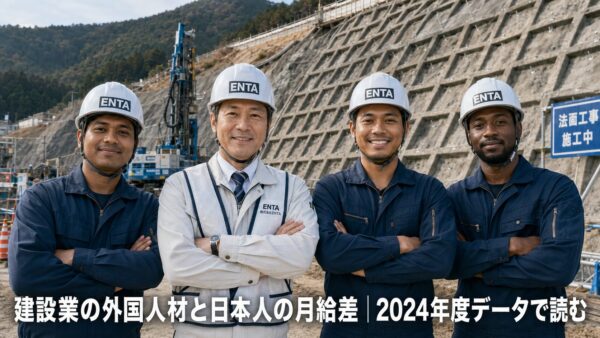
According to industry data based on the Ministry of Health, Labor and Welfare’s “Status of Foreign Worker Employment” reports (as of the end of October Reiwa 6), there are approximately 178,000 foreign workers in the construction industry, representing a 22.7% increase from the previous year.
Since the figure for 2014—10 years ago—was apparently about 21,000, that means the number has grown to roughly 8.5 times that level over the past 10 years.
Broken down by residence status, it appears that 107,000 people—about 60 percent—are employed under the “Technical Intern Training” status, while 37,000 people—about 20 percent—are employed in “specialized and technical fields.”
By nationality, Vietnam is said to have the largest number, at approximately 70,000, followed by Indonesia with 37,000.
The percentage of foreign workers among the total workforce in the construction industry has also been rising year by year, and it appears to have reached 3.73% as of Reiwa 6.
Behind this trend lies the aging of the workforce and a sharp decline in the number of young artisans.
It’s now inevitable that the veteran employees currently with us will leave in droves 10 or 20 years from now.
Even setting the statistics aside, I think you’ve all noticed firsthand that the number of young foreign workers on construction sites is steadily increasing.
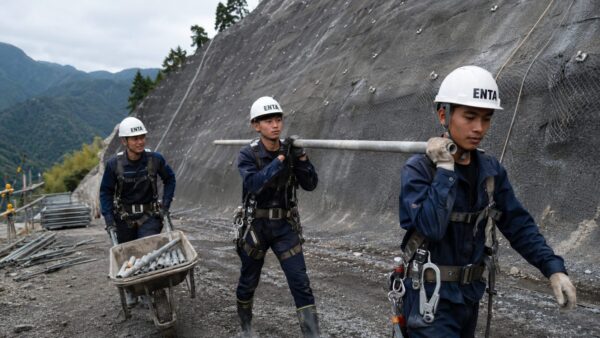
What Will Change Under the “Child-Rearing Work Support System”?
One thing you should know here is the change in the system.
The long-standing Technical Intern Training Program is scheduled to transition to the “Skills Development and Employment Program” on April 1, 2027.
While the Technical Intern Training Program was ostensibly based on the principles of “international contribution and skills transfer,” the Training and Employment Program is reportedly a system that clearly states “securing and developing human resources” as its objective.
The program is designed to develop trainees to the Level 1 Specific Skills standard within three years, in principle, and then transition them directly into the Specific Skills program.
It should be noted that the transition will not happen all at once; following the enactment of the law, a transition period of approximately three years will be established, and it is expected that the Technical Intern Training Program and the Skilled Worker Program will coexist until around 2030.
Another major factor is a transfer to another company.
While transfers for personal reasons were generally not permitted under the Technical Intern Training Program, they are now expected to be permitted under the Skills Development and Employment Program, subject to certain conditions.
In other words, the focus is shifting from hiring people who come for a short time and then leave to hiring people with the expectation that they will work in Japan for the long term.
From our perspective as those welcoming new members, we feel that this system places even greater emphasis on “training them and helping them settle in” than ever before.
However, on the flip side, there is also the risk that if the company is a bad fit, you won’t be selected.
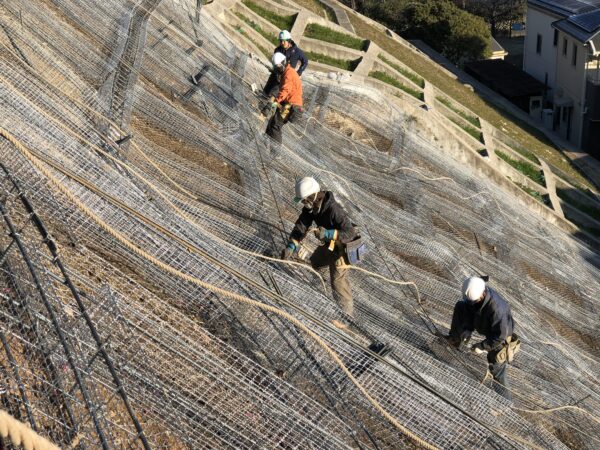
I want to explain the standards, measurements, and the reasons behind them.
That’s why I write about standards, construction methods, and tips on my blog.
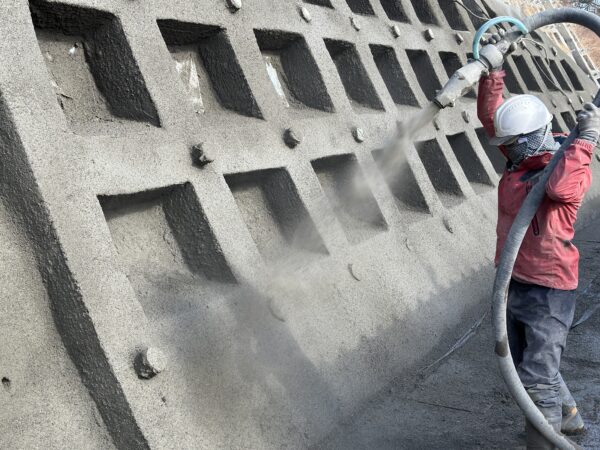
For example, formwork for the on-site spray-casting method.
The cross-sectional dimensions of the frame, the number of reinforcing bars, and the center-to-center spacing are specified in the design drawings and the special specifications.
The finished product turns out completely different depending on whether you just “put it together roughly” or assemble it with an understanding of why those specific dimensions are used. (From the recent “Unity of Knowledge and Action”)
The same applies to rebar installers (rock bolt installers).
There is a specific reason behind the measurement and construction methods for each of these steps: drilling depth, anchoring, and grout injection.
What is the real purpose of what we're doing on-site?
Why are we doing this?
You won't know unless you verify it with your own eyes, the numbers, and your actions.
Even if we can't communicate perfectly, standards and numbers know no borders, right?
"How many millimeters is this?" "What does this measurement mean?" "What is the purpose of this installation?"
If this message gets across, foreign craftsmen will be able to carry out the work with confidence.
As a general guideline, students are expected to have a Japanese language proficiency level of N5 or equivalent at the start of the program and N4 or higher upon completion, so
I think it would be most practical to start by presenting the numbers, charts, and real-life examples.
Personally, I believe that on-site, rather than giving long explanations, the most effective approach for a supervisor is to mark measurements on the blueprints and demonstrate how to measure them together, or to have the workers carry out the work together.
Even if only half of what you say gets through, this makes it easier to get your point across.
To be honest, I don’t think drawing a line between “foreigners” and “Japanese” really makes much sense anymore in the field.
A good craftsman is someone who does good work—it’s as simple as that.
My blog has been translated into various languages, and a mother from overseas has been able to see her son’s workplace and, while she’s at it, learn about Japanese standards and know-how.
It's easier to handle things when you know about them in advance, isn't it?
If that kind of trend became the norm, nothing would make me happier.
It’s not exactly a spectacular story, but I believe that continuing to share our message, little by little, is the best preparation we can make.
By the way, the translation doesn't happen all at once lol
Since I post about 10 articles a day, it takes some time, so please bear with me for a while ^^;
See you later.
On the Crime of Facilitating Illegal Employment | Points to Note When Hiring Foreign Workers