Hello, everyone.
This is Enta.
"He's quiet, but he gets the job done." "The quieter someone is, the more trustworthy they are."
This is a phrase I hear a lot on the job, lol.
On the other hand, there are also quiet people who get on others’ nerves—people who are told things like, “I have no idea what you’re thinking” or “Stop keeping quiet and tell us what’s going on.”
The same personality trait might be praised in one situation but criticized in another.
I’ve always felt that this isn’t so much a matter of personality as it is simply a case of people being treated differently based on the convenience of those doing the evaluating.
So in this post, I’ll take an objective look at the question, “Are quiet people really strong on the job?”—without relying on mere intuition.
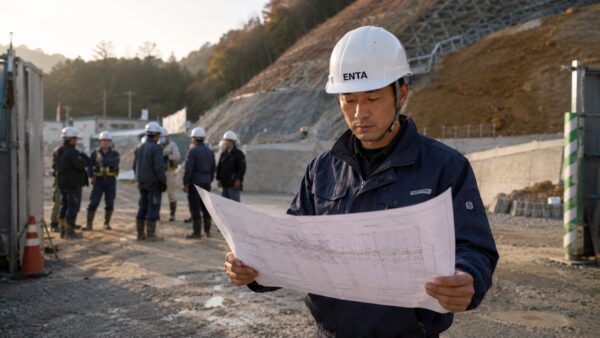
Is It True That “Quiet People Are Good at Their Jobs”?
To put it simply, there is no direct link between personality traits and job performance.
As I looked into various things online, I found that according to analyses of the Big Five (five-factor model) in psychology,
The trait that best predicts job performance is “conscientiousness,” with a correlation coefficient of around ρ = 0.19. (I’m totally lost at this point… lol)
On the other hand, the correlation between extraversion and job performance is around ρ = 0.10, which is about half that of conscientiousness (Oh, right...)
Research suggests that “being serious and persistent” has a greater impact on work performance than “being quiet or talkative.”
Even though I think, “Well, that makes sense,” it’s the same on the job, too.
In my 30 years of experience, the most reliable craftsmen were the “quiet and sincere” type.
However, there are also people who are “quiet and careless—or rather, quiet and do nothing”—and it’s impossible to get any work done with them.
So it seems that whether or not someone is sincere matters more than their personality!
It's okay as long as they're sincere, even if they're chatty, lol.
The Strengths of Quiet People | 3 Tips That Really Work in the Field
That said, there are certainly advantages to being quiet by nature.
① Less likely to cause unnecessary mistakes。
Since the time spent talking is short, it’s harder to lose focus while working.
This is a huge advantage in situations where a moment’s concentration—such as when checking items between different work tasks—can mean the difference between an accident and safety.
② Less likely to cause interpersonal conflicts。
Since there are few slip-ups, conflicts among craftsmen and friction with the general contractor are less likely to occur.
The longer the project, the more this calmness benefits the team.
③ They tend to master new skills quickly。
It's because they spend more time "observing" and "imitating" rather than talking.
I get the impression that quiet, young workers often pick up tasks that rely on instinct—such as trowel finishing for sprayed concrete formwork or operating machinery—more quickly than others.
Anyway, I’m definitely paying close attention! (Though there are some people who just zone out while pretending to watch, lol.)

The Drawbacks of Being a Quiet Person: Two Issues That Cause Real Problems in the Workplace
On the other hand, I’ll be honest about the downsides as well.
If you try to gloss over this, it'll be a bit of a hassle on site, lol.
① Delays in reporting, communicating, and consulting。
This is the biggest one.
According to data from the Ministry of Health, Labor and Welfare on the causes of workplace accidents, more than 90% of such accidents are attributed to “unsafe acts and unsafe conditions” (which is just common sense, isn’t it?).
Many of these “unsafe conditions” involve cases where someone was aware of the issue but did not report it.
People who are quiet tend to keep their judgments to themselves, thinking, “They’ll figure it out without me saying anything” or “I’ll just say it later,” and if this is delayed, it can quickly lead to an accident.
② They are more likely to be at a disadvantage when it comes to promotions and evaluations。
This may sound blunt, but research apparently shows that introverts tend to have a harder time exhibiting “leader-like behavior,” which lowers their chances of getting promoted!
Even though he is praised on the job for “quietly doing good work,” he is rarely recommended by site representatives or foremen.
This is less a matter of the individual's responsibility and more a matter of how the evaluator perceives the situation, but it does put the individual at a disadvantage in reality.
To Empower or Crush Quiet Employees? | It All Depends on How the Company Uses Them
I believe that whether a quiet employee succeeds or fails depends more on the "manager" than on the employee's personality.
If you simply ask everyone during morning meetings or KY activities, “Please speak up if you notice anything,” you’ll never get any input from quiet people.
This is a personality issue; it's not the person's fault.
Ask them directly, have them write it down, or briefly confirm it one-on-one before starting the task.
If you put such a system in place, the observational skills of quiet people can actually serve as a safety net for the team. (That’s what people commonly refer to as “the ability to ask questions”!)
Conversely, under managers who jump to the conclusion that silence means “a lack of motivation,” talented, quiet craftsmen will leave one after another.
Personally, I feel that there are really a lot of companies that are losing employees here.
There are plenty of quiet, skilled craftsmen out there! But even though they know full well that their work isn’t easily recognized, it’s not like they can just change that, is it!?
That's why there are often problems on the part of leaders and supervisors, right?
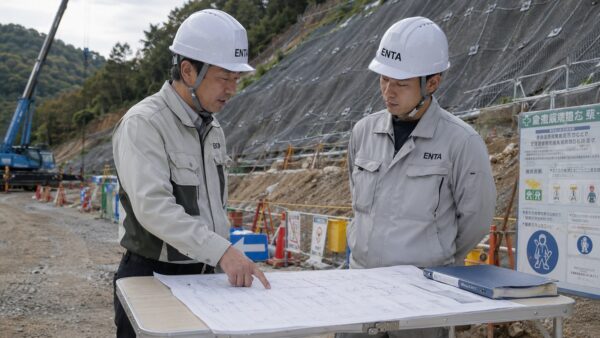
Things for Quiet People to Keep in Mind | The Bare Minimum Step
Conversely, it’s also clear what the quieter person should do to avoid being at a disadvantage in the workplace.
"Say just one brief thing right then and there about whatever you notice."。
That's all.
You don't have to talk for a long time, and you don't have to force yourself to act cheerful.
"There's a little water leaking here." "The anchor is out of position."
Whether or not that one phrase is said can make all the difference in terms of both evaluation and safety.
This isn't about changing your personality; it's about adding one more action to your routine.
Staying true to my quiet nature, I’ll just send a brief report.
People who can do this are highly valued on the job for a long time.
It just means you should keep working hard even if you're quiet, lol.
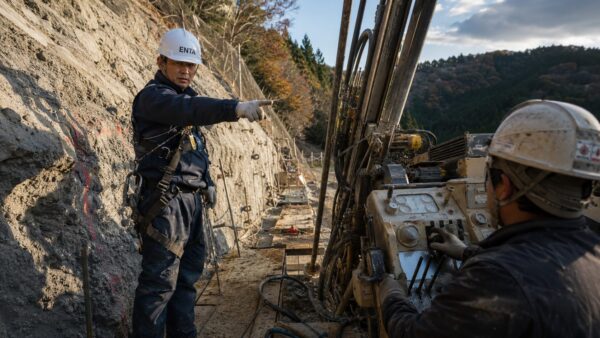
Both the idea that “being quiet makes you unsuitable for the field” and the idea that “being quiet means you have the right craftsman’s temperament” are crude generalizations.
The outcome depends more on sincerity and whether you can manage to say at least a few words than on your personality itself.
I feel that it’s in the best interest of both employers hiring quiet people and the quiet people themselves not to misunderstand this point.
See you later.