

Hello, everyone.
This is Enta.
This is a continuation of the previous post.
In Part 1, we looked at the compensation amounts paid when a Japanese office worker dies in an accident (typically ranging from 65 million to 100 million yen) and the top 20 countries in the global ranking of the value of human life.
Japan ranked 19th with approximately 680 million yen.
Although it ranks in the middle, safety management at the worksite is said to be among the best in the world.
This time,Rankings for All 188 Countries in the Worldand the current state of workers' compensation in developing countries,
Next, I’ll write about why people keep harping on safety so much—specifically, the idea that “a workplace accident can easily put a company out of business.”
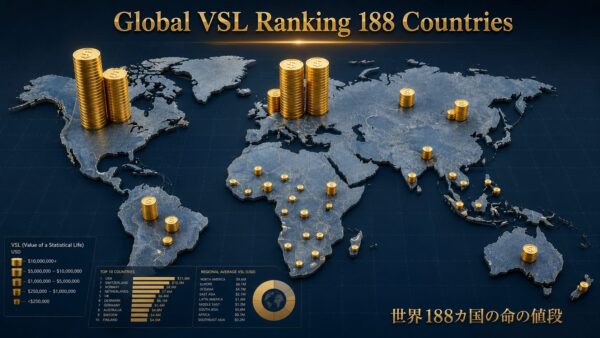
The Complete Ranking of the Value of Life in 188 Countries Around the World
The following are VSL estimates for 188 countries worldwide, based on the World Bank’s 2015 GNI per capita data, as reported by Viscusi & Masterman (2017).
The baseline figures are calculated using U.S. values of $9.6M and an income elasticity of 1.0.
The yen conversion is a reference value calculated at an exchange rate of 150 yen per dollar.
(Source: Viscusi, W.K. & Masterman, C.J., 2017, “Income Elasticities and Global Values of a Statistical Life,” Journal of Benefit-Cost Analysis)
| Rank | 国 | VSL (in millions of USD) | Converted to yen (100 million yen) |
|---|---|---|---|
| 1 | Bermuda | 18.26 | 27.4 |
| 2 | Norway | 16.13 | 24.2 |
| 3 | Isle of Man | 14.67 | 22.0 |
| 4 | Switzerland | 14.56 | 21.8 |
| 5 | Qatar | 14.45 | 21.7 |
| 6 | Luxembourg | 13.25 | 19.9 |
| 7 | Macau | 11.56 | 17.3 |
| 8 | Australia | 10.34 | 15.5 |
| 9 | Denmark | 10.07 | 15.1 |
| 10 | Sweden | 9.97 | 15.0 |
| 11 | United States | 9.63 | 14.4 |
| 12 | Ireland | 9.05 | 13.6 |
| 13 | Singapore | 8.96 | 13.4 |
| 14 | Iceland | 8.63 | 12.9 |
| 15 | The Netherlands | 8.41 | 12.6 |
| 16 | Canada | 8.18 | 12.3 |
| 17 | Austria | 8.16 | 12.2 |
| 18 | Finland | 8.01 | 12.0 |
| 19 | Germany | 7.90 | 11.9 |
| 20 | Belgium | 7.61 | 11.4 |
| 21 | United Kingdom | 7.47 | 11.2 |
| 22 | Andorra | 7.44 | 11.2 |
| 23 | United Arab Emirates | 7.41 | 11.1 |
| 24 | Kuwait | 7.25 | 10.9 |
| 25 | Hong Kong | 7.05 | 10.6 |
| 26 | France | 6.98 | 10.5 |
| 27 | New Zealand | 6.89 | 10.3 |
| 28 | Japan | 6.68 | 10.0 |
| 29 | Brunei | 6.54 | 9.8 |
| 30 | Israel | 6.15 | 9.2 |
| 31 | Italy | 5.65 | 8.5 |
| 32 | Spain | 4.91 | 7.4 |
| 33 | South Korea | 4.72 | 7.1 |
| 34 | Cyprus | 4.47 | 6.7 |
| 35 | Malta | 4.12 | 6.2 |
| 36 | Saudi Arabia | 4.05 | 6.1 |
| 37 | Slovenia | 3.82 | 5.7 |
| 38 | The Bahamas | 3.57 | 5.4 |
| 39 | Portugal | 3.53 | 5.3 |
| 40 | Greece | 3.50 | 5.2 |
| 41 | Bahrain | 3.41 | 5.1 |
| 42 | Puerto Rico | 3.32 | 5.0 |
| 43 | Estonia | 3.16 | 4.7 |
| 44 | Czech Republic | 3.12 | 4.7 |
| 45 | Trinidad and Tobago | 3.04 | 4.6 |
| 46 | Slovakia | 3.02 | 4.5 |
| 47 | Oman | 2.91 | 4.4 |
| 48 | Uruguay | 2.71 | 4.1 |
| 49 | Nauru | 2.65 | 4.0 |
| 50 | St. Kitts and Nevis | 2.59 | 3.9 |
| 51 | Latvia | 2.58 | 3.9 |
| 52 | Lithuania | 2.57 | 3.9 |
| 53 | Seychelles | 2.54 | 3.8 |
| 54 | Barbados | 2.50 | 3.7 |
| 55 | Chile | 2.43 | 3.6 |
| 56 | Poland | 2.30 | 3.4 |
| 57 | Antigua and Barbuda | 2.28 | 3.4 |
| 58 | Hungary | 2.23 | 3.4 |
| 59 | Equatorial Guinea | 2.21 | 3.3 |
| 60 | Croatia | 2.19 | 3.3 |
| 61 | Argentina | 2.14 | 3.2 |
| 62 | Palau | 2.10 | 3.1 |
| 63 | Panama | 2.04 | 3.1 |
| 64 | Russia | 1.97 | 3.0 |
| 65 | Kazakhstan | 1.96 | 2.9 |
| 66 | Malaysia | 1.82 | 2.7 |
| 67 | Costa Rica | 1.79 | 2.7 |
| 68 | Turkey | 1.71 | 2.6 |
| 69 | Brazil | 1.70 | 2.5 |
| 70 | Mauritius | 1.68 | 2.5 |
| 71 | Mexico | 1.67 | 2.5 |
| 72 | Romania | 1.63 | 2.4 |
| 73 | Suriname | 1.61 | 2.4 |
| 74 | Gabon | 1.58 | 2.4 |
| 75 | Grenada | 1.49 | 2.2 |
| 76 | China | 1.36 | 2.0 |
| 77 | Lebanon | 1.33 | 2.0 |
| 78 | Bulgaria | 1.29 | 1.9 |
| 79 | Turkmenistan | 1.27 | 1.9 |
| 80 | Saint Lucia | 1.27 | 1.9 |
| 81 | Montenegro | 1.24 | 1.9 |
| 82 | Colombia | 1.23 | 1.8 |
| 83 | Maldives | 1.20 | 1.8 |
| 84 | Dominica | 1.17 | 1.8 |
| 85 | Saint Vincent | 1.14 | 1.7 |
| 86 | Azerbaijan | 1.13 | 1.7 |
| 87 | Iran | 1.13 | 1.7 |
| 88 | Belarus | 1.11 | 1.7 |
| 89 | Botswana | 1.11 | 1.7 |
| 90 | Dominican Republic | 1.07 | 1.6 |
| 91 | Tuvalu | 1.07 | 1.6 |
| 92 | Peru | 1.06 | 1.6 |
| 93 | South Africa | 1.05 | 1.6 |
| 94 | Ecuador | 1.04 | 1.6 |
| 95 | Iraq | 1.00 | 1.5 |
| 96 | Thailand | 0.98 | 1.5 |
| 97 | Serbia | 0.95 | 1.4 |
| 98 | Namibia | 0.89 | 1.3 |
| 99 | North Macedonia | 0.88 | 1.3 |
| 100 | Jamaica | 0.87 | 1.3 |
| 101 | Algeria | 0.84 | 1.3 |
| 102 | Fiji | 0.83 | 1.2 |
| 103 | Marshall Islands | 0.82 | 1.2 |
| 104 | Jordan | 0.81 | 1.2 |
| 105 | Bosnia and Herzegovina | 0.80 | 1.2 |
| 106 | Belize | 0.77 | 1.2 |
| 107 | Tonga | 0.74 | 1.1 |
| 108 | Albania | 0.74 | 1.1 |
| 109 | Paraguay | 0.72 | 1.1 |
| 110 | Angola | 0.72 | 1.1 |
| 111 | Georgia | 0.72 | 1.1 |
| 112 | Guyana | 0.70 | 1.1 |
| 113 | Tunisia | 0.69 | 1.0 |
| 114 | Kosovo | 0.68 | 1.0 |
| 115 | El Salvador | 0.68 | 1.0 |
| 116 | Samoa | 0.68 | 1.0 |
| 117 | Armenia | 0.67 | 1.0 |
| 118 | Mongolia | 0.67 | 1.0 |
| 119 | Sri Lanka | 0.65 | 1.0 |
| 120 | Guatemala | 0.62 | 0.93 |
| 121 | Federated States of Micronesia | 0.61 | 0.92 |
| 122 | Philippines | 0.61 | 0.92 |
| 123 | Indonesia | 0.59 | 0.89 |
| 124 | Egypt | 0.58 | 0.86 |
| 125 | Cape Verde | 0.56 | 0.85 |
| 126 | Eswatini | 0.56 | 0.85 |
| 127 | Vanuatu | 0.55 | 0.82 |
| 128 | Palestinian Territories | 0.53 | 0.80 |
| 129 | Morocco | 0.52 | 0.78 |
| 130 | Bolivia | 0.52 | 0.77 |
| 131 | Nigeria | 0.49 | 0.73 |
| 132 | Ukraine | 0.45 | 0.68 |
| 133 | Republic of the Congo | 0.44 | 0.66 |
| 134 | Bhutan | 0.41 | 0.61 |
| 135 | Honduras | 0.39 | 0.59 |
| 136 | Moldova | 0.39 | 0.58 |
| 137 | Papua New Guinea | 0.39 | 0.58 |
| 138 | East Timor | 0.38 | 0.56 |
| 139 | Uzbekistan | 0.37 | 0.56 |
| 140 | Vietnam | 0.34 | 0.51 (51 million) |
| 141 | Nicaragua | 0.33 | 0.50 |
| 142 | Solomon Islands | 0.33 | 0.50 |
| 143 | Sudan | 0.33 | 0.50 |
| 144 | São Tomé and Príncipe | 0.30 | 0.45 |
| 145 | Laos | 0.30 | 0.45 |
| 146 | India | 0.28 | 0.41 |
| 147 | Zambia | 0.26 | 0.38 |
| 148 | Ghana | 0.26 | 0.38 |
| 149 | Pakistan | 0.25 | 0.37 |
| 150 | Ivory Coast | 0.24 | 0.37 |
| 151 | Mauritania | 0.24 | 0.35 |
| 152 | Kenya | 0.23 | 0.35 |
| 153 | Cameroon | 0.23 | 0.34 |
| 154 | Lesotho | 0.22 | 0.33 |
| 155 | Tajikistan | 0.22 | 0.33 |
| 156 | Bangladesh | 0.21 | 0.31 |
| 157 | Kyrgyzstan | 0.20 | 0.30 |
| 158 | Myanmar | 0.20 | 0.30 |
| 159 | Yemen | 0.20 | 0.29 |
| 160 | Cambodia | 0.18 | 0.28 |
| 161 | Senegal | 0.17 | 0.25 |
| 162 | Tanzania | 0.16 | 0.24 |
| 163 | Chad | 0.15 | 0.23 |
| 164 | Zimbabwe | 0.15 | 0.22 |
| 165 | Benin | 0.15 | 0.22 |
| 166 | Haiti | 0.14 | 0.21 |
| 167 | South Sudan | 0.14 | 0.20 |
| 168 | Comoros | 0.13 | 0.20 |
| 169 | Mari | 0.13 | 0.20 |
| 170 | Nepal | 0.13 | 0.19 (19 million) |
| 171 | Rwanda | 0.12 | 0.18 |
| 172 | Uganda | 0.12 | 0.18 |
| 173 | Burkina Faso | 0.11 | 0.17 |
| 174 | Sierra Leone | 0.11 | 0.16 |
| 175 | Afghanistan | 0.11 | 0.16 |
| 176 | Ethiopia | 0.10 | 0.15 |
| 177 | Guinea-Bissau | 0.10 | 0.15 |
| 178 | Mozambique | 0.10 | 0.15 |
| 179 | Togo | 0.09 | 0.14 |
| 180 | Guinea | 0.08 | 0.12 |
| 181 | The Gambia | 0.08 | 0.12 |
| 182 | Madagascar | 0.07 | 0.11 |
| 183 | Democratic Republic of the Congo | 0.07 | 0.11 |
| 184 | Niger | 0.07 | 0.10 |
| 185 | Liberia | 0.07 | 0.10 |
| 186 | Malawi | 0.06 | 0.09 |
| 187 | Central African Republic | 0.06 | 0.09 |
| 188 | Burundi | 0.045 | 0.07 |
The difference between 1st-place Bermuda at 2.74 billion yen and 188th-place Burundi at 0.07 billion yen (7 million yen) isAbout 400 times。
Vietnam ranks 140th, Bangladesh 156th, and Nepal 170th—these are the “prices of life” for migrant workers in their home countries.
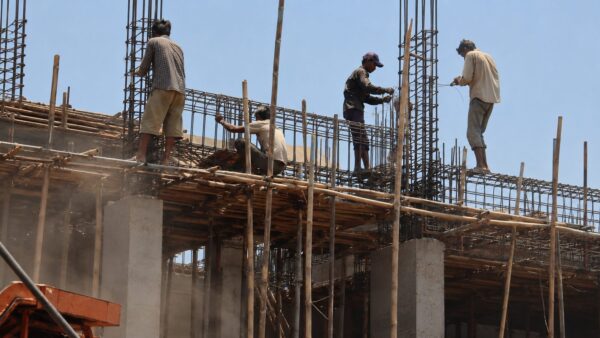
The Current State of Workers' Compensation in Developing Countries
While the VSL is a policy indicator, actual workers' compensation is much more stringent.
Bangladesh
Under the provisions of the 2006 Labor Law, compensation in the event of death is 200,000 taka (approximately 300,000 yen).
This is lower than the per capita GDP (2,793 USD)—does that mean it can only cover funeral expenses and a portion of the family’s medical bills!?
Vietnam
In the event of a work-related death, the payout is 36 months' worth of base pay plus a survivor's pension. For a general factory worker (earning 80,000 to 100,000 yen per month),Approximately 3 to 4 million yen。
Nepal
In the event of a work-related death, the compensation—consisting of several years' worth of salary plus a lump-sum payment—amounts to approximatelyApproximately 1 to 3 million yen。
Migrant Workers in Saudi Arabia
The social insurance agency GOSI has a system in place to pay the deceased's surviving family members the equivalent of 84 months' worth of the deceased's salary.
However, it appears that the deaths of migrant workers from Bangladesh, India, and Nepal are often misclassified as “natural deaths,” resulting in a lack of investigation or compensation...
What kind of problems does the disparity in the value placed on human life cause in the field?
If a foreign worker is involved in a work-related accident in Japan, compensation is provided in accordance with Japanese standards, regardless of nationality.
As a system, this is the correct way to do things.
However, because there is a disparity between the standard of living of the family back home and that of the recipient, there have reportedly been cases where relatives swarm the recipient the moment the insurance payout is deposited, leading to trouble.
A few tens of millions of yen—by Japanese standards—could be enough to support an entire family for decades, or even a lifetime, in Vietnam or Nepal.
Because they are accustomed to high-risk work sites in their home country, Japan’s safety management seems “excessive” to them.
This discrepancy in perception manifests as a gap in safety awareness on the job site.
Foreigners tend to have a fairly low sense of safety at first.
That is precisely why it is essential to thoroughly implement orientation for new employees, KY training, and safety training—including materials in their native languages.
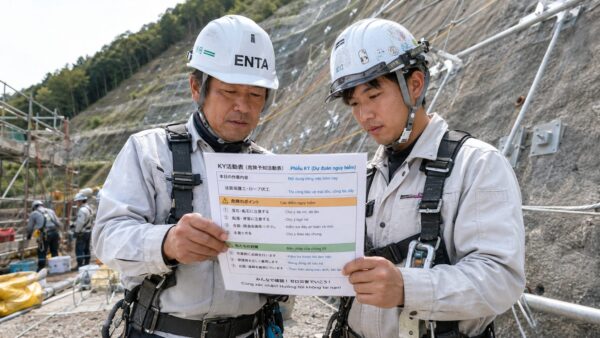
If a workplace accident occurs, the company can go under in a flash.
When a fatal workplace accident occurs in Japan, the burden on the company is not limited to compensation payments.
- Compensation for the bereaved families (ranging from tens of millions to hundreds of millions of yen)
- Increase in Insurance Premium Rates Under the Merit-Based Workers' Compensation Insurance System
- Suspension of Designation as Prime Contractor
- Administrative Sanction (Suspension of Business Operations) by the Labor Standards Inspection Office
- Loss of Social Trust
- Referral to Prosecutors; Criminal Liability for Negligent Homicide in the Course of Business
All of this comes rushing at you at once.
For small and medium-sized construction companies, a single fatal accident could very well put their business at risk.
For example, consider a case where a slope maintenance contractor with annual sales of 300 million yen experienced one fatal accident.
100 million yen in compensation, a six-month suspension of contract awards resulting in a 150 million yen drop in sales, and an annual increase of 1 million yen due to rising insurance premiums—on top of that, the loss of private-sector contracts due to damage to our social credibility.
This alone could rapidly erode the company's financial strength and potentially lead to insolvency.
(Reference: Association for the Prevention of Industrial Accidents in the Construction Industry, Safety Management Guidelines for Small and Medium-Sized Construction Companies)
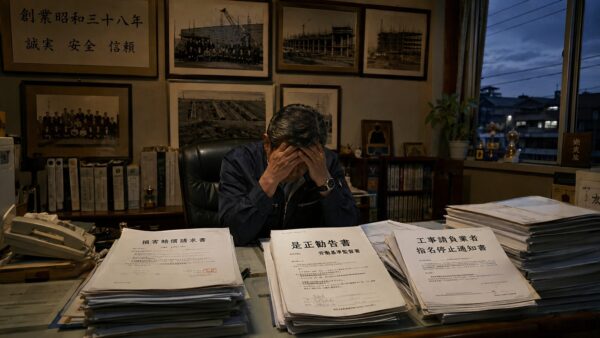
Safety management is the very essence of a business strategy that ensures the company's survival.
Once an accident has happened, it’s no use saying, “We should have managed safety better”—there’s nothing we can do about it now.
Daily KY activities, checking in with workers on-site, sharing near-miss incidents, and investing in safety equipment.
It is these seemingly small, day-to-day efforts that ultimately help protect the lives of our workers, their families, and the company itself.
Slope construction, in particular, is a line of work that involves working under conditions—such as at heights, on slopes, and using ropes—that directly affect workers’ lives.
That’s exactly why we shouldn’t view safety management as a “tedious obligation,” but rather as,Business Strategies That Support a Company's Profits and SurvivalI’d like you to think of it that way.
This is something that not only management but all employees should really think about!
The value of a human life varies by as much as 400-fold from country to country.
At work sites in Japan, we must protect people according to Japanese standards, regardless of their nationality.
And I believe that, ultimately, it is the safety awareness of each and every person on the job site that makes this possible.
Safety is for the workers on the job site, for their families, and for the company.
Let’s work on-site with a constant focus on safety and by making safety our top priority.
See you later.