Hello, everyone.
This is Enta.
When preparing the heads of ground anchors or rebar inserts, you put rust-preventive oil inside the caps, right?
Is that...Petroleum Products (Mineral Oils)That's right. Well, I'm sure you already know that, lol.
Although these are naturally derived ingredients, they won't break down if they leak into the soil or water. (Common sense!?)
Applying rust-preventive oil inside the head cap is a standard practice in the industry as a corrosion-prevention measure, and this is common knowledge that everyone is aware of.
However, there are actually work sites where that “anti-rust oil = mineral oil” simply can’t be used.
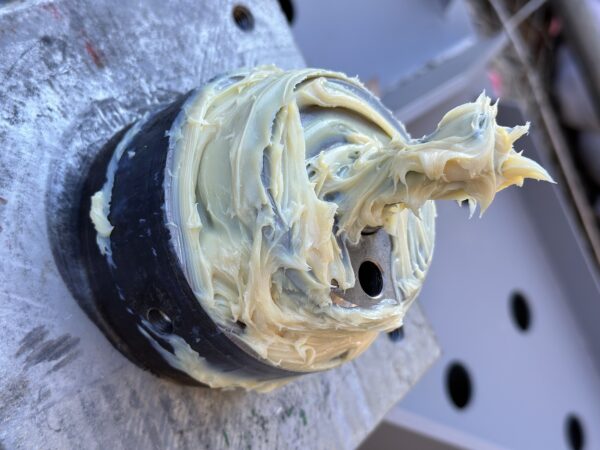
A water treatment plant—a facility where not even a single drop of oil is allowed.
There was this one guy at a job site I worked at before who was a total pain in the neck, lol.
Water Treatment Plant!
This was a worksite where even a single drop of oil was strictly prohibited.
I mean, come on—you can't use a machine without oil, right?! That's the point.
But since this is where they make drinking water, I get it!
That's totally out of the question, lol.
However, to begin with, everything—from the drilling rig to the compressor to the generator—runs on oil.
It won't work without that!
If you don't grease it, the bearing will seize up immediately.
When I looked into it, the special specifications document contained just one line
"No Oils Allowed"
That's it, lol
Nothing has been submitted for the design cost estimate.
But the special notes section just says "strictly prohibited."
I thought, "This is totally crazy," lol.
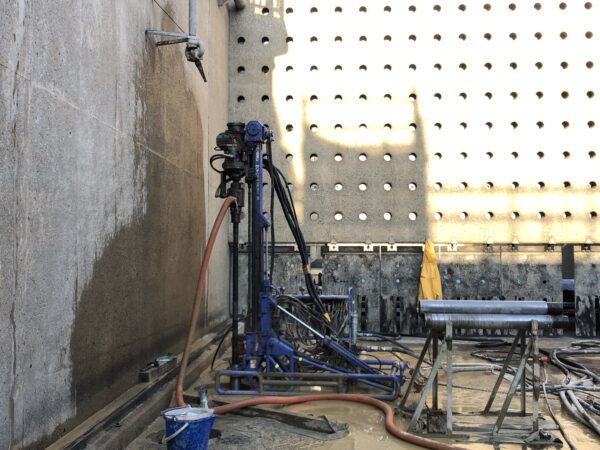
When I looked into it, I found that there are actually quite a few “biodegradable oils” out there.
So, as I looked into various things,Biodegradable Lubricants and GreasesI realized there are actually quite a few different kinds.
For example
・Shell Naturale S2 (Hydraulic Fluid)
・NOK Klüber's Kluberbio Series
・Kyodo Yushi's BioTemp Series
These are some of the standout players.
There are quite a few products from overseas, and they seem to be more common abroad.
The base oil isVegetable oils such as canola oil and sunflower oil, or fatty acid esters derived from chemically synthesized vegetable oils, and
It is ultimately broken down into carbon dioxide and water by bacteria in the soil.
Data shows that plant-oil-based products have a biodegradability rate of nearly 100%.
(From Juntsu Net 21 / "Basic Knowledge of Biodegradable Lubricants").
Furthermore, the Eco Mark certification includes a category called “biodegradable lubricants,” and
・Hydraulic fluid
・Two-stroke engine oil
・Grease
・Other Lubricants
The following four items are covered.
In Europe, government guidelines even require the use of biodegradable hydraulic fluid in construction machinery operating on rivers, and
It appears that in Japan as well, the Lubricants Technical Committee of the Japan Construction Machinery Association has established quality and performance standards for biodegradable hydraulic fluids used in construction machinery.
When I looked into it, it turns out this is actually pretty common. (People who know about it are already doing it, lol.)
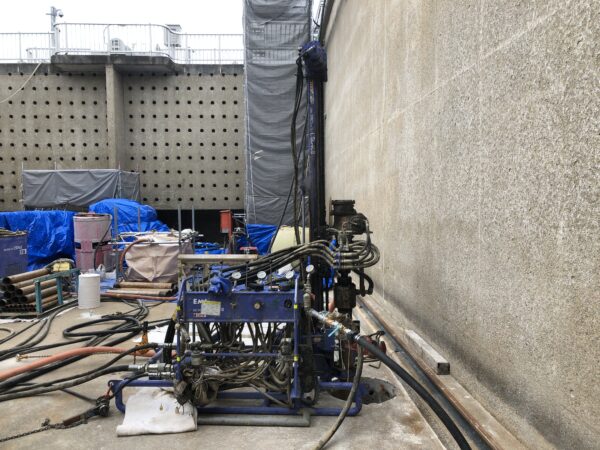
Completely regrease all machinery before installation
So, what happened was, before we started construction,
Thoroughly clean the machine once, then reapply vegetable-based grease to all grease nipples.
I did this for every single spot.
Replace the hydraulic fluid with a biodegradable type.
However,The hammer assembly of the core drill (inside the percussion mechanism)For that part alone, however, we continued to use the existing grease due to heat and impact pressure concerns.
I decided that if I switched to a plant-based option here, there was a risk of it burning.
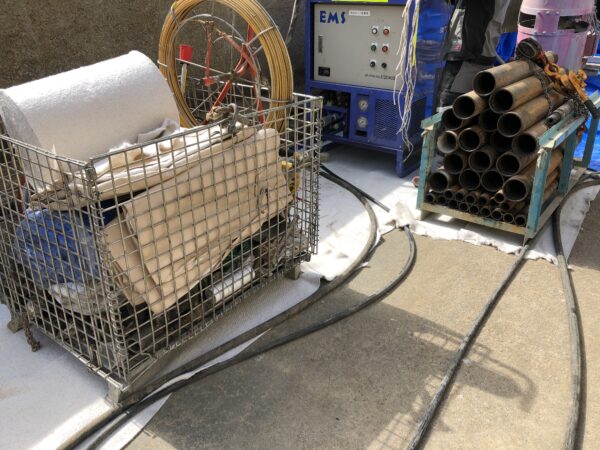
Around the machine, there isLay the absorbent mats over the entire area。
It's a two-step safeguard that stops any leaks before they come into contact with concrete or water.
It was a really tough job site, but since you don't get to have experiences like this very often, I personally found it pretty interesting lol.
It's just so expensive—biodegradable! We even had to change the design.
But you know, when it comes to biodegradable oils and greases...It's just so expensiveThat's right.
It's shockingly expensive!!
Based on my experience, it costs several times as much as regular mineral oil-based products.
If this had been included in the design estimates from the start, there wouldn’t be any problem at all, but there were no specific instructions in the design documents—the special specifications just say “No oil allowed,” lol.
In the end, this included the cost of preparing the oil selection documentation and the labor costs for re-greasing all the machinery,Design ChangeI took it there.
Neither the general contractor nor our company really knew what we were doing in terms of profit, but in the end, it was a job site that taught us a lot.
Doing things like this without speaking up just drains the company's resources, so,
Based on the following factors (Eco Mark certification, the standards of the Construction Machinery Association, and the location—a water treatment plant),
I think the right thing to do is to confidently submit a request for a design change.
On the other hand, I think it would be good for government agencies and consulting firms to be aware of this as well.
The contents of the hair treatment cap have also been changed to "plant-based grease."
Now, as for the crucial part—the head—
Inside the head cap of the ground anchor used to prevent the water treatment plant itself from floating (as a measure against uplift, right?), there is,Filled with vegetable-based grease to prevent any impact in the unlikely event of a leakI did.
In addition, the capping section is securely sealed with caulk in two or three layers to prevent water leakage.
Unless something really unusual happens, I don't think there's much of a chance that oil will leak.
To be honest, I learned a lot back then—I was really surprised to discover that even something as simple as anti-rust oil for head gaskets could involve such a complex topic.
To all you designers who simply write “No oil allowed” in the specifications: Please make sure to include biodegradable oils and greases in your cost estimates as a separate category.
The crew will be in tears lol
See you later.