Hello, everyone.
This is Enta.
The other day, I went to attend a lecture hosted by the Association of Certified Engineers.
I still didn't get it at all, but I did have fun at the get-together lol
But that's beside the point.
In this post, I’ll discuss what to do—and in what order—on days when there are scheduling mistakes on site.
We were short on materials, the equipment wasn't compatible, and the delivery date was off.
No matter how careful you are, things like this happen on any job site.
We mess up a lot too, lol.
The key is how you respond after the event—that determines whether the day’s losses will be limited to half a day or extend over the course of a week.
For young supervisors and those who have just become foremen, I’ll outline the steps I actually follow.
Initial Response and Safety Checks Immediately After a Planning Error
A long time ago, on a day when the ground anchors were being tensioned, work came to a halt.
There are six PC steel strands per anchor.
However, the jack head that arrived on site had only four holes.
Since I can't fit two in there, I can't even get one in that day lol (That's when it really bugs me lol)
In situations like this, the first thing to do is “stop.” (Though, in reality, that’s not possible.)
Trying to rush to finish everything by the end of the day—like dashing out to pick something up—is the most dangerous thing you can do.
The National Institute of Occupational Safety and Health classifies the causes of human error into 12 categories, which include “the instinct to take shortcuts or skip steps” and “panic.”
Immediately after a planning error, these two things are particularly likely to occur.
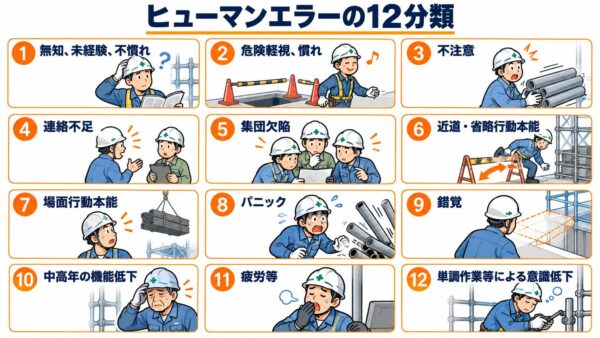
So, first, I’ll stop the work and clearly tell all the workers, “We’re not doing this task today.”
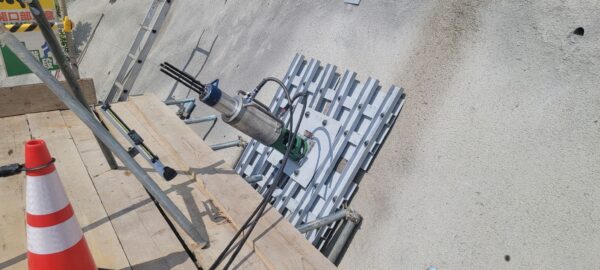
Then, I’ll take a look for myself to see what’s missing or what doesn’t fit.
Taking just one photo makes it so much easier to check things later.
Report to the general contractor promptly, providing both the facts and the outlook
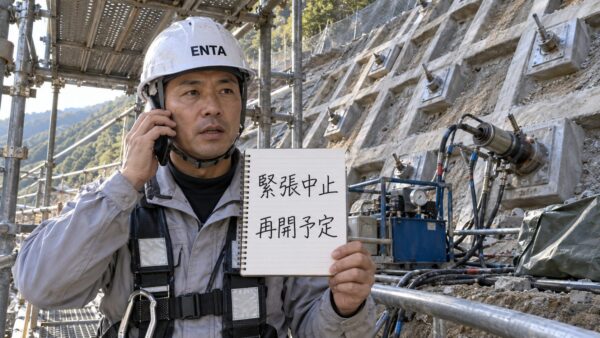
If we have to halt work on-site, we'll contact the general contractor's supervisor right away.
The one thing you absolutely must not do here is wait until the evening to submit your report.
Based on the day's projected progress, the general contractor prepares a report for the client and plans the next day's schedule.
There’s a world of difference between being told in the early afternoon and being told first thing in the morning in terms of the number of options available.
Here is the order in which you should convey this information over the phone.
- What Happened (The number of holes in the jack's head didn't match, so it couldn't be tightened)
- What should I do today? (If I'm feeling nervous, I'll stop and switch to something else.)
- When will operations resume? (We are currently checking with the manufacturer; we expect a response by [time])
If you're asked about the reason or your excuse, it's enough to simply answer.
After all, the Standard Contract Terms for Public Works stipulate that the contractor must report to the client regarding the performance of the contract.
Even under the Standard Subcontracting Contract Terms for Construction Projects—which apply to subcontractors—an extension of the construction period may be requested only when there are reasons beyond the subcontractor’s control, such as inclement weather.
This does not apply to our company's planning errors.
In other words, the assumption is that we will make up for any delays on our own.
That’s exactly why it’s important to communicate this honestly and as soon as possible, so the general contractor has time to make adjustments.
Approaches to Arranging Alternatives and Process Recovery
As soon as the report is filed, we begin making arrangements for a replacement.
As for the issue with the tension, I immediately contacted the manufacturer and had them send me a 6-tube head as quickly as possible.
Next, provide specific instructions regarding "when it will arrive."
If we leave it as “as soon as possible,” we won’t be able to let the general contractor or the tradespeople know their next schedule.
Next, let's think about how to prevent people and machines from playing around that day.
In this case, saying something like, “Have it delivered to the Seino branch in ○○ tomorrow!” in a slightly annoyed tone is the quickest way to get it done, lol.
If you can't work under pressure, there are actually quite a few tasks you can get a head start on, such as preparing the head section, repairing the area around the support plate, and making arrangements for drilling the next section.
Another thing that’s easy to overlook is the impact on other work sites.
Specialized contractors rotate the same workers and equipment across multiple job sites.
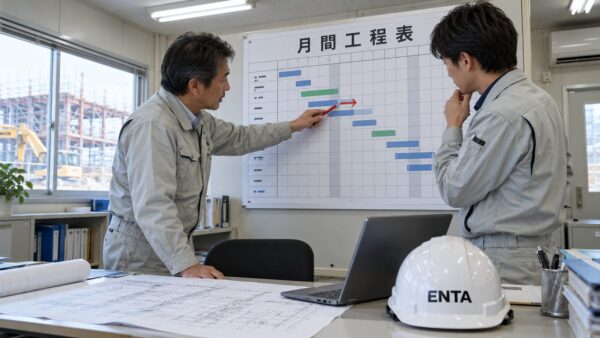
If there is a one-day delay, there is a possibility that the start of construction at the next site will also be delayed by one day.
So, on the same day, we’ll notify the general contractor at the next job site and decide whether to reassign personnel or postpone the work by one day.
Personally, I don't really recommend trying to make up for lost time all at once by working overtime or on your days off.
Working while tired is precisely what leads to the next mistake or accident.
If you can rest, make sure to get plenty of rest—that’s the best strategy!
Records to Prevent Recurrence and the Day-Before Checklist
Once I'm done cleaning up for the day, I'll write a brief note about what happened.
Even just three lines in the corner of your daily report would be fine.
What remains to be determined is which materials or equipment were incompatible, and who should have checked them at what point to prevent this from happening.
This is not a record intended to place blame.
This is a note to help me avoid making the same mistake twice.
"Insufficient communication" is also listed as one of the causes in the 12 categories of human error mentioned earlier.
As for my issue with the tension, it’s clearly the manufacturer’s mistake, but I think the manufacturer also had its share of problems, such as failing to check properly and miscommunication.
So, when sending emails, it might be necessary to include drawings and specifications as well, whenever possible.
It only takes five minutes to check, but it's important.
It's impossible to completely eliminate planning errors.
But you can start changing how you move right after waking up, even starting today.
Stop, communicate, find a replacement, check other sites, and keep a record.
If you have this process firmly in mind, you'll be surprisingly calm even on days when things go wrong.
It's okay if you new hires are a little overwhelmed at first.
But the most important thing is to accept the situation and figure out what to do next.
I think there are often those stupid older bosses who just won't stop harping on your mistakes forever.
Forever and ever lol
Well then, just decide on a plan already, lol.
Mistakes are okay as long as they aren't accidents!
Sure, there will be some adjustments and apologies, but let's just accept it and move on!
There's actually a tough old-timer coach I know in Kagoshima whose signature move is "prostrating himself" lol
Let's just go about our work on site with that kind of boldness.
See you later.