Hello, everyone.
This is Enta.
Today, I’d like to talk a bit more about IT technology.
I'm sure you've been hearing terms like "AI" and "ChatGPT" a lot lately.
Is everyone using it?
In practice, how to make the most of translation tools and AI is a key consideration.
1. Making Conversations with Foreign Technical Trainees Go More Smoothly
These days, construction sites feature multinational teams working together, with members from Vietnam, Nepal, the Philippines, Indonesia, and other countries.
But haven’t you ever had times when “safety instructions don’t get through” or “you don’t quite catch the subtle nuances”?
That's where translation tools come in handy.
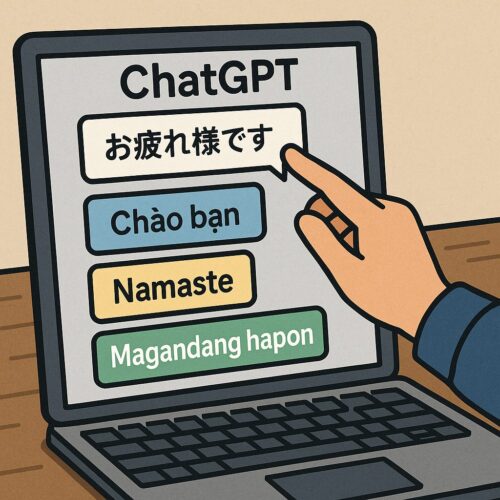
When you speak Japanese on your smartphone or tablet, it’s instantly translated into the other person’s native language.
Conversely, it also translates the other person's words into Japanese.
Simply ensuring that “instructions are communicated correctly” will reduce accidents and improve work efficiency.
I use translation quite a bit on this blog as well.
2. Automation of Documents and Reports
Site daily reports, material delivery lists, safety documents…
To be honest, they're all things that "take a long time to write."
If you use ChatGPT,
-
Enter a quick note → Automatically converted into a polished sentence
-
Output in multiple languages for foreign visitors
-
Such as ensuring that contract and quote documents are written in a "polite and respectful manner," and so on
This alone will help you save time on administrative tasks.
3. Training and Manual Development
It’s a lot of work to “explain things verbally every time” to new employees and foreign trainees. Plus, if a different person explains it each time, the nuances can change.
The same thing happens to Japanese people, right?
"Even though A said all that, B told me the exact opposite—it really pisses me off!" lol
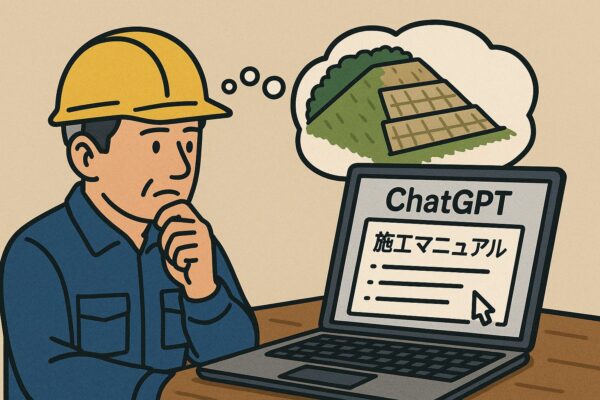
If you use ChatGPT to write up the manual, anyone can share the same content.
Plus, since we can distribute them with translations included, it helps people understand them better.
It's fine to just use individual words when writing this out. Then, check it over and edit out the parts that aren't good.
Just doing that will save you a considerable amount of time.
4. Points to Note
However, it is not a cure-all.
-
Mistranslations of Technical Terms
-
The Risk of "Stopping Thinking" When You Rely Too Much on the Internet
-
It's safer not to enter confidential company information (especially at large companies, where this could constitute a compliance violation).
AI is, after all, just a “training aid.”
How you use it can make all the difference in the quality of your work. And it helps you get a lot done.
5. Photo Evaluation
I think this feature is quite useful.
They’ll even answer questions like, “If the total area is 1,000 m², what’s the area of the part circled in red?” lol
You’ll need to fill in some of the details beforehand to make things clearer, but the volume and quantity of work within the legal framework can also serve as a rough guide.
I can figure out the remaining amounts of cement and sand, too, lol.
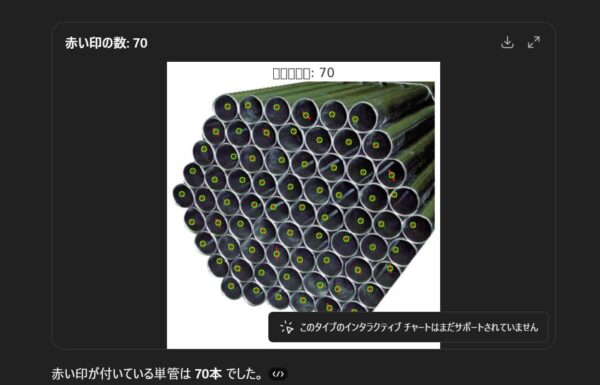
It can also be used for checking the number of steel pipes, for example.
If you can take a clear photo from the front, it will provide a fairly accurate image analysis.
ChatGPT and translation tools are particularly effective for “on-site communication,” “streamlining documentation,” “education,” and “verification.”
However, human judgment is ultimately required.
It looks like we’re entering an era where the ability to effectively incorporate AI will be what sets workplaces apart in the future.
See you later.