Hello, everyone.
This is Enta.
Construction Methods for Static Crushing (Part 1)
Construction Methods for Static Crushing (Part 2)
Construction Methods for Static Crushing (Part 3)
This is a continuation of the section on static crushing.
This is the packaging for the Power Blaster.
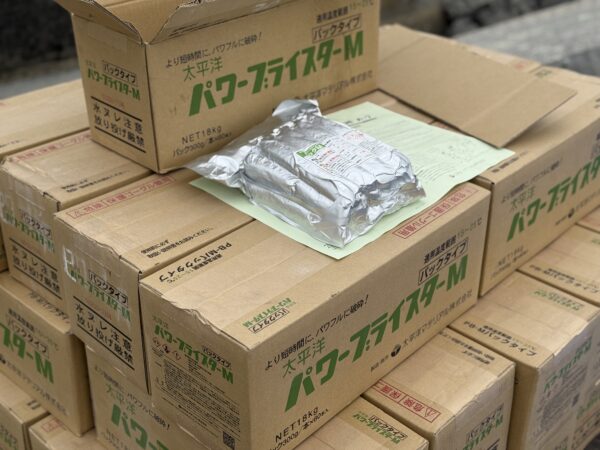
Regular Braister products are usually packaged like this, too.
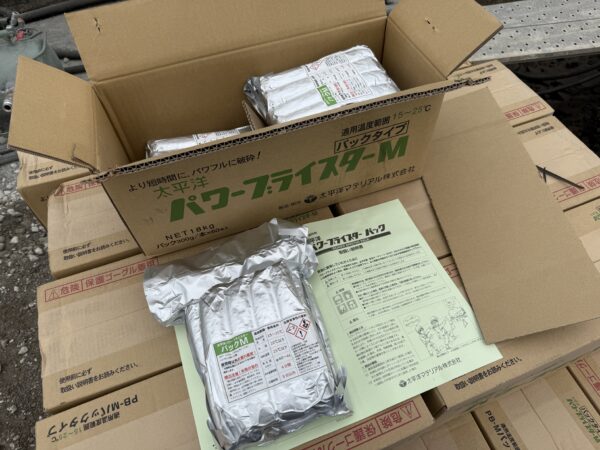
This time, I used the pack type.
Realistically speaking, if you're going to use it on-site, the pack type is definitely the most convenient.
The mix-and-pour type is cheap and good, but I think the ease of application is more than double the difference, lol.
For the powdered type, add water, stir, and pour it into the holes using a funnel.
Of course, it cannot be used directly to the side.
It only goes up, doesn't it?
It might be a good thing that you don't have to poke it with a stick.
Therefore, when using the powder type for pouring, we recommend using the standard type in an area where it won’t affect the surroundings (a safe place where it’s okay if it breaks at any time).
Other than that, I recommend the pack type.
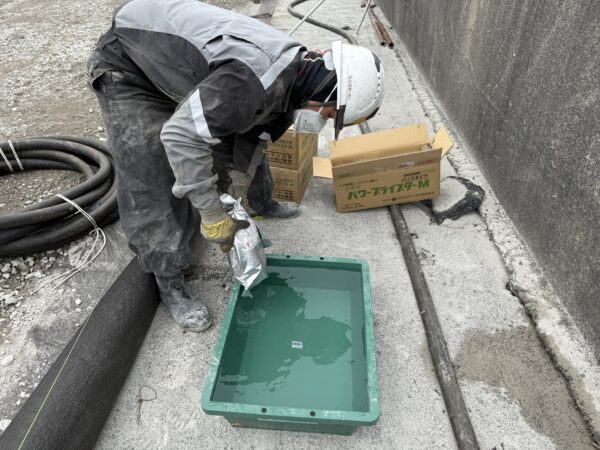
Place the Power Blaster (pack type) in water.
The more Blister you add to this water, the more it reacts with the water, causing the water temperature to rise.
Be careful, as the product reacts more quickly when the water temperature rises and swells before insertion.
After placing the Blister in water two or three times, drain the water once and refill it with cold water (at room temperature).
As I've said many times, their reaction can be faster or slower depending on the air and water temperatures.
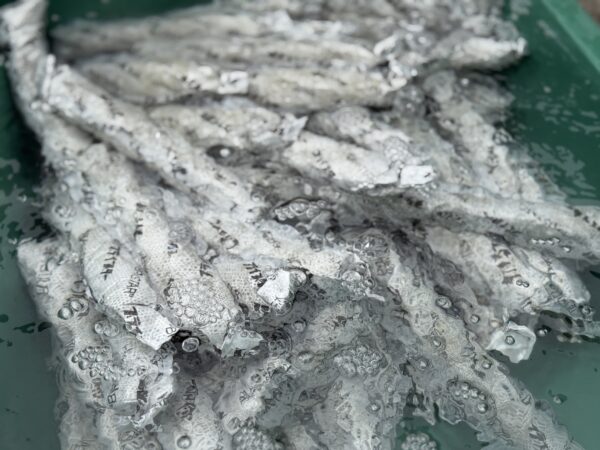
The time spent underwater is also about 4 minutes.
Please be careful not to add any more, or it will expand and become unusable.
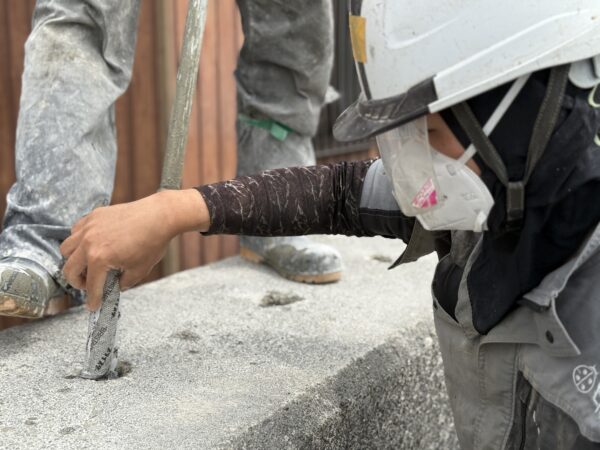
When the time comes, stick one into the hole and poke it with a stick!
Be sure to use this rod to tamp down the blaster material inside the hole, as this step is necessary to compact it.
(*Please use rubber gloves!!)
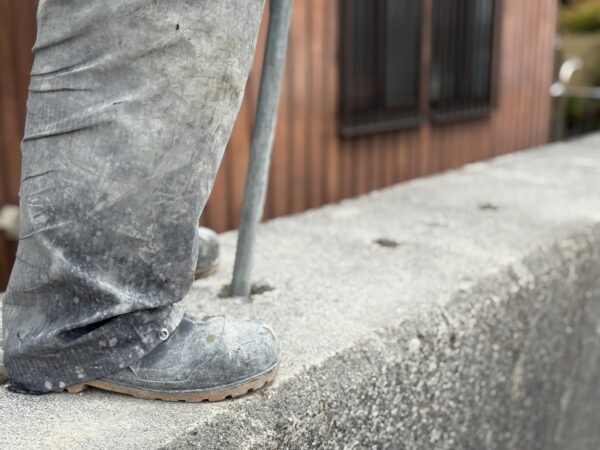
After inserting one or two, be sure to press down firmly to pack them tightly.
Once it goes in about 10 cm below the surface of the hole, it's done.
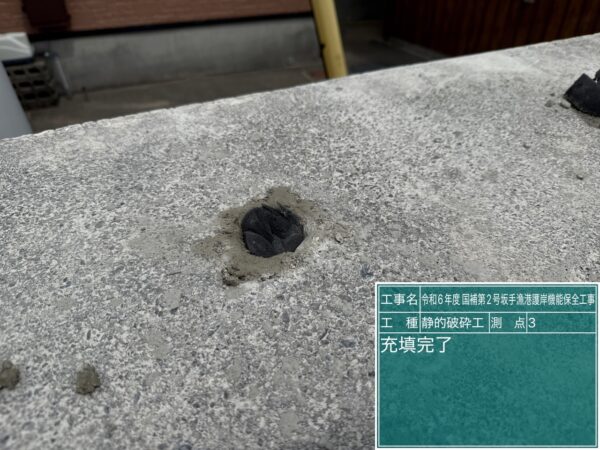
After filling is complete, be sure to pack the remaining 10 cm or so with sponge.
This is designed to prevent static fragmentation agents from bursting or spraying out as a result of any reaction.
In the summer, they tend to crack one after another from the back as you pack them, so I think they’ll be just fine, but,
If there are residential homes nearby or members of the public passing by, I think additional safety precautions will be necessary.
Just in case it bursts (which is highly unlikely), take precautions to prevent shards from flying (such as using lead-lined sheets)
It is best to wait until all drilling is complete before injecting or inserting static blasting agents. (This is acceptable if managed by blocks.)
For example, if you apply pressure vertically and a crack forms, and then you apply pressure horizontally, the stress may be transferred to the crack.
So I think it would be better to have cracks appear all at once across the entire surface at the same time.
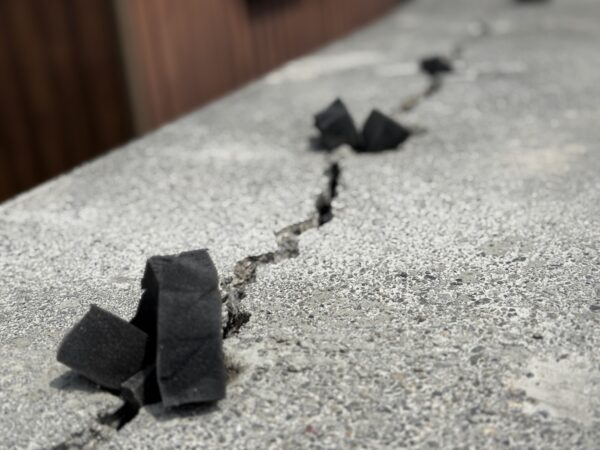
It's fun to watch it crack while making a "pop, pop" sound.
When performing this work, please be sure to wear gloves and, in particular, safety glasses.
And whatever you do, don't look into the hole!
This is an absolute must.
This often leads to accidents.
Even if you put in a sponge to prevent accidents, you never know what might happen, so I’d like you to be as thorough as possible in that regard.
Do not look into holes containing static explosives!!
See you later.