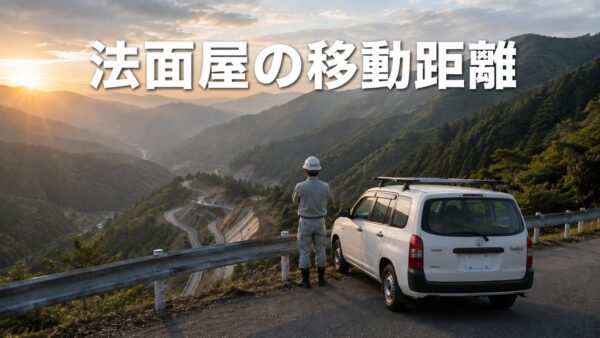
Hello, everyone.
My name is Enta.
I was driving for about three hours, thinking to myself, “The distances these slope workers have to travel are just crazy, aren’t they?”—so I figured I’d write this down lol.
Our sense of distance is out of sync with the rest of the world.
Generally speaking, a commute of even just one hour by car is often considered “long.”
It’s not uncommon for the commute by train to take between one and one and a half hours within Tokyo.
However, in rural areas, such long commutes don't seem to be very common.
On the other hand, our perspective as slope engineers is quite different from this.
If it takes an hour and a half to get to the site, I actually end up thinking it’s “close.”
Even if it takes about two hours, I feel like, "Well, that's still pretty close."
When it gets to three hours, I can’t help but think, “That’s a bit far.”
Even so, if it’s within day-trip distance, there are actually quite a few people on site who just pop over and come right back lol
Seriously, I'm practically a long-haul trucker, lol.
The reason there’s such a discrepancy is that the slope stabilization site is located in a mountainous area, lol.
Unlike jobs in urban areas, which tend to be concentrated around train stations or industrial parks, in most cases, once one job site is finished, the next one is deep in the mountains of a neighboring prefecture.
To be honest, since we can't choose the location of the job site, we just have to accept the commute.
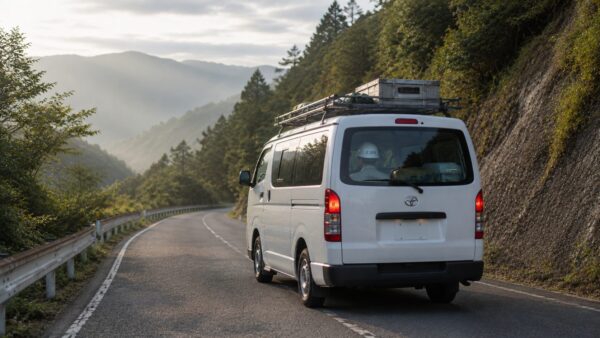
Annual mileage and a car's lifespan can have a huge impact
If the commute to the job site is long, the annual mileage will add up to a significant total.
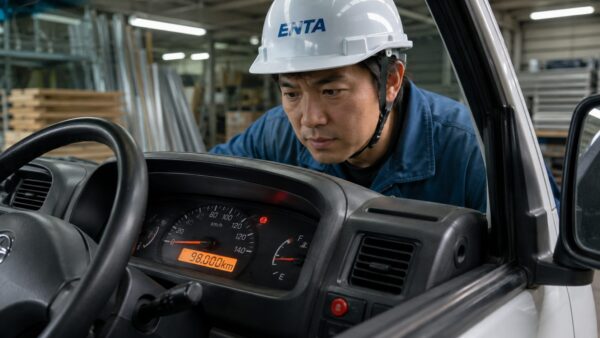
In our industry, some drivers with high mileage may drive around 40,000 kilometers a year.
Personally, I drive around 30,000 kilometers a year.
If you drive this much, even a brand-new car will approach 100,000 kilometers in about three years.
In Japan's used car market, there's a tendency for the appraisal value to drop sharply once the mileage exceeds 100,000 kilometers, isn't there?
For this reason, it seems that quite a few companies replace their company cars on a cycle of about 3 to 5 years.
At our company, we generally follow the policy of using equipment until it stops working.
The conclusion is that, rather than trading in for a new car, repairing it and using it for a longer time will ultimately keep costs down.
Of course, the more mileage you rack up, the more frequently you’ll need to replace tires, oil, and other wear-and-tear parts.
I feel that these maintenance costs are one of the fixed expenses that weigh most heavily on companies that cover long distances.
Still, based on my experience so far, if I can put off buying a new car, it’s more cost-effective overall to just drive the current one until it’s worn out.
If it's in really bad shape, I guess there's nothing I can do about it, lol.
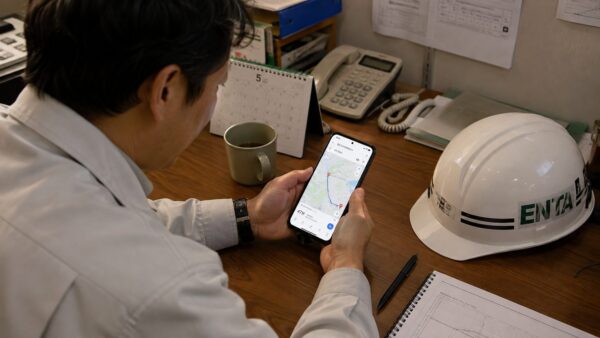
I looked into what the general “acceptable commute time” is.
I was curious about just how far off our perception was, so I looked up the typical commute times online.
Although I haven't been able to find any definitive primary sources, several websites provided similar guidelines.
As a general trend,
0 to 30 minutes is "close,"
31 to 45 minutes is "reasonable,"
46 to 60 minutes is "somewhat far,"
Anything over 61 minutes is "far"
It seems this is a common way of categorizing things.
And a common rule of thumb I often saw was that the threshold at which commuting starts to feel like a burden is 60 minutes or more.
When I apply this to the mindset of a slope contractor, I have to admit it makes me laugh.
For us, “close” is actually many times farther away than what most people would consider “far,” lol.
Slope contractors really are crazy, lol.
Ultimately, I think this is simply an unavoidable aspect of the work due to the nature of slope stabilization projects.
Since the sites are located in the mountains or on slopes, it’s rare for the work to be completed entirely on-site, unlike jobs in urban areas.
There are days when I feel like complaining about how far I have to travel, but oh well!
If there are any of you out there thinking of entering the slope construction industry, you might want to get a feel for these distances beforehand, lol.
However, in our case, any commute longer than an hour and a half requires an overnight stay.
After all, it’s not right for the driver to be the only one who has to go through all that trouble.
Plus, staying overnight makes mornings easier, and especially during the summer, it’s definitely better to let your body rest.
It's a long drive, but let's drive safely!
See you later.
Commute times of 1.5 hours or more are a waste of time | Work Styles