Hello, everyone.
This is Enta.
After seeing the news about embezzlement at the Expo construction site, we started talking about it at work this morning, saying, “Huh, this isn’t something that only happens to other people, is it?” lol
The construction industry—it seems small, yet it’s actually quite vast—and there’s truly no end to stories like this.
But that's beside the point.
I previously wrote a series of articles about embezzlement at a major construction company.
I wrote about questions such as “To what extent are subcontractors drawn into this?” “What kinds of schemes are used?” and “What happens after they’re discovered?”, but,
Just this week, a news story came in that was a perfect example of that.
Using this as a starting point, I’ll discuss the similarities with past incidents and explore how subcontractors and general contractors should approach their relationship moving forward.
Internal Embezzlement and Breach of Trust at a Major Construction Company Occurred Again This Year
August 19, 2026, a major general contractorTakenaka CorporationMeanwhile, Tatsumi Kawai (61), who served as the general site manager for construction at the Osaka-Kansai Expo, was arrested by the Osaka Prefectural Police on suspicion of breach of trust.
The headquarters building of Takenaka Corporation is also being searched.
According to a report by Jiji Press, suspect Kawai conspired with the representative of a subcontracting construction firm (based in Nara Prefecture, with whom he is said to have had a relationship spanning approximately 20 years) to inflate the invoice for interior work on a temporary office used by workers at the Expo site’s “Grand Roof Ring,” from the original amount of approximately 14.1 million yen to approximately 13.69 million yen, thereby causing financial loss to Takenaka Corporation. The inflated amount was reportedly used to cover renovation costs for Kawai’s home, a condominium he owns separately, and a café operated by a relative; the total renovation costs are estimated to exceed 60 million yen. A follow-up report by the Nikkei Shimbun also states that he is suspected of having submitted similar inflated invoices for another Expo-related construction project.
▼See:Breach of Trust Case Involving Takenaka Corporation’s Expo Construction Project (Yahoo! News)
As was the case with the news story I covered previously, titled “Former Construction Company Department Head Suspected of Embezzlement—Damages May Exceed 100 Million Yen,”
Internal embezzlement and breach of trust—to be honest, these kinds of incidents are not uncommon in our construction industry.
In a small company like ours, there aren't that many cases, but I get the impression that there are quite a few at large companies.
I can say with certainty that many employees at major construction companies are either “familiar with” such situations, “have been involved in” them, or “are currently involved” in them.
I understand this very well myself, since I used to work at a major company for a while. There are plenty of things I know that I can’t write about here, lol.
Someday, I'll take on the big players (when the time is right, lol)
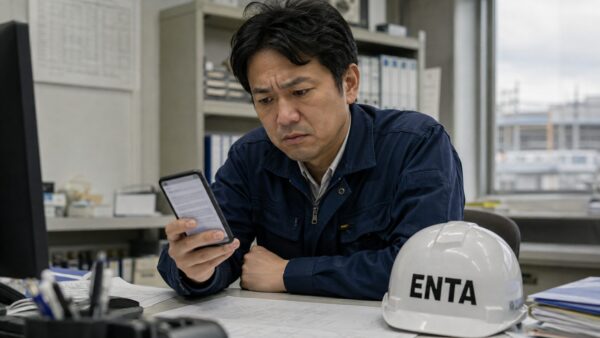
In cases like this, it usually ends with the subcontractor getting cut off.
Why Do Subcontractors Find Themselves in a Situation Where They “Can’t Say No”?
There are quite a few companies in the industry that rely solely on work from major clients.
In that situation, if a high-ranking executive at a major company (such as a construction department manager or someone in a position with significant decision-making authority) asked you to “come up with the money,” could you honestly refuse?

I think it’s hard to turn down such a request—not just for the person making it, but also when you consider the person on the receiving end.
It's precisely because we've built a relationship over the years that it's hard to say no.
And that's even more true when work is dangled right in front of you.
Given that the relationship with Takenaka Corporation in this case is said to have lasted for about 20 years, I think this is exactly the pattern we’re seeing.
Some people say, "That doesn't matter—just say no," but I don't think it's that simple.
When you're in a position where you have to protect your employees' families and livelihoods, you often end up accepting even the most difficult decisions.
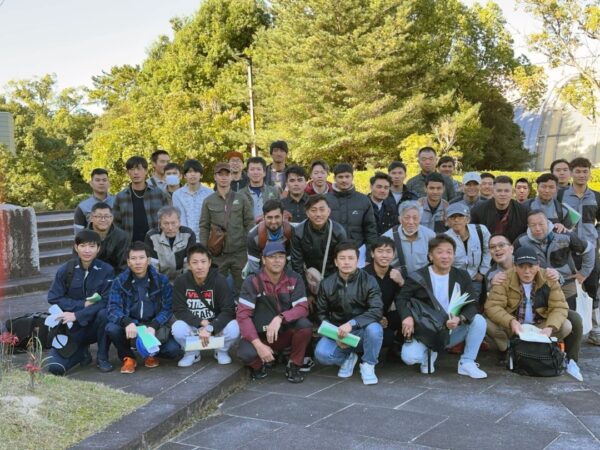
As someone who employs this many people, I have a duty to protect them.
They are my valued colleagues who trust me and follow my lead, so I absolutely want to avoid a situation where they are suddenly thrown into turmoil because of someone’s embezzlement.
That’s precisely why subcontractors that rely heavily on employees from major companies are more likely to be taken advantage of in situations like this.
Once money starts changing hands between the two parties, it becomes difficult to part ways, and employees tend to give priority to that vendor.
The contractors simply accept this as acceptable. In a sense, it seems like a win-win situation for both sides, but in reality, it only ends up compromising the quality of the work on-site.
When I was younger, there were many times when I thought, “Why would anyone hire a contractor who does such shoddy work?”
I remember that later, a senior told me, “Money changes hands there,” and I instantly lost all motivation.
5 Common Methods of Embezzlement Actually Used Today
So what kinds of scams are actually out there?
Based on what I know, I’ll break down some common patterns.
I think the kind of things I’m writing about here are things that anyone with experience in construction management would naturally come up with, and,
The tax office is well aware of these kinds of tactics, and it is said that they are a key focus during tax audits.
| Modus operandi | The Embezzler's Motive | Risks Faced by Outsourcing Providers | On-Site Measures |
|---|---|---|---|
| Inflating Work Volume and Invoice Amounts | Receiving money from a contractor or using it for personal expenses | It cannot be claimed as a business expense, so the president often ends up paying for it out of his own pocket. | Construction Progress Rate, Daily Construction Photos, and Verification of Measurements |
| Inflating the Unit Prices of Temporary Rental Items | Receiving Items from a Rental Company | We have to depreciate unnecessary assets every year, which results in them appearing on the financial statements. | Regular Consultations on the Reasons for Price Changes |
| Reallocation of Entertainment Expenses | Making subcontractors bear the cost of entertainment expenses for the general contractor | Companies are more likely to attract the attention of the tax authorities if their entertainment and hospitality expenses are disproportionate to their size. | Verify the volume of work performed by subcontractors and whether there has been any overbilling |
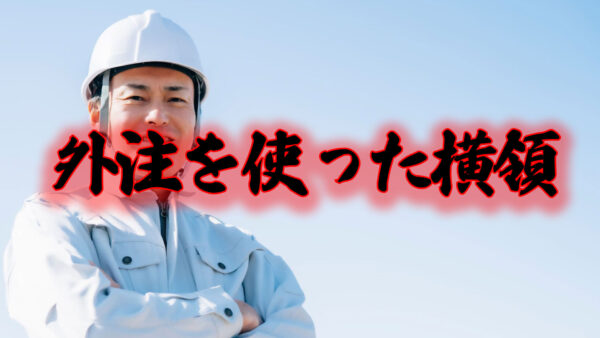
| Demands for Money in Exchange for Orders | Obtaining money by hinting at construction contracts | Cannot be recorded as an expense; the president must pay out of pocket, and it’s difficult to keep records of this. | Avoid relying solely on phone calls or in-person interactions; keep a record. |
| Forgery of Receipts | Receive more money than you paid | Getting Drawn Into a Crime Without Realizing It | Verification of the registration number, confirmation with the issuing office, and verification of the presence of revenue stamps and seals |
In my opinion, it’s mostly people in positions with a certain level of decision-making authority who are capable of carrying out this kind of scheme.
It is believed that the Takeno Construction case also stems from the fact that suspect Kawai was in a position where he could effectively select subcontractors.
In severe cases, this can escalate into a pattern of repeated high-value payments spanning several years.
What are the similarities and differences between this Takeno Construction incident and past incidents?
Let's take a moment here to compare this with past incidents.
In the case involving a subsidiary of Yamaura, a general construction company listed on the Tokyo Stock Exchange Prime Market that we covered previously,
An accounting staff member is alleged to have fraudulently withdrawn approximately 2.63885 billion yen from a subsidiary's account over a period of about 10 years, and
The man and his son were later arrested on suspicion of embezzlement.
Although the amount involved in the Takenaka Corporation case—approximately 13.69 million yen—is orders of magnitude smaller, the structure is very similar.
- Authority for placing orders and inspecting deliveries had been concentrated in the hands of a single person for a long period of time.
- He was moving funds through individuals with whom he had long-standing personal relationships (representatives of subcontractors and subsidiaries).
- The funds from the inflated and fraudulent expenditures were used for personal purposes, such as home renovations and personal living expenses.
- The issue came to light through internal control mechanisms, such as findings by the auditing firm and an investigation by an independent committee.
The differences lie in the scale of the amounts involved and the nature of the conspiracy.
The Yamaura case is considered a conspiracy between a parent and child, while the Takenaka Construction case is considered a conspiracy with the representative of a subcontractor, but,
I believe the root cause in both cases is that, for a long time, the situation remained such that “only the person in charge knew the true state of affairs.”
On construction sites like those for the World’s Fair, where the schedule is fixed and work inevitably becomes a rush job, quality control tends to be lax, and
My impression is that, as the number of complicated tasks on site increased, it felt like we could do just about anything—no matter what!
I believe this same situation is entirely possible even in small- and medium-sized workplaces where staffing shortages make it impossible to rotate personnel, resulting in authority continuing to be concentrated in the hands of the same individuals.
To be honest, I expect that similar incidents will continue to occur in the future in workplaces like this, where too much authority is concentrated in the hands of a single person.
This is just my personal opinion, but I wonder if there aren't quite a few contractors doing a lot of work on the construction projects related to this Expo?
For example, are the quantities for the ground improvement work correct??
Are those material costs correct?
You might start to think it would be a good idea for all the contractors involved (the general contractor joint venture) to look into things like: “What are the labor costs? How many workers are involved? What’s the unit price?”
The Line Between “It’s Okay to Pay for Drinks” and Company-Related Issues

We've been talking about embezzlement so far, but personally, I think “a little money for drinks is a different story.”
The contractor picks up the tab and takes the general contractor’s representative—who worked hard alongside them on site—out for a big celebration.
I don't think this is embezzlement or anything like that.
Especially at large companies, it’s not uncommon for the company to refuse to cover even the costs of a wrap-up party for the project team.
What's the point of working on set when all you do is suffer?
I think the honest truth on the job site is that people would rather have a drink with the craftsmen they’ve worked hard alongside than attend the company’s year-end party.
In the case of large corporations, the company tends to be viewed more strongly as belonging to its shareholders.
I wonder if it’s precisely because management prioritizes shareholders that opportunities for frontline employees to unwind are put on the back burner, leading to this issue manifesting in distorted ways, such as embezzlement.
That said, this is just my personal opinion, and I have absolutely no intention of defending embezzlement itself, lol.
That said, it’s totally fine to go out for a wild night of drinking with everyone—as long as the subcontractor picks up the tab (for one izakaya or snack bar or so)!!!
On the contrary, I think that's actually healthy.
But since general contractors’ executives are so extreme, they end up banning everything—this and that—which makes things even worse.
I think it’s important to leave yourself some wiggle room in situations like this, too, lol.
Beyond the Revelation: How Should Subcontractors and General Contractors Move Forward?
What happens once embezzlement or breach of trust is discovered?
At major companies, once a violation is discovered, the employee in question is typically placed on administrative leave and subject to questioning.
It is reported that investigations into relationships with affiliated companies, the flow of funds, and personal bank accounts are proceeding, and that even past email correspondence will be scrutinized.
As a result, interviews will also be conducted with the subcontractors involved.
In the Takenaka Corporation case as well, it is reported that a voluntary investigation is underway regarding the representative of a subcontractor.

There are two scenarios for individuals who have embezzled funds: some admit their guilt and proceed with a repayment plan, while others deny the charges until the very end, leading to criminal charges.
It is generally believed that if a criminal complaint is filed, it will be virtually impossible to recover the amount of the loss.
Unless the subcontractor's conduct is deemed egregious, the matter will end with a ban on doing business with the company; however, if the conduct is deemed egregious, it may result in criminal charges.
In terms of criminal law classification, simple embezzlement in the course of business is treated as the crime of embezzlement in the course of business, while acts of breach of trust that cause damage to a company are treated as the crime of special breach of trust, and
It is understood that a conviction for embezzlement in the course of business may result in a prison sentence of up to 10 years.※。

Regarding the Yamaura case, the third-party committee’s report appears to point out that gaps in internal controls had been left unaddressed for many years—including the fact that the individual in question had been confined to the role of accounting manager for a long period of approximately 30 years, and that the subsidiary’s board of directors, which should have met once every three months, had been virtually non-functional.
Even if the amount embezzled per instance is small, if the lack of oversight continues for a long time, it can grow to this scale.
They go on and on about "compliance," but they're probably pretty corrupt, aren't they? lol
Even for a small company like ours, this isn’t something that doesn’t concern us, though lol.
That said, I’m all for going out for drinks and having wrap-up parties with the general contractor, so let’s do it as much as we can!!
That's why the government recognizes entertainment and hospitality expenses!
I’d go if it were a main contractor rep I like! Thanks to that rep, the project went smoothly, and both our company and the main contractor made a profit.
Of course, as long as you're getting paid a fair price, there's no problem.
So, what should subcontractors do from here on out?
I believe there are three things I should keep in mind. First, I must always keep records of contracts, the basis for quotes, and the payment process.
Second, if an employee of a major company offers you a personal favor, you should either refuse it on the spot or be sure to consult with someone else at your own company.
If you try to handle everything on your own, you’ll get swept up in an atmosphere where you can’t say no even if you want to.
Third, reduce your dependence on any single major company. This isn’t as easy as it sounds, but it’s a fact that the more dependent you are, the more likely you are to be taken advantage of.
There are some areas where we’d like the general contractor to make changes as well.
Do not concentrate the authority for placing orders and inspecting deliveries in the hands of a single person; instead, rotate the responsibilities on a regular basis.
Furthermore, it is important to establish a proper internal reporting system and ensure that subcontractors can also seek advice.
I believe that if the prime contractor has a compliance hotline where subcontractors can report such misconduct or abusive demands, they should not hesitate to use it.
Because individuals on the front lines handle these matters themselves, without going through the company, issues like this never come to light for years.
To begin with, major general contractors focus too much on their own compliance.
That's why there's a tendency to develop a culture of cover-ups.
They should just keep releasing them—even if an accident happens, they’ll try to classify it as a non-work-related injury, right? That’s exactly the problem!
That said, as a subcontractor, I’m certainly grateful for a relationship that allows me to get work.
Honestly, as long as the reality remains that our work runs smoothly thanks to that person, it’s difficult to simply say we should distance ourselves from them.
I think that, caught between theory and reality, I’ll just have to make a decision on how far to go on a case-by-case basis, even if it means agonizing over it each time.
Social obligations and personal feelings get in the way.
I can’t just cast aside my sense of duty. But they’re using that to make financial demands...
I believe that crimes like this should be brought to light as much as possible.
That's exactly why, if only I could give such people a gentle reprimand...
Deep down, you know the truth but don't say anything; turning a blind eye is the worst thing you can do...
Is it a sign that a civil engineer lacks confidence in his technical skills when he tries to get things done with money?
When it comes down to it, skill is what matters most.
I’m certainly not saying I’ve got it all figured out—I’m far from perfect—but I’d like to stop shying away from bringing these kinds of issues to light.
See you later.
*The information regarding sentencing for the crimes of embezzlement and special breach of trust is general in nature and is based on explanatory articles from law firms; it does not guarantee the outcome of any specific case.