



Hello, everyone. This is Enta.
For this post, I’d like to write about a topic that’s a bit sensitive but one we simply can’t avoid in the workplace: “Japanese People and Foreign Workers.”
The reason is, for some reason, there's been more and more stuff on X that's been getting on my nerves lately lol (I know, I'm being childish).
Even though they say things like, “If we let foreigners in, they’ll take our jobs,” the Japanese themselves don’t actually do the work—yet they’re the ones sitting on the sidelines, yapping away about it, aren’t they? lol
The people who don't actually do the work just sit on the sidelines spouting whatever suits them, so to those of us in the industry, they're nothing more than a nuisance—like annoying flies.
So I thought I'd share my personal opinion.
Contradictions on the Ground
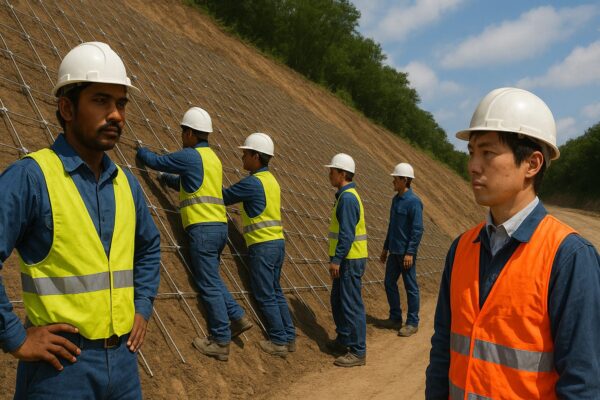
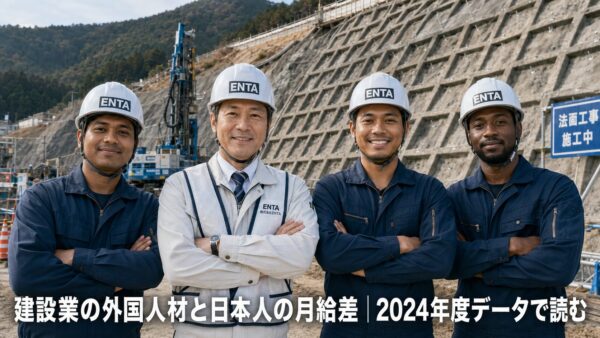
At slope construction sites, we’re seeing more foreign technical interns and workers with “Specified Skilled Worker” status than ever before.
This applies not only to slope construction companies but to every industry.
Vietnam, the Philippines, Myanmar, Indonesia… It’s truly a multinational group.
Whether it's hot or cold, they work quietly and diligently without a single complaint.
Weeding slopes, spraying mortar, installing netting… To be honest, they’re taking the lead on jobs that Japanese people don’t want to do.
Well, our Japanese employees are doing a great job while receiving proper guidance ^^
Interestingly, though, the comments I hear on X and social media are filled with anxiety that “if the number of foreigners increases, they’ll take our jobs.”
But when it comes to whether those people actually show up at sites for slope stabilization work (or other civil engineering and construction projects)... they don't.
Wages actually don't vary that much
Some people may have the impression that “foreigners can use it at a lower cost,” but that’s not actually the case.
Whether they are Technical Intern Trainees or Specific Skilled Workers, the minimum wage is, of course, upheld, and enrollment in social insurance is mandatory.
In today's construction industry, it's common sense that if you do the same work as a Japanese worker, you get paid a similar wage!!
In other words, the conditions are pretty much the same. So why is it that only foreign workers end up on the job site?
Reasons Why Japanese People Avoid the Construction Industry
This is something I’ve come to realize after more than 30 years in this industry, but,
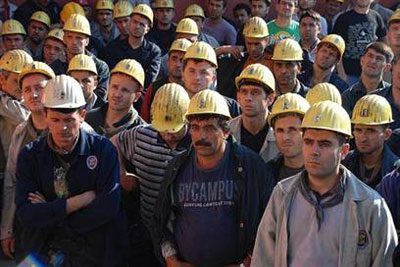
Japanese people, especially the younger generation, have a strong aversion to “dirty work,” “hard work,” and “dangerous work”—the so-called “3K” jobs.
Slope construction is a perfect example of that.
You get covered in mud, it's hellishly hot in the summer, and working on slopes can be dangerous.
But if no one does it, we can't protect our infrastructure.
On the other hand, foreign workers come to Japan with a clear purpose: to earn money for their families back home and for their own future.
That’s why I can push through even if it’s a little tough or if I get dirty. The difference in sense of purpose directly translates into a difference in how we work.
And when you see those kids giving it their all in Japan, you just want to cheer them on, don't you?!?
People around the world tend to think Japanese people are easy to take advantage of, but,
When I see someone giving it their all right in front of me, I’m the kind of person who’s easily swayed, so of course it moves me!
We'll cheer them on, right?!
Differences in personality and culture also become apparent
When you work alongside others on-site, you begin to see differences in national character and culture.
Vietnamese peopleHe is skilled and a quick learner. He handles detailed tasks with care. However, he has a strong sense of pride, so you need to be careful about how you reprimand him.
FilipinoThey are cheerful and have strong communication skills. They tend to value teamwork.
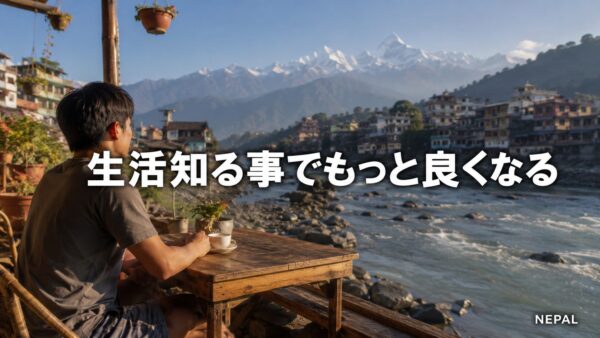
NepaleseHe is earnest and patient. His quiet, focused work ethic is reminiscent of the Japanese artisans of old.
On the other hand, young Japanese people… I don’t mean to say anything bad about them, but they tend to immediately say, “That’s impossible” or “I can’t do that.”
Of course, it’s not everyone. But it’s true that there’s a noticeable tendency to give up before even trying.
Have you become so blessed that you've lost your drive?
The Pros and Cons of the Technical Intern Training Program
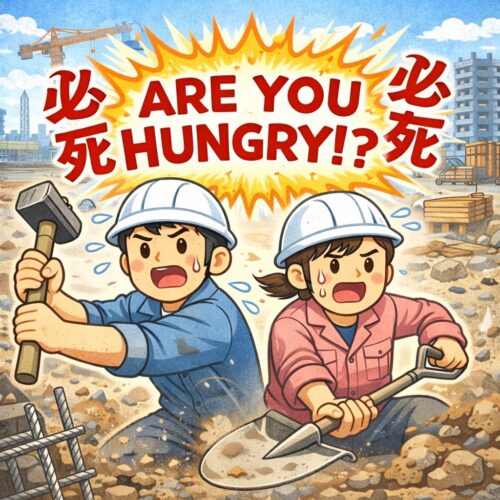
There are mixed opinions about the Technical Intern Training Program. While some criticize it, saying that “trainees are being used as cheap labor,”
Some view it as “a valuable opportunity to learn new skills.”
At my workplace, I teach technical skills as fairly as possible, just as I would to Japanese employees.
After all, slope stabilization techniques should also be useful for infrastructure development in developing countries.
However, when looking at the industry as a whole, it is true that there is still room for improvement.
Language barriers, cultural differences, and a lack of preparation on the part of the host community… the challenges are mounting.
That said, for foreigners, it’s one of the easiest ways to come to Japan.
I’ve seen on social media that people say, “I’m poor back home, but if I come to Japan, things will work out!”
What the Construction Industry Needs Going Forward
The very idea that "foreigners are taking our jobs" may already be outdated.
After all, foreigners are doing the jobs that Japanese people don't want to do.
In fact, we should be grateful to them and respect them as colleagues.
At the same time, I think Japanese people should take more pride in their work.
Slope stabilization work (civil engineering) may seem unassuming, but it’s a vital job that protects people’s lives from disasters.
Don't just say "no" because it gets dirty or because it's too hard—I want you to see the value that lies beyond that.
We're the ones protecting the lives of city dwellers!!!
Foreign workers are now an indispensable part of Japan's construction industry.
To be honest, without them, things just wouldn't run smoothly on the job site.
Even though their pay and working conditions are almost the same, their work ethic is different.
I think it's not a matter of nationality, but rather a difference in sense of purpose and drive.
Both Japanese and foreign nationals will work together to protect Japan’s infrastructure while respecting one another.
Isn't that what the construction industry should look like going forward?
The voices coming from a safe place are too loud
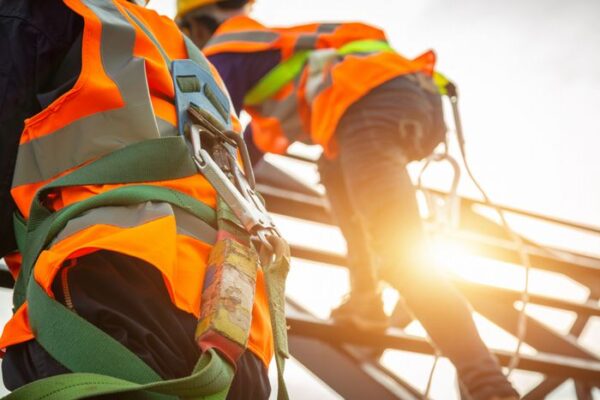
Aren't the voices of people who just complain from the sidelines—people who actually have absolutely nothing to do with the matter—a little too loud?
"The construction industry hires foreign workers because using technical interns lets companies rake in tons of subsidies and grants, so they're rolling in it!" (There's absolutely nothing like that!)
Why do they give preferential treatment to foreigners instead of hiring Japanese people? (Opinions from people outside the construction industry lol)
It’s the same with the bear issue—it’s basically like people from areas where bears don’t live (urban areas) saying, “Don’t kill the bears! I feel sorry for them!”
The same goes for the snow removal issue that was in the news the other day.
People from areas where it doesn't even snow say, "The snowplows are too loud! Change the schedule."
And yet, all the locals can say is "Thank you"!!?
This might sound harsh, but it’s basically saying, “This has nothing to do with you guys! You outsiders should just shut up!”—yet,
They raise their voices loudly, but act as if what they’re saying is in the name of justice.
This is just crazy, isn't it?
People on social media and those who are less informed who take that at face value.
Lack of Information and Deception
That way of thinking—making judgments without even seeing the situation firsthand—is really dangerous.
All misunderstandings and the like stem from a lack of information.
It’s precisely because information is lacking—and because we don’t understand the situation on the ground—that people resort to guesswork, speculation, imagination, delusions, and fantasy!
But don't just take that at face value!
Take full responsibility yourselfFirsthand InformationI would like you to make statements or public remarks only after obtaining (original information gained directly through your own experiences, experiments, observations, interviews, etc.).
Lately, the media and TV have also started to easily spread exaggerations and falsehoods.
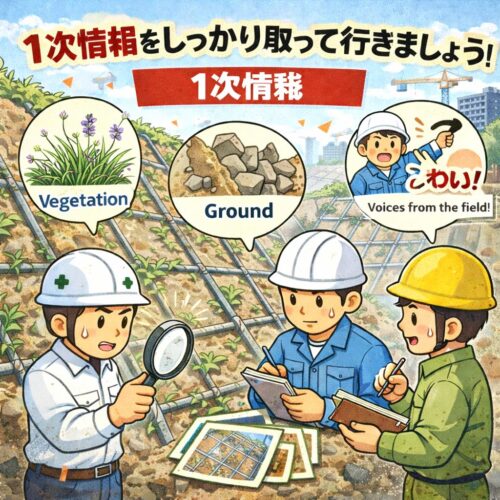
Let's take a good look with our own eyes and think things through carefully!
We’ve reached a point where the construction industry simply cannot function without foreign workers.
That is the reality and the truth of Japan today.
Personally, I hope to fully recognize this and work together with foreign nationals to support Japan’s infrastructure.
Let's not let ourselves get carried away by listening too much to outsiders' opinions!
Information from the field is everything.
On this blog, I always share firsthand information (the truth about what's happening on the ground right now)!
See you later.
*It looks like I'll have some free time in February—please send me some work!
I'll be right there!!
Please give me a call!!

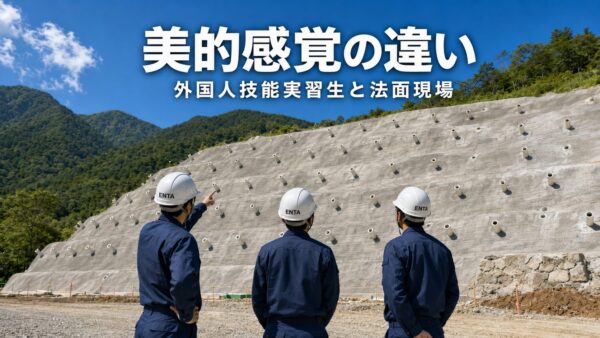
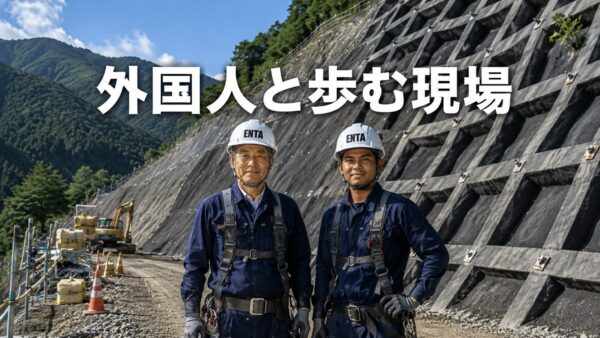
Your insights from the field are very helpful.
I really wanted to hear Enta-san's story about how he got into the construction industry.
I’d especially like to ask about this point: Why is Enta still here when all the other Japanese people have left?
(Sorry if there's already an article on this—I couldn't find it.)
If the foreign workers leave, the operations will grind to a halt.
Now that I understand that, I’d like to ask about 【IF】.
[IF] If there are no foreign participants, how can we run the event with just Japanese participants?
・Is it enough to just have advancements in [machinery]?
・Is having enough staff enough, or...
・Is it enough to just increase wages tenfold?
・Or do we need people with strong physical abilities, like those from overseas?
(I think back in the day, it was just Japanese people doing it, so...)
Thank you
I'll write another article sometime soon!
Please wait just a little longer ^^