Hello, everyone
This is Enta.
Mortar Spraying for Private Homes and Commercial Construction: Part 1 (For the General Public)
Mortar Spraying for Private Homes and Commercial Construction, Part 2 (For the General Public)
Mortar Spraying for Private Homes and Commercial Construction, Part 3 (For the General Public)
In this post, I’ll continue from where I left off last time and write about sprayed mortar used in residential homes.
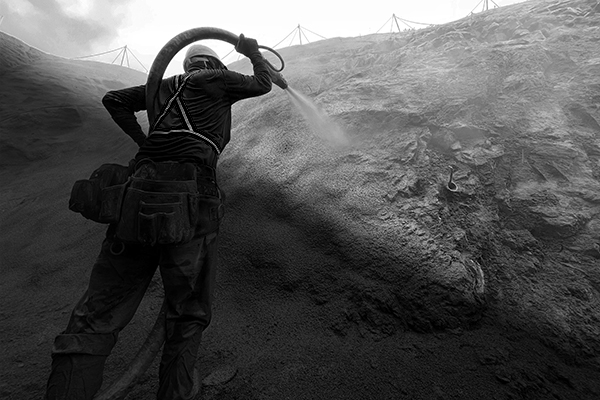
Those who perform spray application in residential homesI think there are some people like that, too.
If you watch it on YouTube,Sprayed mortar on soilDoing this will stop soil erosion, and
AndNo More Weed Removal...is how they explain it.
To start with the basic facts,
In public works projects, it is standard practice not to apply sprayed mortar directly onto soil.That's it!
As part of recent trends, mortar is sometimes sprayed onto soil areas to eliminate the need for weeding.
However, this is only partial.
The basic purpose of sprayed mortar and sprayed concrete is to provide surface protection that prevents the weathering of bedrock.
However,Sprayed mortar is a highly effective method for weed control.
But the problem is the thickness!
Suppose we are to apply sprayed mortar to a soil slope that was originally overgrown with grass and had standing trees (roughly the size of shrubs) after clearing the slope.
What is the spray thickness in centimeters?
Even for private earthwork projects, I recommend using at least 7 centimeters!
If possible, 10 centimeters!
That's because, even if it's just 10 centimeters, in the worst-case scenario, this is what will happen after a few years.
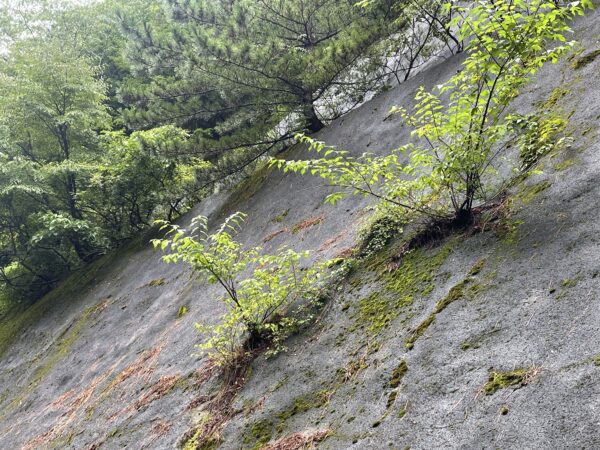
The place is overgrown with plants—there’s even a pine tree growing on the upper step, lol.
This is because the slope, which used to be bedrock, has turned into soil and sediment over time, allowing vegetation to grow there.
It is also believed that cracks and other damage caused by aging allowed native seeds to enter those areas.
This shows what happens when you spray it onto soil—it deteriorates over time!
This tends to happen especially on gentle slopes.
Plants are seriously tough! lol
They also say that it helps prevent soil erosion. (On YouTube)
That's true, but is there a backflow preventer attached to the drain pipe used during spraying?
If it were not installed, soil and sediment would be washed away after rainfall, causing the interior of the sprayed mortar to become hollow.
And this makes for a very dangerous slope that you wouldn't know just by looking at it!
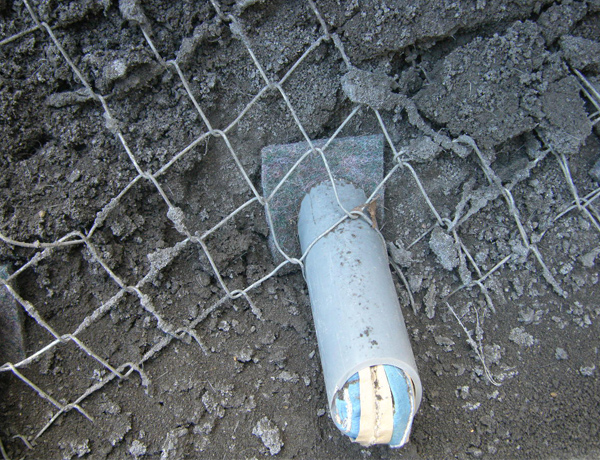
In public works projects, when performing construction work on earthwork sections,Be sure to install a backflow prevention deviceI will.
This prevents the soil inside from being washed away by rain and allows only the water to flow out.
Installation of Anti-Siphoning Material
Please check to see if the sprayed mortar applied to the earthwork areas at your homes contains this material.
Next, try tapping that mortar lightly with a hammer.
Where you hear a hollow sound, the mortar is coming loose.
If it's floating, that means it's hollow.

I find myself rambling on and on about sprayed mortar, but,
Given these conditions, I think it might be okay to spray next time.SpecificationsI'm going to try writing it.
If you're a member of the general public interested in working on slopes or cliffs on your property, please consider this information as a reference.
See you later
Found a Great Product (Drainage Pipe for Mortar Spraying in the Soil and Sand Division)