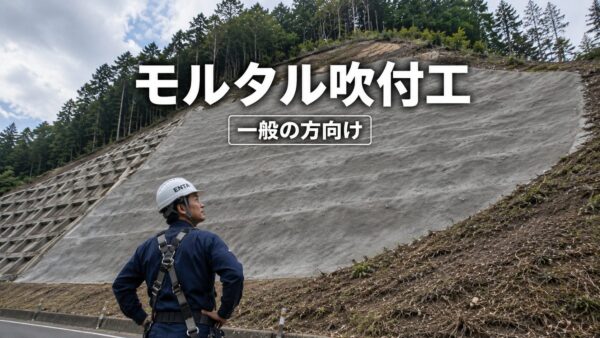
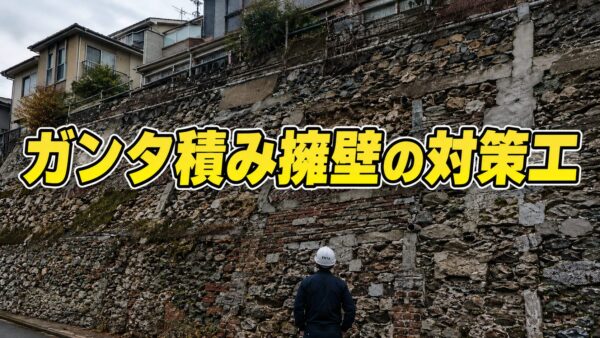
Hello, everyone
This is Enta.
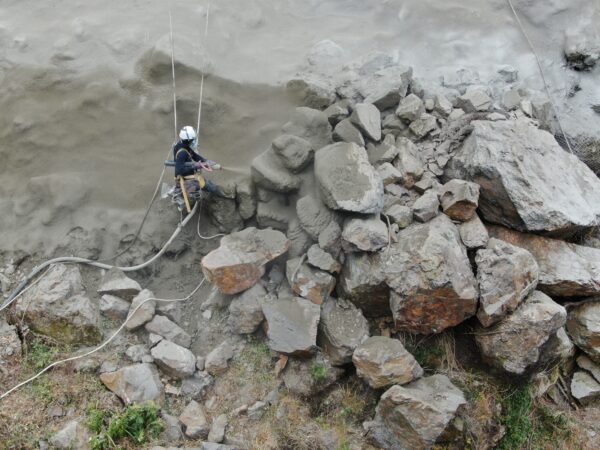
As you know, I'm a sprayed mortar contractor.
Since we're professional slope contractors, we're used to handling even harsh slopes like the one in the photo above—it's just business as usual for us, right?
It’s been popping up frequently on YouTube lately, and I think it’s a relatively simple job for a slope contractor.
Since I’ve been getting inquiries from the general public about sprayed mortar lately, I thought I’d write about it in a bit more detail.
The reason is that a general private construction company—not one specializing in slope stabilization—had previously claimed that the slope wouldn’t collapse if sprayed with mortar, and,
We received an inquiry asking, "Is that true?"
So, with that in mind, I’ll try to write this in simple terms for the general public.
The work sequence for this sprayed mortar application is as follows:
Slope Cleaning Worker (including tree removal, etc.) → Lattice Installation Worker → Mortar Spraying Worker
Slope cleaning involves removing loose rocks, vegetation, and other organic matter from the slope.
Measures will be taken to prevent loose rocks on slopes from falling during construction.
If loose stones are as large as those shown in the photo above, either break them into smaller pieces and remove them, or secure them firmly so they do not move, and then apply the spray coating over them.
In the case of public works projects, there is a process called "temporary mortar spraying." Since the above refers to temporary spraying, it is unrelated to the main construction work, but
This work is being carried out to eliminate hazards in preparation for the main construction project.
For this reason, we do not apply a final layer of plaster; instead, we incorporate special fibers and other materials into the mixture during installation.
This fiber is added to serve as a substitute for lath and to maintain continuity.
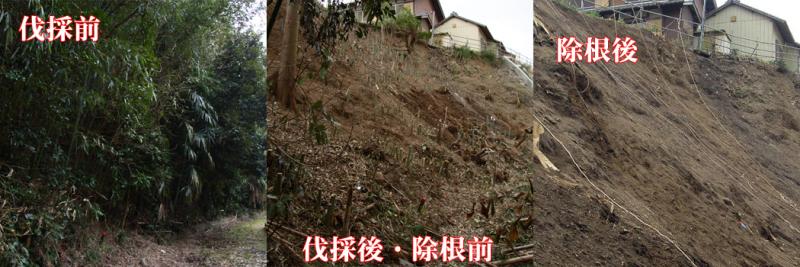
The removal of organic matter is necessary because, if left in the mortar, it will eventually rot and create cavities.
To prevent such a situation, it must be removed, or appropriate measures must be taken to ensure it does not occur.
Occasionally, we receive requests to remove tree stumps, but we generally do not recommend it.
That's because cutting down a tree leaves a big hole.
When a hole opens up, the ground becomes unstable.
Therefore, you should not pull up tree roots that are too large.
In public works projects, the terrain is generally cut to conform to the shape of the mountain.
We'll simply spray mortar over the top to cover it.
I used to use a saw to cut roots and such, but lately I've been using this!
This is a Makita reciprocating saw.
Amazon Makita Reciprocating Saw
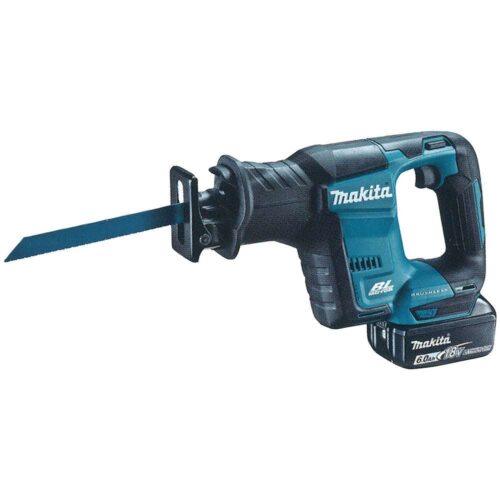
This tool is incredibly sharp and can easily cut through even steel, so I highly recommend it for cutting roots.
Anyway, for this project, it was "Mortar Spraying, Part 1": slope cleaning work.
Next time, in Part 2, we'll cover the roof sheathing process.
See you later