



Hello, everyone.
This is Enta.
The other day, at our construction site, we applied rust-preventive spray to the rebar in preparation for next year’s construction work.
We’ve been getting a lot of inquiries about the rebar for next year’s construction project for quite some time now.
"We're planning to build the framework over a three-year period, but how will the rebar be handled during that time?"
Something like that.
Common methods include cutting the rebar completely and then driving it back into the hole using a hole-in-anchor the following year, applying epoxy paint, or applying rust inhibitor.
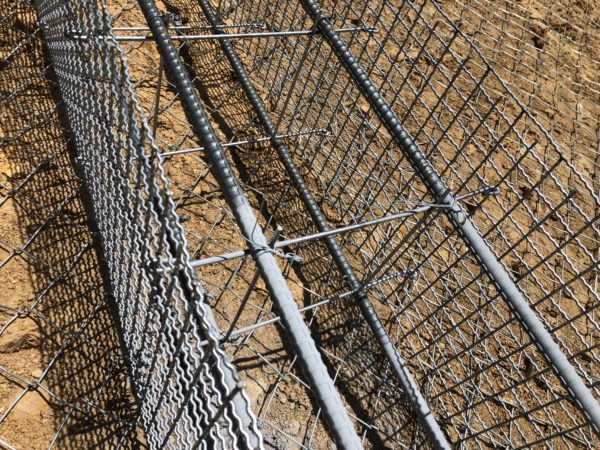
There are some old-school inspectors at the government office who say, “You can’t have paint on the rebar!” lol
The reason isAdhesion deterioratesThat's what they say, lol
I seem to recall that Miyazaki Prefecture had a rule like that...
I can’t help but wonder, “Why?” especially since there are even structures where the rebar itself is painted before use.
Epoxy paints, for example, are commonly used in the construction industry.
There aren't actually any test results on adhesion, are there? (Based on my research. If you know of any, please let me know.)
↑That said, when using epoxy paint, it seems they allow for 1.2 times the standard rebar overlap compared to regular rebar.
Measures to Extend the Service Life of Concrete Structures
So, just to be safe, the rebar overlap isReinforcing bar diameter × 40 × approximately 1.2That might be a good idea.
As a way out, lol
Well, there are countless rules that were established based on someone’s speculation, so it’s hard to say...
It’s hard to imagine that the presence of a rust-preventive coating would actually reduce adhesion to the mortar.
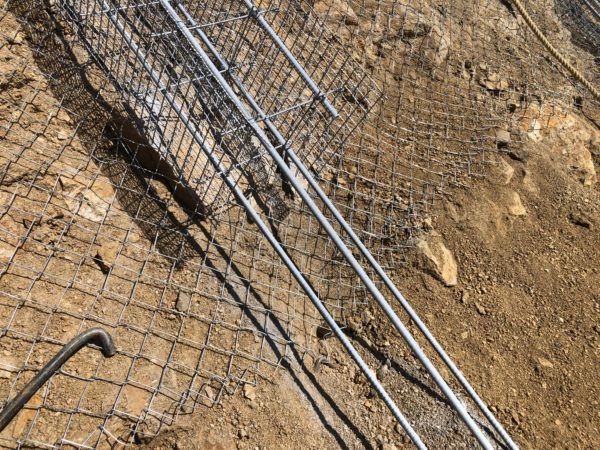
In fact, I think it’s a great idea because simply applying a rust-preventive coating like this ensures the durability of the rebar and guarantees its quality for the following year.
It would be interesting if we could experiment with this area next, wouldn't it?
I'll add that to my list of things to try! lol
So, does spraying the rebar actually reduce the bond strength with the mortar or not? lol
See you later.

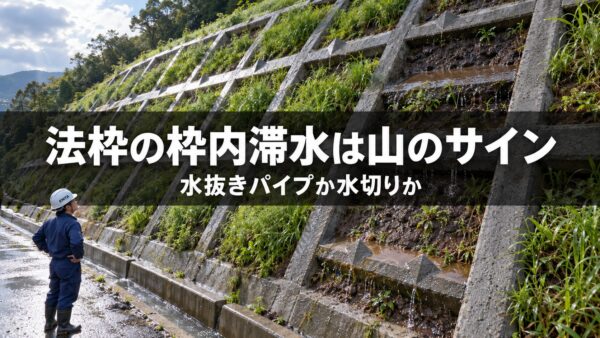
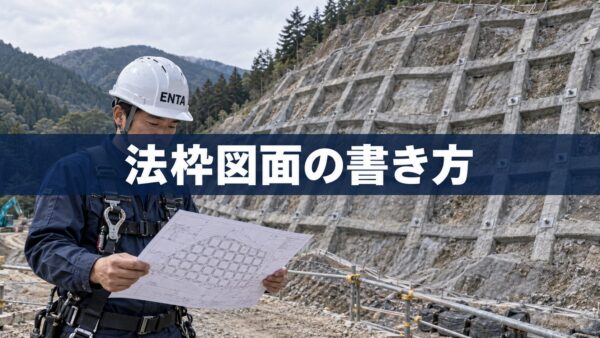

It is certainly true that cementitious materials do not adhere well to rust-preventive paint. You’ll understand this once you gain experience with spalling repairs and similar work. Therefore, when performing spalling repairs and similar work, it is best to apply a rust-preventive primer, a cementitious material with corrosion-resistant properties, and a maintenance paste.
Thank you.
I've never actually done any "explosive repair" work, so I'm not really sure, but,
I'd like to know the basis for the claim that adhesion is poor.
For example, if we have data from tensile tests and the like, it’s easier to understand, and it’s also easier to explain to government officials.
In addition, we can disclose the data to government agencies that request it.
You might think, “If adhesion is poor, is epoxy a good option?” but what’s the reality?
I suppose that’s why the reinforcement overlap is sometimes set at 1.2 times, taking that into account.
Since perspectives differ depending on the industry, it’s a great learning experience.
The Semenshous and Mente Paste you mentioned are very interesting materials.
I've been in the slope stabilization industry for a long time, but this is the first time I've heard of this material.
I’d like to buy some and see if I can use it to prevent rust on the ends of rebar.
We look forward to your continued support.
I work as a site supervisor in Miyazaki Prefecture, and we apply rust-preventive coatings like Rust-Eater to the rebar within the formwork; I’ve never received any complaints about the paint job either.
For construction projects where we knew there would be a significant time gap between the abutment work and the superstructure work, we did use rust-preventive agents that last for several years to protect the rebar.
However, some inspectors tend to nitpick, so it really depends on the inspector. Since each inspector says something different, we’ve submitted a request asking them to standardize their approach a bit more.
Thank you.
Have the restrictions in Miyazaki Prefecture been eased quite a bit?
A while back (about 15 years ago?), when I was checking the number of anchor pins driven in while installing the lath, I got really scolded for spraying on the lath lol.
I remember the Sabiraz getting a lot of flak, for one reason or another.
Even though Sabiraz was being used at the Ministry of Land, Infrastructure, Transport and Tourism office in Miyazaki at the time, the prefectural government wouldn't allow it.
As you say, it’s the same in every prefecture, but there’s no consistency.
And then the specialists and inspectors make these observations based on their own subjective judgment.
Based purely on subjective opinion, with no basis whatsoever.
This is the biggest problem.
Even though various service providers have been making requests for a long time, there doesn't seem to be any sign of change, and it just makes you wonder, "Is this just my personal opinion...?"
We look forward to your continued support.