Hello, everyone.
This is Enta.
This is a continuation of the previous post.
④ Raising Awareness in Local Communities and the Private Sector: There Are Significant Disparities in the Actual Situation
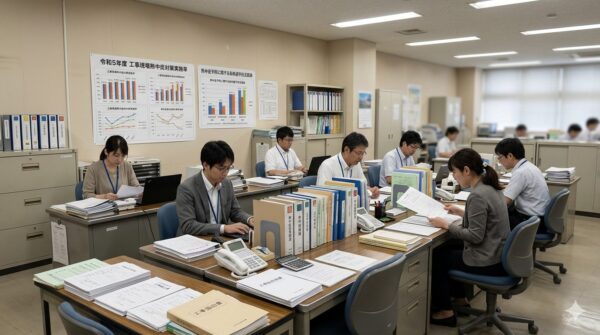
This is the data from this package that really made me think, "This is crazy."
Prefectures and Government-Designated Cities: Local governments that take extreme heat days into account when setting construction schedules → Over 80 percent
Municipalities: Same → Less than 20 percent
*Survey Results on Implementation Status: Ministry of Land, Infrastructure, Transport and Tourism Survey
It’s not just the major companies in urban areas that are winning construction contracts, is it?
Construction projects commissioned by local municipalities, projects in the agriculture, forestry, and fisheries sectors, private residential land development, and so on...
For construction companies that handle many such projects,"The rules for projects directly managed by the Ministry of Land, Infrastructure, Transport and Tourism have been finalized"—to be honest, that's not really relevant....will end up happening.
With regard to privately commissioned construction projects, the approach has been limited to “collecting and sharing best practices,” andIt is not enforceable.
The problem I see is...
While this document contains some good points, when read from a frontline perspective, there are a few parts that make you think, “Wait a minute.”
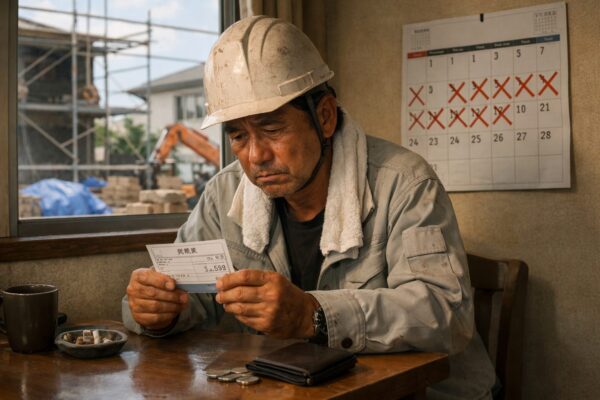
[Issue #1: The Problem That Craftsmen on a Daily Wage System Earn Zero Income When Work Is Suspended]
The package also states that “further discussion is needed,”Medium- to Long-Term Challengeshas been postponed.
If skilled workers paid by the day stop working due to extreme heat, their daily earnings will be zero.
It's a completely different story for people on a monthly salary.
Even in public works projects, there are still many skilled workers on site who are paid on a daily wage basis.
The reality is that “even if they tell me to take a break, I won’t be able to put food on the table if I do.”
This package does not include any specific measures to address this issue.
Well, to be honest, they're also trying to phase out self-employed artisans.
I'm sure there are tax issues and other things to consider, of course.
That’s the direction the government is taking.
That said, even among salaried craftsmen, there are some who just can’t help but say, “I’d much rather get paid by the day or month!”
[Issue #2: The Flexible Work Hours System Poses a Significant Hurdle for Small and Medium-Sized Enterprises]
It is necessary to establish employment rules, enter into a labor-management agreement, and file a notification with the Labor Standards Office.
As for whether a construction company with just a few to 10 employees can handle this properly...
There are many companies that are difficult to deal with.
Unless the implementation support system is included as part of the package, it’s easy to end up in a situation where “the system exists, but we can’t use it.”
You’re probably thinking, “You should be able to do that much, right!?”
That's so sweet! lol
It would be a little better if you had your own professional advisor, though...
[Issue #3: "Pilot Projects" Are Still Limited]
A system that would allow work to be suspended during periods of extreme heat has not yet been established.The evaluation phase of a “pilot project”。
It has not been specified when the system will be rolled out to all construction projects. Next summer (the summer of Reiwa 8) is the tentative target, but this will depend on the results of the pilot program.
This year, too, I'll just do my absolute best...
Since the budget and construction time don't match up, I think it'd be okay if the estimate were 1.2 times higher—what do you think? lol
[Issue 4: Compatibility with Snowy and Cold Regions and Construction Projects]
There are many areas where construction cannot be carried out during the winter, and if work stops in the summer and again in the winter, then...The number of operating days per year is steadily being reduced.
The package simply states that “care must be taken” to resolve this imbalance, but offers no specific measures.
What is consideration?
You mean, "Will you be nice to me?" lol
[Issue ⑤: The sliding scale provision is a system that only those who are aware of it can use]
If material and labor costs rise due to a heat wave, in the case of public works projects,Inflation Adjustment Clause (Slide Clause)You can request a change to the contract amount.
The Ministry of Land, Infrastructure, Transport and Tourism could probably handle this quickly, but when it comes to prefectures, cities, and towns...
Construction work mainly involves working in the harsh environment of nature.
For workers laboring in the middle of an open road or on a slope, the heat is often even more intense than it is for construction workers.
It's not that being a builder is easy (though I do envy them a little, lol).
This package covers not only projects under direct jurisdiction but alsoWill this system evolve to cover everything from local and private projects to specialized construction work such as slope stabilization??
The direction of the system is correct.
Words like “trial,” “review,” and “medium- to long-term challenges” are used way too often and are way too vague, aren’t they?
Since most of the decisions are made by people who aren't familiar with the actual situation, I imagine there are many things you don't understand...
I believe it is necessary for us on the front lines to speak up to the general contractor as well.
Information is important, isn't it?
It’s the people on the front lines who lose out if they don’t know this.
See you later.