Hello, everyone.
This is Enta.
I thought I'd write about something that's been on my mind lately.
Here’s the reality of “Japanese and Foreign Workers” as seen from the perspectives of construction site workers and management.
There are all kinds of opinions flying around on X and the internet, but as someone actually on the front lines, I’m going to be completely honest and share my thoughts here.
This might offend some people, lol (not that I know, though).
Well, that's the honest truth from the field.
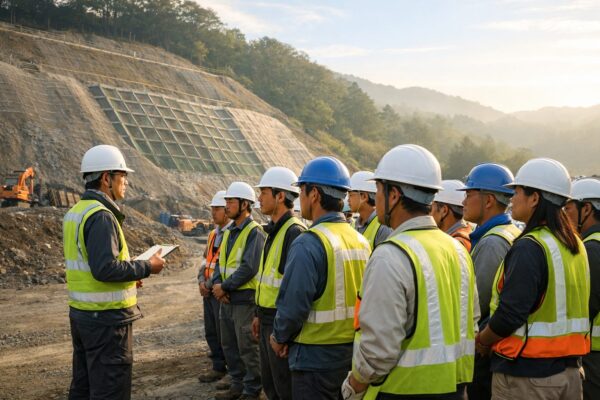
Foreign Workers in the Construction Industry Are No Longer Just “Auxiliary”
The government is doing all sorts of things, such as promoting "an attractive construction industry" and "encouraging young people to enter the field."
Labor unit rates for public works design have been rising for 14 consecutive years.
Wages are certainly rising, but are there really any young Japanese people who are drawn to the construction industry out of envy?
I think there are hardly any left.
You can see this clearly when you look at the actual data.
| 年 | Number of Employees in the Construction Industry | Of these, those aged 29 or younger | Of whom are 55 or older |
|---|---|---|---|
| 1997 (Peak) | 6.85 million people | Approximately 880,000 people | ― |
| 2024 | 4.77 million people | Approximately 560,000 people (12%) | Approximately 1.76 million people (37%) |
Japan Federation of Construction Industries, “Construction Industry Handbook”・Ministry of Internal Affairs and Communications, “Labor Force Survey” (2024 average)
It's probably even lower now!
From its peak in 1997, the number of workers has... over the course of about 30 yearsA decrease of more than 2.08 million people. Compared to the peak,A decrease of approximately 30.41 TP3TThat's it.
Furthermore, the number of young people (aged 29 and under) has plummeted from a peak of 880,000 to 560,000. They account for only 12% of the total.
On the other hand, people aged 55 and older account for 37%. In other words,It is certain that there will be a mass exodus in 10 years.Structure.
Back in those days, when construction investment was cut in half due to a policy shift from “concrete to people.”
While things have improved compared to the days when the industry was in a state of chaos, the underlying problem—that young people aren't entering the field—remains unchanged.
And the image of "dangerous, dirty, and tough" that has been ingrained in young people and their parents' generation is already impossible to shake!
I think whoever came up with the term "3K" is a real criminal! lol
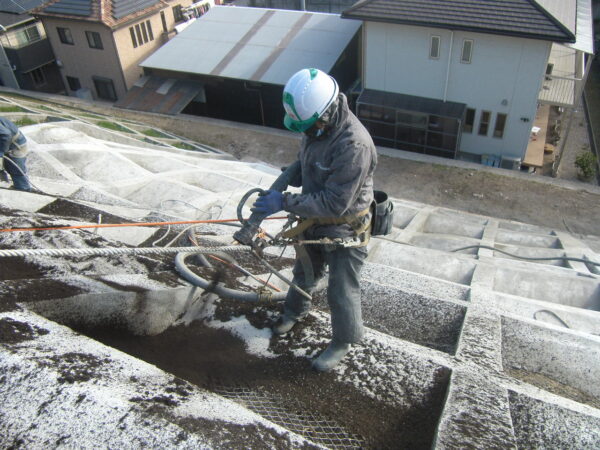
Number of Foreign Workers in the Construction Sector Rises to 3.5 Times the 2016 Level
The number of foreign workers in the construction industry is surging.
Year (as of the end of October) Number of Foreign Workers in the Construction Industry | Main Status of Residence
2016: Approximately 41,000 people (3.81% of the total population) ―
2023: Approximately 145,000 people (7.11% of the total population) Technical Intern Training, Specified Skilled Worker, etc.
2024: Approximately 178,000 people (7.71% of the total population) Technical Intern Training: Approximately 107,000 people; Specified Skilled Worker: Approximately 38,000 people
Japan Federation of Construction Industries, “Construction Industry Handbook”・Ministry of Land, Infrastructure, Transport and Tourism: “Acceptance of Foreign Skilled Workers in the Construction Sector”
3.5 times over 7 years.
This doesn't mean I'm being "employed under slave-like conditions," as the saying goes.
Compliance with the minimum wage and enrollment in social insurance are mandatory for both the Technical Intern Training Program and the Specified Skilled Worker Program.
The law stipulates that employees must receive “compensation equal to or greater than that of Japanese employees with equivalent skills.”
The conditions are almost the same as those for Japanese nationals.
Even so, foreigners come, but Japanese people don't.
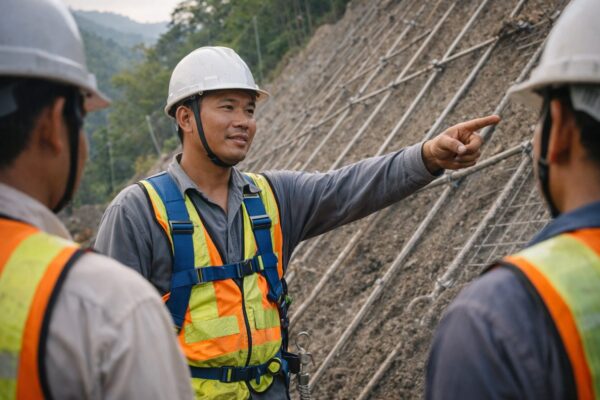
That's the bottom line.
The Difference Between a Sense of Purpose and a Hunger for SuccessThat's it.
A member of Entame's Specific Skilled Worker program has obtained Type 2 status.
The other day, one of our Specific Skilled Worker Category 1 employees obtained Category 2 status.
What happens when you obtain a Specific Skilled Worker (Category 2) visa?
I have a driver's license, too, and I'm really eager to get started!
There is no upper limit on the renewal of the Specific Skilled Worker (Category 2) status, and if certain conditions are met, it is possible to obtain permanent residency.
As long as he continues to renew his visa, he will continue to work in Japan.
As a company, we will, of course, provide generous benefits.
You can understand that feeling of wondering, “Do we really need ‘unmotivated Japanese people’ there?” right?
Whether someone is capable at work or not is the same for both Japanese and foreigners.
However, rather than relying on Japanese employees who are content to coast along, it’s better to hire motivated foreign workers with clear goals—they’ll deliver results.
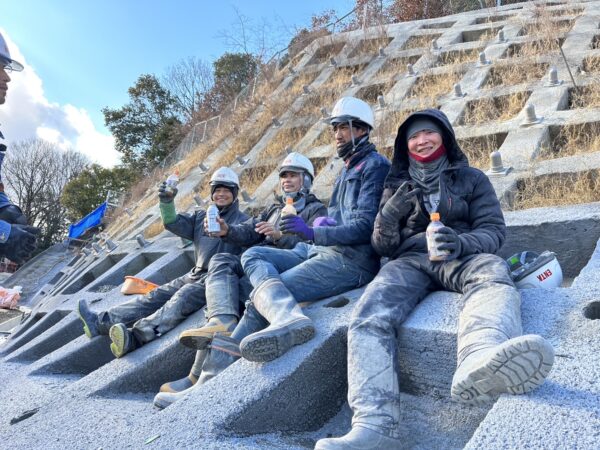
The Truth from the Front Lines and Management: “Those troublesome Japanese—we don’t need them, do we?”
Whenever I write this, people say, “That’s exactly why companies fail—because their leaders think like that!” lol (Well, I don’t really care, though lol)
If this gets published in other media outlets, it'll probably get slammed, lol.
But this is the reality on the ground. (You’ll see for yourself if you come by, and you’ll understand even better if you work with us.)
Craftsmen who take the day off when ready-mix concrete is poured.
A craftsman who takes a break when it's time for spray application.
A craftsman who takes a break once everything is set up.
If you scold someone even a little, it’s considered workplace harassment.
If something is unreasonable, it's workplace harassment.
The reality is that there are a lot of Japanese workers who are only worth 0.5 man-days even though they’re supposed to be worth 1 man-day, lol.
On the other hand, foreign workers always show up on time and follow work instructions to the letter.
From the company's perspective, which would they choose? The answer is obvious, isn't it?
At Enta, they're letting me take on more and more of the main work, so I'm growing by leaps and bounds.
Recently, we’ve sometimes sent only foreign workers to job sites.
We're getting very positive feedback from the general contractor.
People might call it the “grit theory,” but “grit” is the strength to see things through, the determination to persevere, and the resolve never to give up, isn’t it?
That is certainly true of the foreign workers coming to the construction industry today.
Young Japanese people don't come here, so I don't know!
I don't think they're completely gone, but there are so few of them left that it's hard to tell, lol.
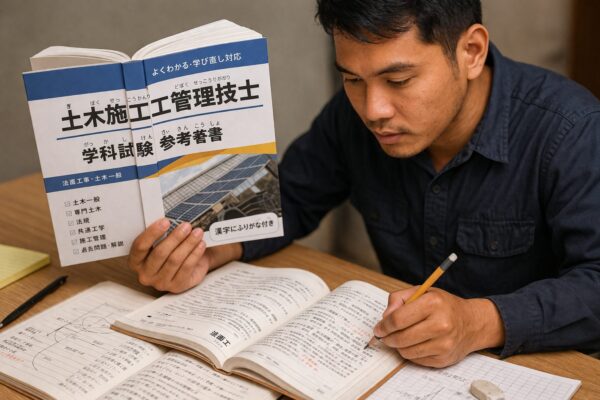
Construction Management Enters the Era of Foreign Workers
For now, the Japanese have the technology.
However, in the future, this will rapidly shift to foreign nationals.
Even on the Civil Engineering Construction Management Technician exam, kanji are now often accompanied by hiragana, and
More and more foreign nationals are passing the exam.
Since the Specific Skilled Worker Category 2 program was launched in 2022, the number of Category 2 holders in the construction sector has been steadily increasing.
As of the end of December 2024, there were 213 Specific Skilled Worker Category 2 residents in the construction sector (Ministry of Land, Infrastructure, Transport and Tourism).
Although the numbers are still small, the number of foreign nationals who overcome the high hurdle of the exam—with a pass rate ranging from 13 to 421 TP3T—is increasing every year.
And a future in which motivated foreigners start their own businesses in the construction industry is just around the corner.
Although there are regulatory issues, I believe we’ve reached a point where we have no choice but to take action to protect our infrastructure.
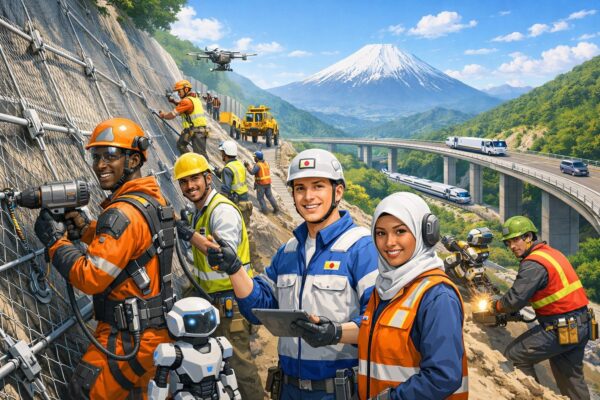
Who Will Maintain Japan's Infrastructure 50 Years from Now?
No matter how hard the government tries, it feels like it's already too late.
People on the sidelines are quick to say things like, “What about the subsidies?!” or “There are people in Japan too—put that money toward the construction industry!”
But those people aren't contractors or site workers.
It's like people from areas where there aren't any bears saying, "Don't kill the bears!" lol
It's the same as people from areas where it doesn't snow saying, "You don't need to clear the snow, do you!?"
Fifty years from now, Japan’s slopes and public infrastructure will be protected by foreigners.
I can say this with certainty.
It's already too late to stop. And there's no need to stop anyway.
If the slope collapses, people will die.
If the road disappears, the village will be cut off.
Rather than who does it,Who's going to do it right?。
That's all there is to it.
If you don't like that, come work in the construction industry right now.
Go out there and work hard.
Let's work together! Hey, you Japanese person over there!!
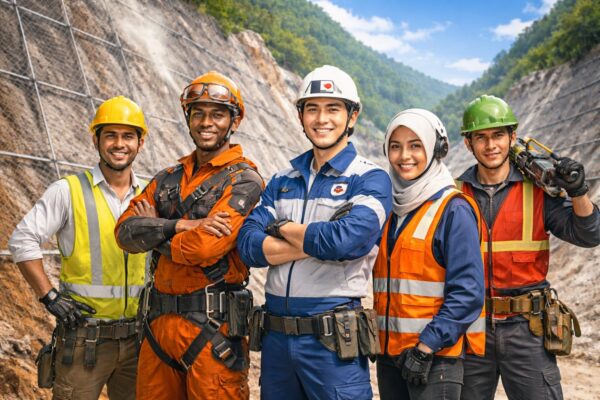
They're not coming, right? They're definitely not coming, lol.
That's why we have no choice but to leave it to foreigners.
I'd like to leave it to a foreignerThat's right. We are.
They've already reached a level where they can be trusted to handle things on their own!
Even at this very moment, foreign workers are clinging to the slopes and working on entertainment production sites.
Don't complain, don't slack off, and give it your all.
And they earn a good salary and bring smiles to their families back home!
This is reality.
Here's the answer.
Instead of just complaining from the sidelines, why don't you put on a helmet and come out to the job site? lol
Let's work together!!
Let’s work together to shape Japan’s future!!
See you later.