



Hello, everyone
This is Enta.
I've been in Vietnam since the other day.
As you might imagine, this is an interview for technical interns.
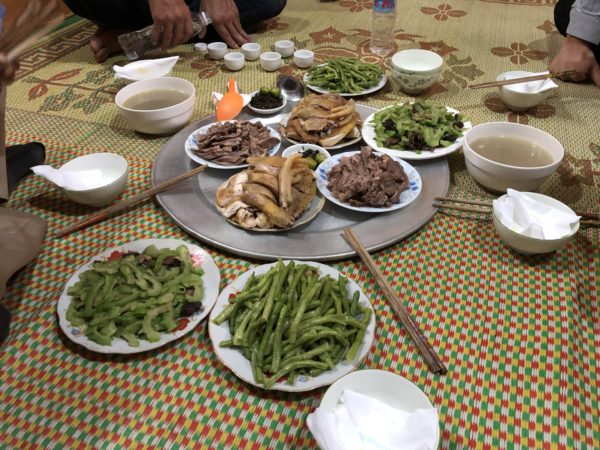
There are claims out there that the Technical Intern Training Program is a form of slavery.
Is that really true?
Here in Vietnam, even children in elementary and middle school are working. (Due to the difference in the cost of living)
At wages far lower than those of technical interns.
And they say that when they grow up, they want to go abroad to work.
I have so many dreams, like working abroad and buying a house or some land for my parents in Vietnam.
Is that a bad thing?
They go abroad of their own free will to work and send money back to their home country.
That way, my family benefits.
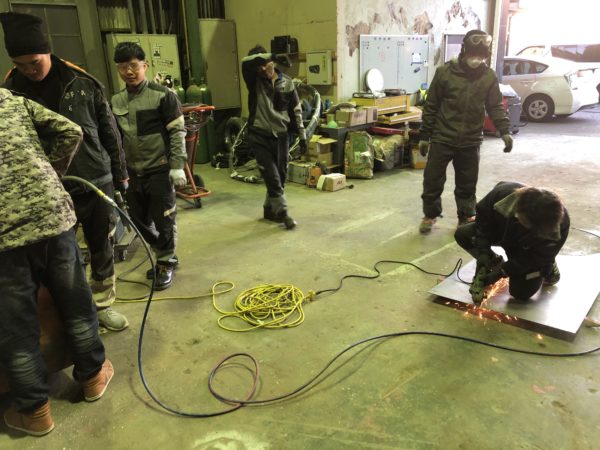
In Japan, they call that labor exploitation or slavery, don't they?
From the company's perspective, they're paying a considerable amount of money.
It’s fine if Japanese people want to work in that field, but these days, it’s pretty rare for Japanese people to get into the construction industry, lol (there are really very few).
So we have no choice but to rely on other countries…
People say that if wages go up, more people will come—but is that really true?
A long time ago, the media was all abuzz, claiming, “The construction industry is making too much profit! We need to cut down on the number of companies!” And this is the result we’re seeing now—what do you think?
In the construction industry, we put our bodies on the line every day—it’s a matter of life and death. (Is that an exaggeration?)
It's a dangerous job, after all (safety first, of course).
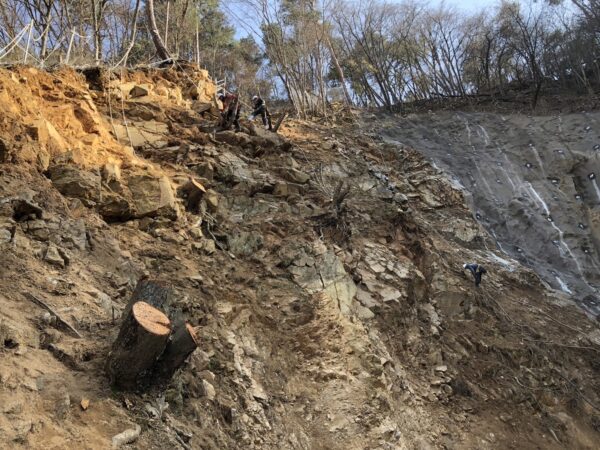
With wages rising so sharply right now, are people flocking to the construction industry?
You haven't, have you?
I think, in the end, Japanese people just stopped working.
I think it's the result of becoming too wealthy.
Once you come to Vietnam, you’ll see what I mean—the energy here is different.
Their energy and power to survive are in a league of their own.
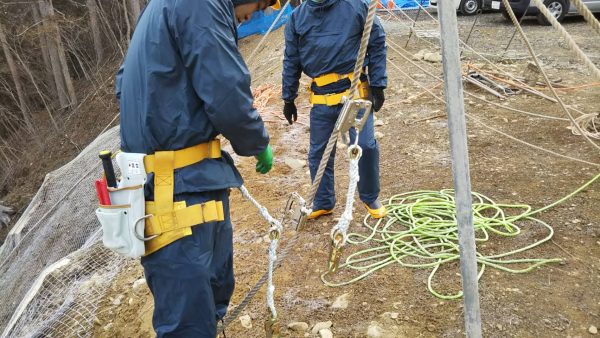
It's fine to complain about the Technical Intern Training Program, but if a pothole appears in the asphalt while you're complaining, you'll complain about that too, right?
If a landslide occurred, the mountain collapsed, and debris scattered all over the road, you’d complain, right?
It's actually them who are supporting all of that right now.
Japanese people don't do that kind of work.
They do this work willingly.
We've asked them to come, too.
I genuinely wonder what's wrong.
I’m sure some people will think, “Well, everyone has their own opinions, so that’s not going to work,” but I really don’t see a way forward for Japan—there just won’t be anyone left to work in the construction industry.
That’s what I find myself thinking deeply whenever I see young people in Vietnam who hope to become technical interns.
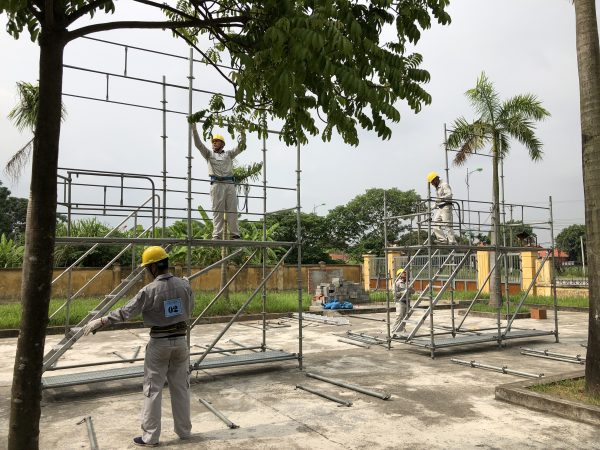
When I realize that this is the only way forward right now, I’m reminded once again how important it is to do my very best to work alongside them.
Even if outsiders get a superficial understanding of the situation, it’ll just widen the gap between them and the rest of us who are actually working on this, lol.
I really think the world would be better off if it were simpler, though lol
That was a report from Vietnam lol
See you later

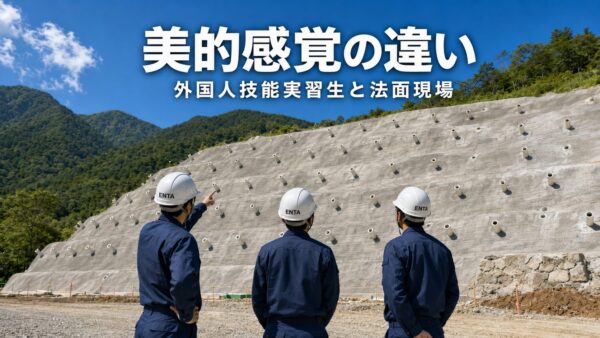
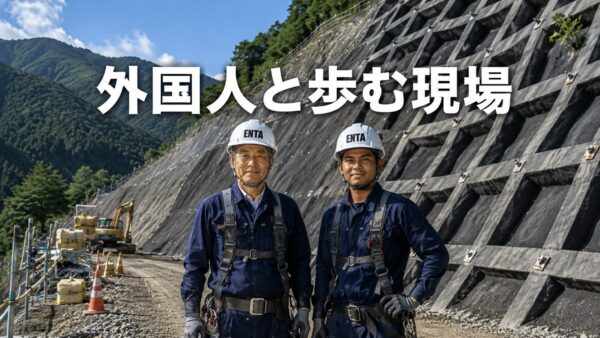

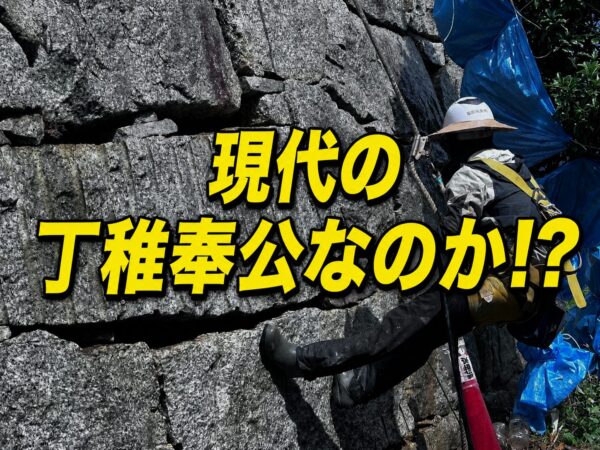
We pay 1.5 times the wage for desk jobs.
We will implement a full two-day weekend system.
Overtime is limited to one hour per day.
Paid time off is 100%.
Limit subcontracting to two levels.
At the very least, do this much before you say, “Wages have gone up, but no one is coming.”
The reason people are embarrassed to work in the construction industry is that it’s still a low-paying job. Is it true that wages in the construction industry are going up? What’s your source? When I talk to the subcontractors, I don’t get that impression. I’m a general contractor myself, but since I run a small-to-medium-sized company, my pay isn’t that high either.
"It's going up." Wait, how much is it?
If you just make a vague statement without mentioning a specific amount, it has zero persuasive power.
You don't actually work on-site, do you? You don't understand a thing.
I’ve been working in the construction industry for 28 years, but my pay is based on daily or monthly wages, and it hasn’t gone up in years. To begin with, the company doesn’t even offer paid time off. My annual income is only about 4 million yen, but people in their 20s are making just 160,000 yen in total pay. At this rate, it’s going to be impossible to secure workers. I’m really hoping to find a new job somehow.
That company is simply in complete violation of labor standards.
Even though wages are rising so much right now? Huh?
The only thing going up is the average age of the craftsmen, right?
Low pay, no paid time off, only Sundays off, and expected to work on public holidays as a matter of course; even though I have to travel to remote job sites—leaving early in the morning and returning late at night—I don’t get paid for the travel time as overtime,
Hard work for low pay.
No days off and low pay.
Even after learning the job, the pay is low.
Anyone want to give it a try?
Material costs are rising, but wages aren't.
I'm on the sub-console,
I'm working, though...
The number of older adults on site is increasing.
Young Japanese people...
They won't come.
Members of the National Diet
I don't understand.
Right now
Like in the U.S., only foreigners...
I'll stop working.
Are your wages going up? No way!!
I completely agree. They want to work, and we want them to work. Even if the term “technical intern” is just a fig leaf, I think calling it “slave labor” is disrespectful to them.
The first intern who came to the company where I work graduated from a Japanese university after returning to his home country and is now working as a full-time engineer, which makes me believe that the internship program is more than just a formality.
In Japan, it's just that the job has lost its popularity because there are other jobs that pay better.
To narrow down one’s perspective arbitrarily and then speak in general terms—I can only say that’s a real shame for the mind.
Instead of just writing about Vietnam’s good points, isn’t it actually disrespectful to the Vietnamese to compare it to Japan—a country that seems to lack motivation—and hold Vietnam up in such a way?
Articles that make frequent use of provocative language don’t seem to show much respect for the interns, and there’s no sense that they’re even trying to hide the fact that they look down on them as mere fodder for showing off.
The tendency to praise Vietnam while disparaging one’s own country clearly reveals the author’s underlying prejudices toward Vietnam.
〉A long time ago, the media was all abuzz, claiming, “The construction industry is making too much profit! We need to cut down on the number of companies!” And this is the result we’re seeing now—what do you think?
Since this was the outcome desired by politicians, bureaucrats, and the media, those involved at the time likely have no regrets at this point.
Politicians, bureaucrats, and the general public in this country are focused only on the immediate issues at hand and blindly believe that the responsibility lies with everyone but themselves.
Since the majority of people in this industry are uneducated and spend money recklessly, the economic response was positive.
Nowadays, there are many smart, prideful people who went to college on loans but fail to realize how unfortunate their situation is; they devote themselves to repaying their debts and saving money, and are not contributing to the economic cycle.
I suppose that no matter how much money I make, I'll get criticized from all sides.
It's slave labor because they're being overworked in terrible conditions.
Stop acting all defiant, like "What's wrong with that?"
The guys posting critical comments here are probably non-regular employees with low salaries, lol.
Don't sugarcoat it—haven't there been problems with working conditions in Japan's construction industry up until now?
There are a lot of people who get into trouble for one reason or another. There are a lot of people who smoke in public. There are a lot of people who park with their feet up on the dashboard. There are a lot of people who can’t write kanji or make typos when typing them. In short, it’s an industry where many people are looked down upon by society. Simply put, I think very few people would want to go out of their way to join such an industry.
People in the construction industry tend to act like they're better than others, saying things like "the world wouldn't function without us," but that's true of pretty much every profession, department, or division.
There are a lot of people who are narrow-minded and lack manners, so I’m simply embarrassed to work in that kind of environment.
You're completely missing the point here.
The reason technical interns are called slaves is because they aren’t being paid properly. This has absolutely nothing to do with the construction industry.
Of course, this doesn't apply to all companies, and I think it's a nuisance for those that actually pay their employees properly and provide training.
The dispatch of workers to the construction industry is prohibited under the Worker Dispatch Act.
Therefore, the fact that the presence of temporary workers among skilled laborers in the construction industry is illegal, yet the Labor Standards Office still has jurisdiction over it, is the root cause of the deteriorating working conditions in the construction industry.
The penalty for disguised subcontracting is imprisonment for up to three years or a fine of up to 2.5 million yen.
*Violations of the Temporary Staffing Act, the Public Employment Security Act, and the Labor Standards Act
Strict compliance with the Subcontracting Act is required.
We're a subcontractor, and even though prices are rising, there's not the slightest sign that wages will go up.
The two-day weekend is something only the employees of the general contractor get; it has nothing to do with us craftsmen.
Still, things were better back then.
"Give us two days off a week! Provide social insurance! Make craftspeople full-time employees!" That's what the higher-ups say, but since we're not getting paid enough to make that happen, it's just not feasible.
If something is too much for Japanese people, it’s too much for trainees as well.
It’s true that many Vietnamese kids are positive and enthusiastic, but…
Given the current situation, I can’t very well tell young people in Japan to follow their example.
〉I started feeling ashamed to work in the construction industry
It's not like this is something that just happened yesterday or today, though...
Forget about subcontractors—there’s a whole “middleman feast” going on all the way down to the nth-tier subcontractors → The “white-collar” crew at the prime contractor earns high salaries (is this what the blog author is trying to say?), but the actual workers on the job site are paid low wages → It attracts nothing but former delinquents and people with troubled pasts who have nowhere else to go → Normal young people are wary and avoid it.
Aren't these technical interns the result of decades of repeating this bad practice?
What if the general contractor hired workers directly and returned the portion that would otherwise be skimmed off?
Is there some rule that says people who earn their living with their brains and those who earn it with their bodies can’t work at the same company and receive the same salary?
Japan, a country that imposes a 20.42%!! income tax on technical interns, is truly abnormal.
We need to change the system.
Everyone knows it, but no one points it out.
It's frustrating—both the articles and the comments.
I wish everyone would just be done with it already.
Wouldn't it be better to discuss rethinking the structure of the construction industry?
The problem is that we have a structure where subcontractors’ subcontractors and even their subcontractors’ subcontractors are doing the on-site work.
Before turning to other countries, there are things you should do first, lol.
Are salaries going up? No way! Isn't that just for the big general contractors?
Or maybe it's a middleman whose name is the only thing listed.
Plus, even though material costs have gone up, the unit price hasn't gone up lol
If you want to make more money, you’ve got to work back-to-back shifts, day and night—otherwise, your pay just won’t go up.
I've never thought of it as something to be ashamed of.
The reason I tend to avoid them is that I’m not comfortable around people with a stern appearance; I have this image of them giving instructions in a commanding, shouting tone. I just don’t like that sort of thing.
Since my job involves visiting various homes, I often interact with people working in construction or on other projects. However, even when I greet them or try to strike up a conversation, they either remain silent or, for some reason, speak down to me, which makes it hard to form a positive impression of them.
There’s always a certain number of people like that in every company, though.
I've never heard anyone call it slavery when people send money to their families back home.
They bring in large numbers of foreign trainees, employ them at minimum wage, and house them in cramped rooms with many people (though apparently they don’t mind because that’s how they’re used to living and are actually enjoying it). When Japanese employees take extended leave, only the trainees come to work—without receiving any holiday pay. Safety training is not thoroughly enforced. They are treated carelessly.
And so on—that’s why people say it’s a slave system that works in the company’s favor.
What’s the point of saying that elementary and middle school students are working in Vietnam? It has absolutely nothing to do with whether working in construction is shameful or with slavery.
Please search for “Yuyuta Construction” on YouTube…
The shocking reality of the Japanese construction industry is about to be revealed…
So? Are you paying those technical interns the same wages as Japanese workers?
If you don't pay, wouldn't you be unable to argue back even if someone called it slavery?
Is it really possible to pay high wages to manual laborers in Australia, or in countries with less economic power than Japan?
The reason people aren't going into construction and civil engineering is the 3Ks
Even though it's a job that's practically synonymous with the workplace,
The pay is too low, and there aren't enough days off.
That's where it starts
Since it's such a "3K" job, the starting salary...
400,000 yen or more and a bonus equivalent to 5 months' salary or more
130 or more days off per year and full use of paid time off
Unless the rate is at least 80%, no one will...
The reason I don't want to work in an industry like that is
It goes without saying.
Also, even if there's a lot of overtime, it should be no more than 10 hours per month.
Required
They aren't doing this because they want to. I used to train Chinese trainees at the metalworking shop, but they said they wouldn't do this kind of work even after returning home. They're just working abroad to earn money. What can they possibly do back home with skills they learn in just three years or so?
I used to work as a scaffolder... Have wages gone up? I think they’ve actually gone down. How much is the daily wage, anyway? To begin with, a monthly salary, two days off per week, paid time off, overtime pay, overtime pay for commuting to and from the job site, and full social insurance coverage—from a worker’s perspective, those are basic expectations. Surely you’re not hiring people as self-employed contractors, are you? We live in an age where it’s easy to spot legal violations with a smartphone. The industry needs to change. It doesn’t have to be your company that repairs the roads. Companies like yours should be weeded out.
Around the mid-1970s, when Tokyo Tower was being repainted, a tour bus guide told me that the daily wage for workers doing the high-altitude work was 50,000 yen.
Also, during the construction of the Yokohama Landmark Tower, which began in 1990, it’s said that scaffolders earned a daily wage of 60,000 yen, with a monthly income of over 1.2 million yen—a fact that was once featured as a question on a famous quiz show.
Around the late 1970s, as the supercar boom was beginning to wane, an interview with a supercar dealer published in a car magazine revealed that the top demographic among buyers was the construction industry, with many being carpenters and roofers.
I think a lot of people would be willing to work as carpenters or construction workers in major metropolitan areas if they could earn enough to buy a supercar or a luxury high-rise apartment.