Hello, everyone.
This is Enta.
Work on next year's construction project is already underway, and we are being consulted on matters such as design changes and the wording to be included in the meeting minutes.
One common reason for this is a change to new materials.
Naturally, it stands to reason that materials that generate profits for both the general contractor and the subcontractors will be selected, andProper Economic ActivityI think so.
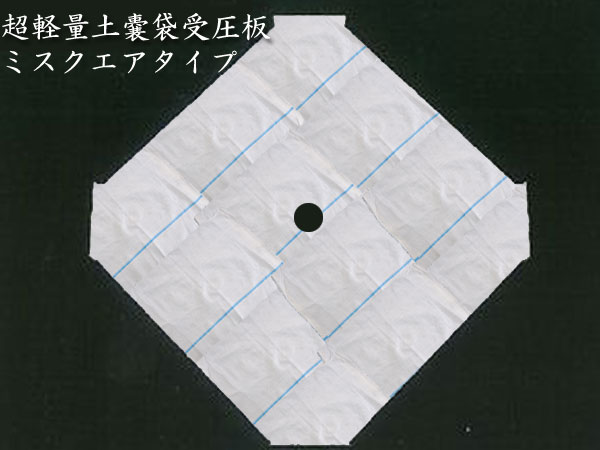
However, when a small company like ours does something like that, we sometimes find ourselves on the receiving end of unnecessary hostility from sales representatives at our materials suppliers.
I can't help but think, "If this were a major company, I wouldn't say this," lol.
Depending on the project, there are certain constraints imposed by the construction method and some aspects that simply can’t be helped, but with conventional construction methods, design changes can be made as much as needed.
All major companies can carry out construction using their own methods as usual, and since they choose construction methods that are profitable for both themselves and the general contractor, there is no problem whatsoever.

However, a salesperson who was recruited after pitching to a consulting firm can’t say that.
Those efforts can be easily overturned by the construction side.
From the government's perspective, as long as it's an equivalent product, they won't raise any objections to the change.
Sometimes things just don't change if government officials are under some kind of pressure—maybe from former employees or something? lol
However, since that would amount to collusion with the private sector, decisions are likely made based on an unspoken understanding. (The fact that there are former employees there implies just that.)
When I say that, the person in charge seems to be at a loss as well.
Salespeople at materials suppliers aren't familiar with small companies like ours, and they have no way of knowing which companies are making design changes.
When I think about it that way, it really makes me feel a little sad.
These days, anyone who knows how to use design software can make design changes, so it’s easy to do.
It's difficult unless it's highly specialized.
If you look at it the other way around, all you have to do is make products like that—so a manufacturing method that results in products simply because there’s no way to change them is the best.
I think we’ve entered an era where even small companies like ours will have to start offering such construction methods and products if we’re going to survive.
The reason is that a sales representative from a major publicly traded company visited our company the other day, and we had a conversation.
So, if we don’t listen to our customers and create products and construction methods that no other company offers, we won’t survive!
Apparently, they’ve been setting that goal since last year.
However, since it’s a major company, progress is slow, but I was told they are doing something.

Seeing such major companies going to such great lengths to do such down-to-earth work made me realize that we—small and medium-sized independent contractors—can’t survive unless we do the same.
The major players in the slope stabilization industry hold an enormous number of construction method patents and products, don't they?
We contractors are just carrying out that construction method. (We’re making a living off someone else’s work.)
There are people at major construction companies who say they can use both this method and that method.
You might think, “Anyone can do that, right? Didn’t someone teach you how to do it at first?”
There’s no point in getting cocky just because you can do it. (After all, it’s a technique that anyone can master once they’ve practiced it enough.)
Just as the major companies are doing, we, too, need to take on new challenges to ensure our survival in the future.
Developing something new for the company of the distant future.
For office workers, this part is, in a sense,Indicatorswill be.
If the company you work for isn't taking on any new projects,The Future Might Be in TroubleThat's it.
It’s precisely because we feel a sense of crisis that we struggle and do something.
For example, let's say you go running once every three days.
If you do this, your body should look completely different six months from now compared to if you didn't.
It’s exactly the same thing: there’s a world of difference between the future that awaits if you do nothing and the future that awaits if you take action.
Doing something new takes a tremendous amount of energy.
If you think that energy is connected to the future, you just have to go for it, right?
From the employees' perspective, they might think, "Here they go again with something we don't understand...," but that's exactly what matters.
Even if something doesn't make sense right now, there's a chance that someday you'll have that "Ah!" moment.
And companies that refuse to embrace new ideas are in trouble, aren't they?
After all, a company that refuses to acknowledge its failures is essentially denying the value of experience.
I'm going to go all out on development! For the company, for the employees, and for the future of the slope stabilization industry!
If you keep giving up after three days—on and off—for a year, you can make significant progress.
Let's start by being consistent for just three days.
See you later.