The construction industry is full of stubborn people
In the construction industry, employee turnover is high, and new hires join the company year-round, even through mid-career recruitment. There are all kinds of people—from those with no prior experience who don’t know their way around yet to those who have switched jobs due to issues like workplace relationships.
In this post, based on my own experience, I’ll share what I felt when a new employee joined the team,The Rigidity (Stubbornness) of People Working on Construction SitesI'd like to talk about that.
Back when I was still working at a certain job site as an assistant to the site manager, a mid-career hire was assigned to the site. He was 23 years old and had previously worked as a civil engineering laborer, but he joined my company because he wanted to work in construction management.
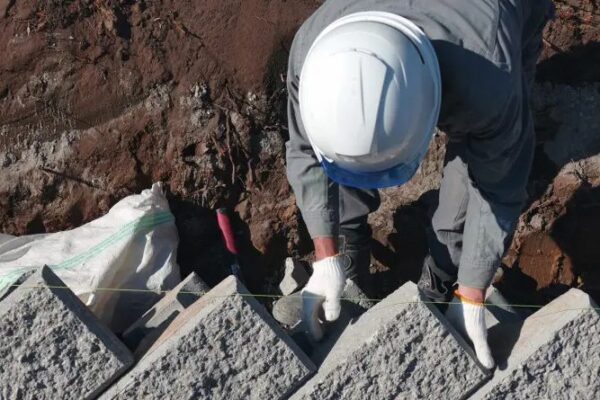
Just as he was assigned to the site, the crew was laying concrete blocks, but the workers from the subcontractor had no experience installing them.
He seemed to be struggling quite a bit with the bricklaying on site, not really knowing how to go about it, but since none of us supervisors had ever done the work ourselves, we couldn’t bring ourselves to offer any advice. Then, a new employee who had been watching the work for a while suddenly spoke up.
"I think changing the order in which you stack the blocks will make construction easier."
When I asked him about it, he said that he had previously worked on block masonry at his last job, and that he had spoken up because he felt something was off about the workers’ construction procedures.
Until now, we’ve been laying blocks after filling the backfill with crushed stone and then pouring the body concrete, but according to him, he suggested that the sequence of laying the blocks first, then filling the backfill with crushed stone, compacting it, and finally pouring the body concrete is overwhelmingly easier to work with and also speeds up construction.
They won't listen just because I'm new
Upon hearing this suggestion, the workers on site replied with annoyed expressions, “If we don’t pour the backfill first, the blocks will shift backward.”
However, the new employee didn’t flinch and replied, “First, apply some camber to keep the blocks from sliding backward, and then fill in the back. Since the blocks are designed to stand on their own, it’s much easier to stack them if you stack them first and adjust the slope and position beforehand.”
What he says makes sense. I tried having them follow his method for just one step, and the blocks went into place smoothly—as if the struggles they’d been having up until then had never happened.
Even so, the workers didn’t seem convinced, and they kept finding some excuse or another to continue working the old way. Watching them, I found myself thinking over and over again that if they had followed the new employee’s method, the workflow might have been quite different.
My experience at this site taught me a great deal.
What Is Expected of the Construction Industry
What I’ve really been thinking lately is that being stubborn is a sin. Even when someone goes out of their way to offer a good suggestion at work, my pride gets in the way, and I end up making some excuse and not following through—that kind of thing happens all the time.
What's more, I think that in most cases, the problem would likely be resolved if the suggestions were simply taken on board.
Even if you have many years of experience in the construction industry, there are bound to be construction methods and types of work you’re not familiar with. In such cases, rather than being too set in your ways, it’s sometimes necessary to be open-minded, listen to others’ opinions, and seek guidance from those with more experience.
I often find myself thinking that people in this industry are really stubborn. It seems almost impossible for young people’s opinions to be taken into account on the job. And that’s true even when their opinions are correct—not just when they’re wrong…
Regardless of seniority—whether because they’re young or lack experience—new employees sometimes offer groundbreaking ideas. Give it a listen and try to visualize it; this is"Flexibility" Required in the Construction IndustryI strongly feel that this might be the case.