



Hello, everyone.
This is Enta.
Are you busy?
We're kind of bored here, lol.
It seems like things are busy, but not that busy—it just feels like things are moving along for now.
Well, in the meantime, we’ve been steadily moving forward with private-sector construction projects.
I wonder what happened to that “leveling out” the Ministry of Land, Infrastructure, Transport and Tourism has been talking about for so long...
But that's beside the point.
How do you prepare estimates for spiral drilling projects?
The other day, we were talking about cost estimation, and since no adjustments can be made in the estimation process, there’s really nothing we can do about it, right?
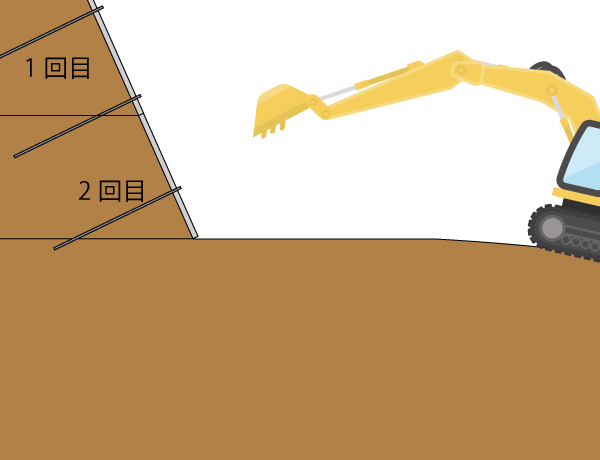
What Is Reverse-Winding Construction? (Part 1)
What Is Reverse-Winding Construction? (Part 2)
However, even though the design calls for reverse-wrap installation, the cost estimate is based on the standard method.
So, if the consulting firm doesn’t anticipate that from the start, the burden will fall heavily on us, the contractors.
Depending on the situation, it may not be possible to carry out the work.
I would like you to set the conditions clearly during the cost estimation phase.
How many layers will be installed?
What is the amount of work per level?
When calculating the total, do not use the total quantity; be sure to multiply the quantity for each tier by the adjustment factor.
Record the costs of installing and removing machinery each time.

Depending on the quantity, I think this approach will result in at least 1.2 times the amount of a standard calculation (based on the total quantity).
If possible, I would like you to use the Slope Association’s volume-based estimation method rather than market unit prices.
If you do that, it'll go up a little more.
In practice, even if you increase the amount by 1.5 times, it still might not be enough.
That’s when it gets really tricky, but the quote for the general contractor ends up being pretty steep, doesn’t it?
The general contractor negotiates with the government agency, but if the agency is reluctant to approve the changes, both the general contractor and the construction company end up suffering.
And just like that, I’m starting to really dislike reverse-wrap installation...
It would be nice if there were a better way to do this, though...
See you later.



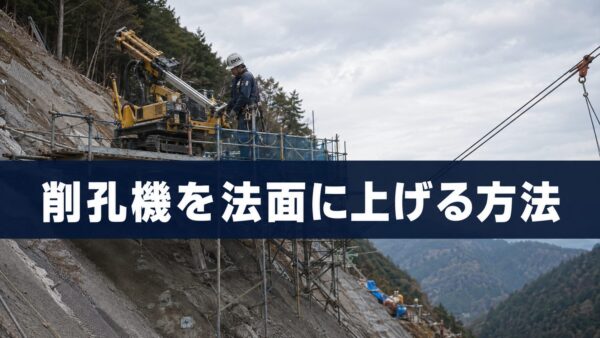
If the original design calls for rebar insertion and there’s a possibility of reverse-wrap construction, why not confirm with the other party before bidding whether they’re planning for reverse-wrap construction—and if not, whether this would be subject to a design change? Since the Q&A becomes part of the contract, it might make it easier for the government agency to proceed with changes. Conversely, if you sign the contract without raising this issue, you might not be able to complain if they later say, “You signed the contract knowing the scope of work, didn’t you?” It’s a tricky situation, but if you encourage the general contractor to address this, you might find a way forward...
If the design drawings specify “reverse-wrap installation” right from the initial design stage, there’s still some hope—but even if it’s written there, they won’t cover the cost of reverse-wrap installation lol.
If the consultants were really on the ball, they might increase the number of machines installed, but almost none of them go that far.
Anyway, Sakamaki is a real headache because neither the government office nor the consulting firm understands him.