Hello, everyone.
This is Enta.
Haven’t you seen a craftsman like this at least once on a job site?
"That's not my job."
"Isn't that Mr./Ms. ○○'s responsibility?"
"I only do what I'm told."
This is it. This is the one.
It’s not just slope workers—there are definitely a certain number of them at construction sites.
A craftsman who thinks, “That’s not my job.”
That "That's not my job" line you hear all the time on the job!
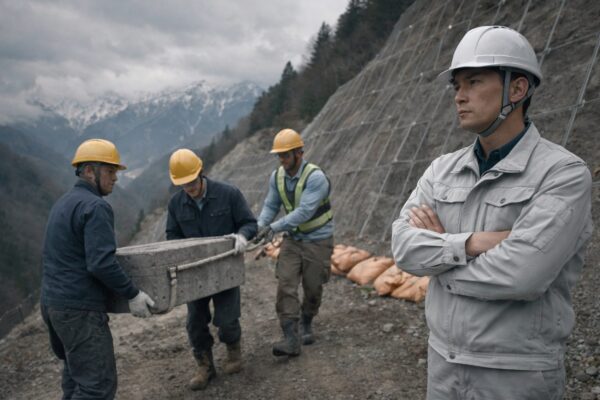
To be more specific, it looks something like this.
Let's say you're drilling holes at a site where ground anchors and shotcrete work are being done, and there are people applying the shotcrete. (Everyone is a colleague from the same company.)
The drilling machine stopped due to a mechanical problem, so we had some downtime from drilling.
The drilling workers said, “Spray coating isn’t our specialty,” and even though they’re from the same company, they wouldn’t help with cleanup after the spray coating work.
At the steel framing site, the spray team and the assembly team are on site.
After the formwork was completed, debris was scattered around the construction site.
It’s like the assembly team’s workers just say, “The spray team will clean it up, right?” and then head home...
Even though we're at the same company...
Ah... You know that feeling when you're like, "Oh, there they are!" right? lol
I don't think this is limited to the construction industry; I believe it's a common occurrence in manufacturing and the food service industry as well.
It’s just that, since construction sites often involve multiple trades working together, I feel like this issue tends to stand out more.
You know how there are people who come in having already decided that this is all they're going to do today?
Why do people think that way?
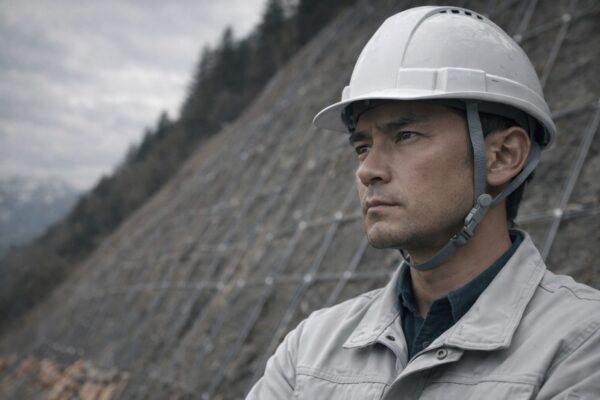
I actually heard this at a safety meeting somewhere a while back.
From a psychological perspective, several concepts fit the situation perfectly.
① Role Theory (based on the Google search below)
This is a concept from sociology and psychology that suggests people tend to act only within the scope of the roles assigned to them.
The key point is that “the clearer a role is, the more one should avoid getting involved in matters outside of that role.”
The more clearly roles are divided on-site—such as “drilling,” “spraying,” and “scaffolding”—the less workers tend to get involved in tasks outside their assigned roles.
In the field of organizational psychology, “Rigid Role Boundaries"It seems to be a phenomenon known as..."
② Bystander Effect
This psychological phenomenon was studied in response to the Kitty Genovese case, which occurred in New York in 1964.
(Research by psychologists John Darley and Bibb Latané, 1968).
Simply put, it’s the psychological tendency to think, “The more people are around, the more likely someone else will help, so I won’t do anything myself.”
There are five workers on site. Right in front of them, someone is in trouble. But no one does anything.
The mindset behind saying, “Someone else will do it, right?”
It seems that the larger the scale of the incident, the more pronounced the bystander effect becomes!!!
③ Lack of psychological safety
This was proposed by organizational psychologist Amy Edmondson (Harvard University).
Driven by the fear of being seen as “overstepping their authority” or “getting in trouble for meddling,” people tend to avoid getting involved in matters outside their area of responsibility.
In particular, at that worksite, there is a tendency to be especially harsh toward “newcomers or people who have been scolded in the past for meddling.”
The point is that if you say this on a job site—even just once—to someone who’s been told, “Oh, you don’t need to touch that,” they’ll absolutely refuse to move from that point on.
You know how I feel, right...
I don't want to get any complaints, either.
Supported by rule of thumb
There’s a huge difference in the scope of work a few years down the line between a craftsman who’s been scolded for overstepping their authority and one who’s been praised for being willing to do anything.
The former’s scope of responsibility keeps getting narrower, while the latter is becoming someone people rely on more and more.
Craftsmen who take the lead tend to be well-liked.
So, how should we handle this on the ground?
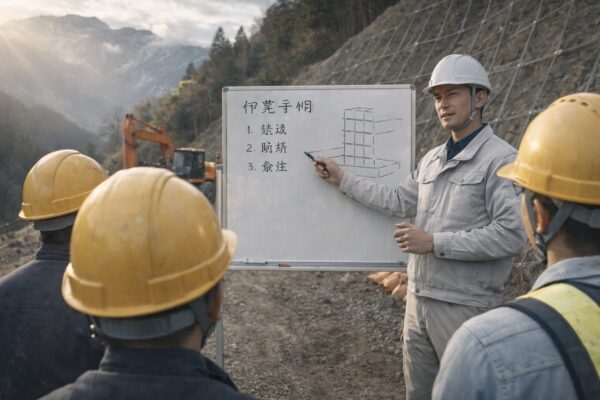
If we just brush this off by saying, “It’s that person’s fault for not helping,” nothing will change, so let’s also talk about how to deal with it.
First and foremost, it is a mistake to dismiss artisans who think, “That’s not my job,” as simply a matter of personal character, and
As you can see from the psychological background, this is clearly a structural problem, isn't it?
There are two main things you can do as a site supervisor or foreman.
① Evaluate “going the extra mile” (make it clear from the start that you want them to do this)
For example, making a point of noticing and verbally praising actions like “taking the initiative to do something outside their assigned responsibilities.”
"It really helped that you gave me a hand," or something like that.
With just these few words, that person's next action is sure to change.
It is said that both the bystander effect and a lack of psychological safety can be significantly mitigated simply by making people aware that “someone is watching.”
② Designing the “Gray Zone” in the Scope of Work
Instead of saying, “The person in charge of drilling is only responsible for drilling,” include tasks outside their assigned responsibilities in their role from the start, such as, “Once you’re done drilling, please tidy up the area around the worksite.”
These are the steps you should take when you start work or before beginning a task.
If you bring it up later, they'll just say, "I didn't hear that."
Construction projects involve multiple trades working together at a single site.
Drilling, grouting, head treatment, formwork, shotcrete, scaffolding... it's all interconnected.
It’s that “That’s not my job” mentality among workers in a single trade that throws off the entire workflow on site, doesn’t it?
I'm not saying it's great just because there are a lot of people, but when others take care of the little tasks I haven't gotten around to, I can go home early lol
And it’s always the “jack-of-all-trades” and the site supervisor who end up bearing the brunt of it.
I believe that it is the job of supervisors and foremen to consider how to create a “work environment that fosters craftsmen capable of handling any task,” based on an understanding of the psychological background.
So let them keep at it—if you train them to be craftsmen who can handle every type of work, the whole team will improve.
See you later.