Hello, everyone.
This is Enta.
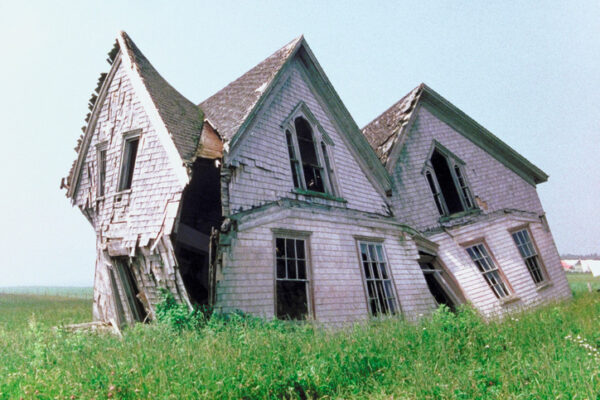
This time, the topic is completely different from the one about slopes, but I think you’ll find yourself saying, “Oh, I see!”
This time,Key Points to Consider When Building a Houseを
Professional Contractors in the Construction Industry (Plumbing, Carpentry, Drywall, Landscaping, Materials Manufacturers, Architects, Electrical, and Others)
I asked [name].
This is definitely not something I heard from a salesperson at a homebuilder or similar company!
Here are stories from artisans who speak only the truth!
Basically, you can do whatever you like, but if you’re thinking of this as a home where you’ll live for a long time, maintenance is inevitable.
Professionals give careful thought to maintenance, and since they’re always working on both maintenance and new construction projects, they naturally focus even more on that aspect, don’t they?
Here are some key points from a professional who has experience with both maintaining older homes and building new homes and buildings.
I think this is a very important point, so I believe it will be helpful for anyone planning to build a house in the future.
1. Don't go with solar (due to roof leaks and many other reasons)
2. Double-pane glass or insulated glass units
3. Floor Insulation
4. High airtightness
5. Avoid all-electric homes (homes that use both electricity and gas are more resilient in the event of a disaster)
6. If you have Kanta-kun the Gas, you're unbeatable
7. Don't get underfloor heating (it's a waste of money, and maintenance is expensive)
8. Drain pipes (to prevent subsidence) in parking lots and around the house
9. Avoid trendy fixtures (they cost a fortune and take a lot of time to repair or maintain)
10. Don't plan to vent through a single location.
11. A space to hang laundry indoors (would be great if available; can be shared with Kanta)
12. Set a budget that includes landscaping work
13. Don't hide your air conditioner (it'll cost a fortune if it breaks)
14. You don't need any extra features on an air conditioner. Just go with the cheapest model.
15. Air conditioners cost more as their capacity increases, so if your room is large, install two of them. (Cheap ones are fine.)
16. Stay away from Ene-Farm. It breaks down within 10 years.
17. Avoid integrated toilet units. Stick with a standard Western-style toilet and a Washlet. (It’s a hassle if the automatic feature breaks.)
18. Ventilation in attics, lofts, and underfloor spaces is essential
19. It’s a good idea to install a ventilation fan in the entryway as well.
20. Avoid unnecessary external decorations.
21. Skylights Can Cause Leaks
22. Avoid open-concept layouts (for two-story homes)
23. The bathroom should be on the north side or the east side, slightly toward the north.
24. It’s best to have plenty of outlets in various places (though this will increase costs).
25. Choose the Eco-One water heater! (The next-generation version of EcoCute)
26. Install empty conduits in each room (so various things can be installed later)
27. If the roof insulation is at least 200 mm of spray foam, you won't even notice the air conditioner set to 29 degrees in the summer (results may vary by region).
28. EcoCute is outdated
29. Stay away from colonial-style roofing materials
30. Stay away from ceramic siding (wall material)
31. If you want to keep costs down, galvanized steel is the only way to go.
32. Avoid using urethane insulation (it acts as fuel in a fire and burns easily, so insurance claims are likely to be approved).
33. For insulation, high-density glass wool is recommended (fire-resistant).
34. Choose a reliable contractor for 16K glass wool
35. Keep the roof a simple hipped roof.
36. Make the roof overhang as long as possible (a zero-overhang roof causes exterior walls to deteriorate more quickly).
37. The eaves should extend at least 30 centimeters. Ideally, they should be 1 meter long.
38. Don't bother with whole-house air conditioning—it's a pain to maintain yourself.
39. If you have large windows facing south or west, install external blinds. We recommend making the window awnings a bit larger.
40. Avoid built-in furniture (unless you’re working with a contractor who handles maintenance—in that case, built-in furniture is actually more cost-effective). There’s a very real possibility that the contractor could go out of business.
41. Simple Gable Roof
42. Be mindful of wheelchair accessibility (in old age)
43. Make sure your kitchen table is big enough (for your golden years)
44. Don't Plant Anything (Maintenance)
45. Don't Build a Wood Deck
46. Make sure to take measures against humidity both indoors and outdoors.
47. Use galvanized steel for the roof and exterior walls.
48. Spend money on insulation (?)
49. Install a Carport (Car Maintenance)
50. Make sure to thoroughly dehumidify the space under the floor
51. Don't go with a fully opaque fence
52. Minimize Walls and Create a Flexible Layout
53. Install handrails while you're still young
54. If you mount your TV on the wall and set up a small storage space behind it, you can hide your HDD recorder and wiring.
I think it would be great if you could run this by a contractor and discuss whether it’s feasible, budget constraints, and so on—if they’re the kind of contractor willing to have that kind of discussion, that is,
I think it can also serve as a factor in deciding to avoid places that are clearly out of the question from the start.
Homeowners who are building a house are novices when it comes to construction.
Even so, there’s still a gap in understanding when talking to home professionals, isn’t there?
Objectively speaking, if you take the points mentioned above into account, I think the house will be simple yet built to last for many years.
And there's no doubt it will be a home that offers great value for the money!
I think you should just decide what to keep and what to discard based on your own values and way of thinking.
See you later
For honest and conscientious home building, turn to my friend at WithHome (Yokohama)