Hello, everyone.
This is Enta.
Has it been raining for the first time in a while?
Every time it rains, the temperature drops a little bit...
It's starting to be a nice time of year, isn't it? ^^
But that's beside the point.
Since my photography style was well-received before (by a very small number of people, lol),
I’m going to start by writing about the very basics of photo management.
Since everyone has their own unique shooting style, there’s a good chance it might not be a good fit.
However, rather than rejecting it just because it doesn't fit, please work to integrate it and keep improving it.
You just need to take the good parts and use them as a reference.
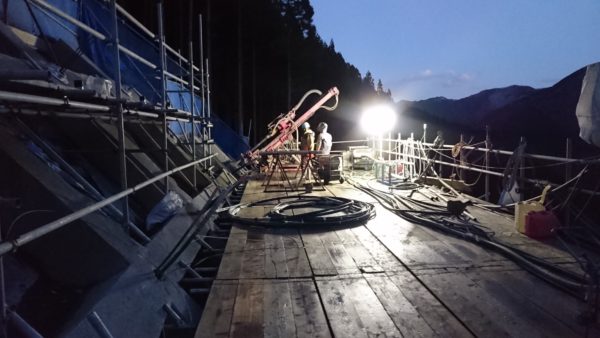
In Part 1 of the previous post, I suddenly wrote about how to take photos of certain types of construction work, but,
This is Part 2, and in this post, I’ll be sharing the site supervisor’s perspective on taking construction photos.
1. What is the job type?
2. What is the order of construction?
3. Are there any hidden parts?
4. Are there any unsafe behaviors?
5. Is there any unsafe behavior behind the subject?
6. Are you wearing a helmet?
7. Are you holding the cigarette in the correct position?
8. Does it come with a chin strap?
9. Are your sleeves rolled up?
10. Do the numbers match what's on the blackboard?
11. Are the staff (box ruler) and scale clearly visible?
12. Isn't this photo out of focus?
13. Is this a clear photo?
14. Is the time correct?
15. Is that really a photo of the site?(So I don't raise any suspicion during the inspection, lol)
This is just a rough overview, but the director pays attention to things like this when filming lol
You're probably thinking, "No way!?" but it's true!!
When the director takes photos, he makes sure to frame the shot so that people behind the subject don't appear in the frame and to keep unnecessary objects out of the shot.
This is due to the reasons mentioned above.
Photography is about capturing the present—the very moment of the process—so, in a sense, there’s no room for error.
That's why you can retake it as many times as you want.
And, of course, I get disappointed when I come across weird photos while organizing my photos lol
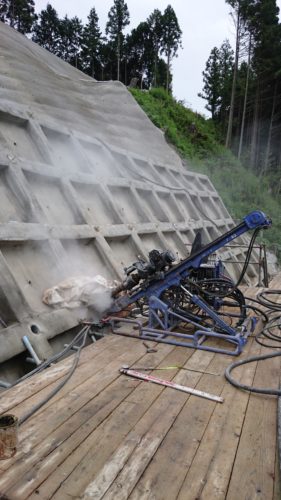
↑ This is a candid shot—what do you think of this photo? (It was taken about 10 years ago.)
First of all, I don't like that there's a staff (box ruler) lying around in the foreground.
It looks like a blurry photo.
There is no baseboard on the scaffolding in the back.
This could be considered unsafe scaffolding. (In reality, though...)
And the biggest issue is that, no matter how solid the rock may be, if there’s no one there, it becomes an unsafe construction operation.
It is a strict rule that a person must always be operating the machine while it is running.
Other than that, what about the gaps in the scaffolding?
Are there any other problems in the surrounding area??
I'll check that first, then take the photo.
The reason we do this is to ensure that no issues are raised during the inspection by the client (the government agency).
Since the scores are based on on-site evaluations, of course you want to get a good score! (Although I’m just a subcontractor now, lol.)
To get good scores, you need good documents and good on-site work!
As long as the photos are reasonably clear and well-taken, the paperwork is mostly in order.
The inspectors are keeping an eye on that as well.
(Apparently, inspection pros can picture the site just from the paperwork! I heard that from an inspector a long time ago lol)
Being able to prepare good documentation means you can also create a good worksite. (by an inspector at the time)
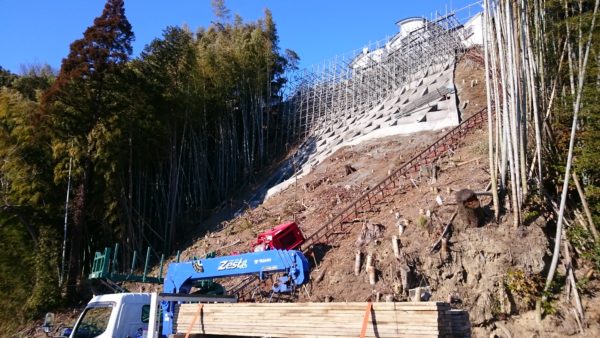
No matter how well the work is done or how high the quality is, if you can’t prove it, it’s all for nothing.
This means there is no difference between them and people with a low number of construction projects.
The bottom line is that photographic and video evidence is crucial.
Good workmanship is not only excellent in terms of quality and finish, but also visually appealing, but
That means there is documentation to prove it.
That's exactly why site supervisors are so particular about photos.
If you take photos with an understanding of the importance of photo management, your skills will improve rapidly!
As I’ve written before, simply by focusing on something, people tend to move in that direction (whether it’s good or bad).
If you make a conscious effort to take good photos, you'll naturally get better at it!
However, please also take a moment to think about what makes a good photo.
See you later.