Hello, everyone.
This is Enta.

It appears that a slope managed by Kanagawa Prefecture gave way, causing damage to some residents; this is a tragic accident.
May he rest in peace.
When I saw the news, I wondered if it might be a surface slide caused by slaking due to spring water or something similar.
It’s a mountain where you can see quite a few boulders made of gravelly rock. (Vague)
We don't know the actual cause of the skid. The results of the investigation will likely be released soon.
I'm also curious about the measures that will be taken going forward, but I suspect it will likely involve a combination of a steel frame and rebar insertion. (Speculation)
I'm not sure if it's necessary to reinforce all the way down to the stone wall at the bottom, but it seems like the kind of thing they'd do to maintain the atmosphere.
There is no doubt that this type of remedial work will increase in the future.
However, it seems there are many locations where construction work will be extremely difficult to carry out.
Kanagawa Prefecture says it will inspect every location, but I wonder if they actually have the staff to do it??
I wonder if the government office is outsourcing its work to a consulting firm because it's short-staffed??
Either way, since it all comes down to people, there are plenty of tricky aspects to it.
Well, I suppose drones are playing a part in that, too.
We’d really prefer that members of the general public stay as far away as possible from steep slopes.
So, let's take a look at some dangerous slopes (cliffs).
1. No work has been done on it in the past. (It has not collapsed.)
2. Nearly 50 years have passed since construction.
3. It is tall (7 meters or more).
4. It is not a legal framework.
5. There are many trees growing on the artificial slope (with a diameter of 10 centimeters or more).
6. There are no signs of management (such as logging).
7. Water flows regularly over the slope (e.g., spring water).
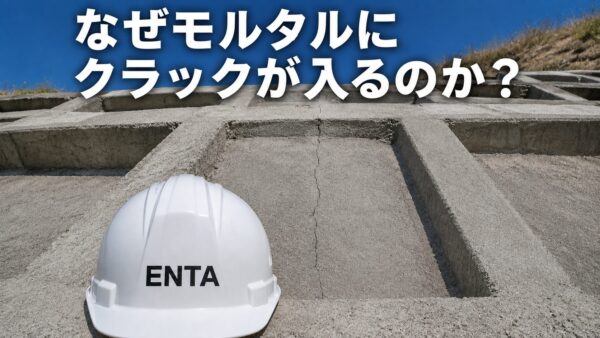
8. There are large vertical cracks in the sprayed mortar and other surfaces.
9. The base of the cliff (where the cliff begins) has already shifted. There are cracks in it.
10. Water is seeping out of the slope.
To put it simply, it's best to stay away from slopes (cliffs) like this.
Especially on rainy days and right after it rains.
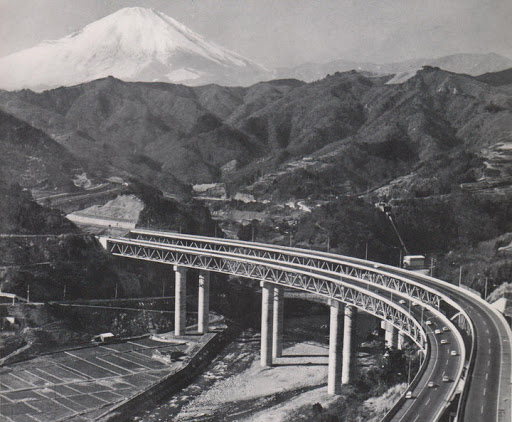
The slopes (cliffs) constructed during the period of rapid economic growth have already begun to deteriorate, and there are actually many areas that are extremely dangerous.
Even just based on the figures the national government, prefectures, and NEXCO have on record, the number is absolutely staggering.
However, since I don't have the money, I can't do it all at once, and I don't have a contractor either.
NEXCO has been doing bridge repairs at interchanges on the Tomei and Meishin Expressways and other highways recently, hasn't it?
That's also part of our aging infrastructure mitigation efforts.
A few years ago, they said the cost of those measures would exceed 500 billion yen.
Most of it is for bridges, and I believe just under 50 billion (my memory is a bit fuzzy) of that is for slope stabilization.
The fact that there are that many on NEXCO roads alone means there are even more dangerous spots like that on other roads.
Surprisingly, even the streets you walk down without a second thought can hide dangers.
If you see a slope (cliff) like the one shown above, please be careful.
It would be great if we, as slope construction contractors, could offer various proposals, but since this is a project of significant public interest, it can be daunting for the private sector.
However, the owner is liable if a privately owned slope (cliff) collapses.
If you own a slope (cliff) like that, please consider consulting a slope specialist. (Limited to companies that can provide design services.)
I want to do my part to reduce the number of accidents like this, even if only a little!
See you later.