Hello, everyone.
This is Enta.
Hello, everyone.
This is Enta.
Lately, when I read business books and stuff, there’s this term that comes up a lot: “comfort zone” lol
You know, the one that says, “Get out of your comfort zone!”
What exactly is a "comfort zone" anyway?
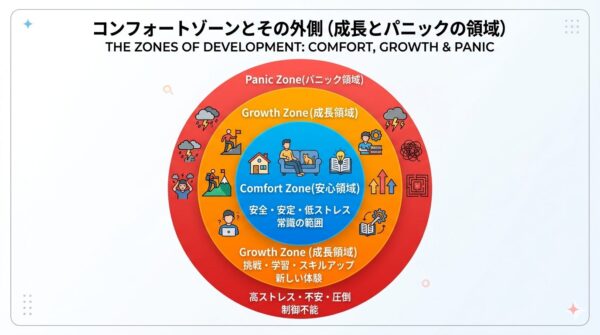
To put it simply, here's what it comes down to.
「Comfort Zone"" = The zone where you can act as usual, without anxiety, using the same methods as always.
People feel at ease when they're there.
But,There's no growth there.
You won’t gain new skills, increase sales, or discover new possibilities unless you step outside your comfort zone and take action—even if it’s a little tough.
This isn't just about mindset—This is something that has been properly proven in psychologyThat's it.
(The Principle That Moderate Stress Brings Out the Best Performance)
So, the reason I’m bringing this up now is...
Because conditions at construction sites and slope sites are starting to change to the point where we can no longer stay in our comfort zone,。
Things are starting to change on the ground. I'm serious.
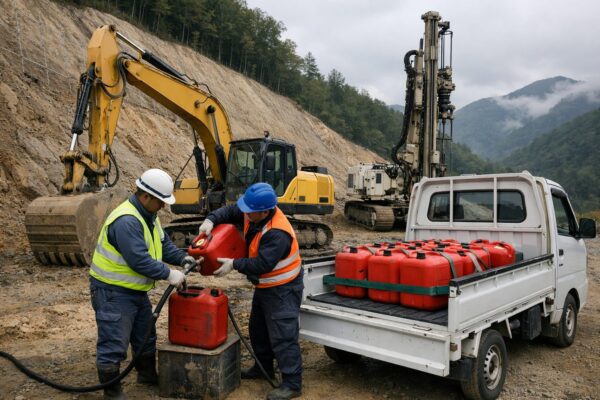
Right now, at our site, too...More and more companies are transporting diesel fuel in portable containers on their own.
The truck isn't coming.
"Wait, why?"—that's what you're probably thinking, right?
This is influenced by the article I wrote the other day about the war.
With the de facto blockade of the Strait of Hormuz, approximately90%The aorta through which blood flows is on the verge of stopping.
If we don't get any oil, we can't refine it.
If we can't refine it, we won't get any diesel fuel either.
It goes without saying, but that's how it is right nowThis has become a reality that has trickled down to the front lines.
"Transporting it ourselves in portable cans" is proof that we're still up and running.
But,No one knows how long this will last.
It has gone far beyond what we can control...
I "can't buy" paint thinner. It's not that the price has gone up—it just isn't coming in.
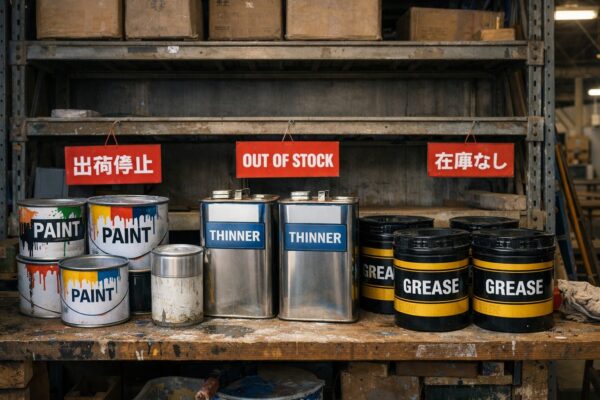
This was the biggest surprise.
As of last week, shipments of thinner have been restricted or suspended.
It's not a price increase."The item hasn't arrived"That's right.
Thinner is made from naphtha (see the previous article).
The fact that the naphtha isn't coming means this isn't just a problem with the thinner.
The same goes for paint. (I can't paint it pink.)
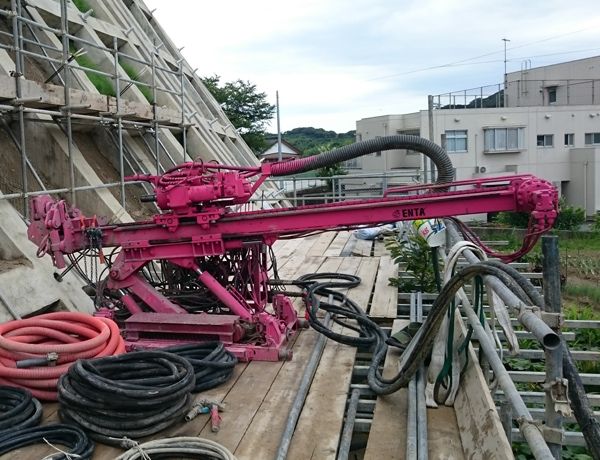
Anti-corrosion coatings used on-site, epoxy coatings, and coatings for anchor heads... all of them are affected.
The story I had been brushing off as “just a little bit of material” will, from now on,"A Story That Can't Be Obtained"It will gradually change into...
At this point, you’re probably wondering, “What’s going to happen with repainting the bridge??”
Grease and hydraulic oil prices will rise sharply starting around June
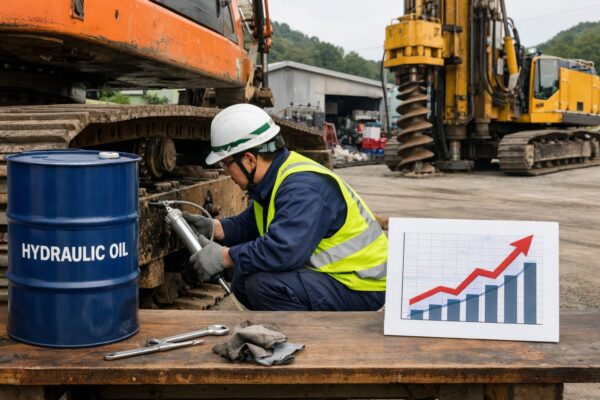
We have received information from machinery manufacturers and oil and fat trading companies.
Prices for grease and hydraulic oil are expected to rise sharply once current inventory runs out. (Trading company)
As a general guidelineAround JuneThat marks a turning point.
(*Based on information from various trading companies and distributors. These are current estimates, not final figures.)
The machinery we use—drilling rigs, sprayers, hydraulic cranes, excavators, and so on…
All of them require grease and hydraulic oil.
With this,Machinery maintenance costs are skyrocketingThat's the point.
Are your monthly equipment expenses reflected in your quotes?
Items that we’ve been recording as “consumables expenses” at a low level up until now may end up costing 20 to 30 percent more.
Rumor has it that the figures are two or three times as high.
If I keep taking on work at the job site, eventually I won’t have anything left for myself...
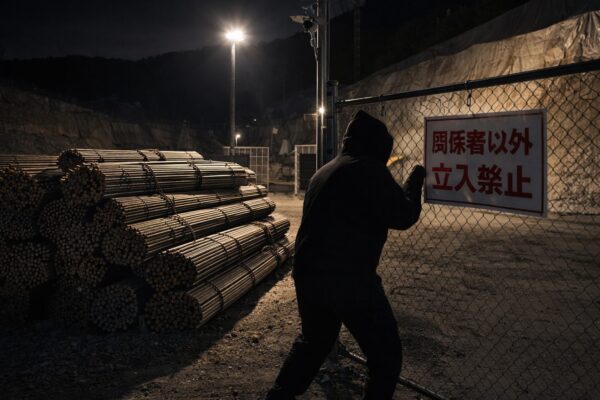
Prices for rebar and steel are also rising. Construction site thefts are on the rise as well.
If the price of diesel fuel rises, transportation costs will go up.
If transportation costs rise,The prices of all materials—rebar, formwork, and steel—will go up.
In fact,Scrap metal prices have already begun to rise.
If scrap prices rise, the cost of manufacturing rebar will increase.
D13, D16, D19… The rebar used for slope stabilization will definitely keep getting thicker and thicker from now on.
And there’s one more thing I really want you to be careful about:Rise in Construction Site TheftsThat's it.
Even after the previous financial crisis (2008–2009), there was a sharp increase in thefts of construction materials.
You should expect the same pattern to play out this time as well.
Reinforcing Bars, Electrical Wires, Copper Products, and Toolsare particularly targeted.
Please check the locks on the materials yard, the security cameras, and the night lighting right away!
Based on my own experience of having a coworker at the same worksite who was a thief, lol (a meth addict who stole to buy more meth)
The estimate is outdated. Can the work be done under the current circumstances?
This is the most serious issue we face.
The amount quoted a few months ago.
When compared to current material prices, there is a difference.
Is There Room for Contract Amendments in Public Works Projects!?
The Ministry of Land, Infrastructure, Transport and Tourism has a system called the “sliding scale clause (inflation adjustment).”
This is a system that allows for a request to adjust the contract price if the unit prices of materials or labor fluctuate beyond a certain threshold during the construction period.
However,Consultation with the client and submission of documents are required.
This is common sense for site representatives, so make sure you get paid properly!
What about private construction projects?
If changes can't be made, it's quite possible that the longer the construction continues, the greater the losses will be.
It’s terrifying to think that if material costs rise to 1.3 or 1.5 times their original price, we’d still be stuck with the unit price set at the time the order was placed.
With inflation on the rise,Choosing to “keep taking on work at the old rate” is the riskiest optionThat might be the case.
When things get tough, step out of your comfort zone.
I'll be honest.
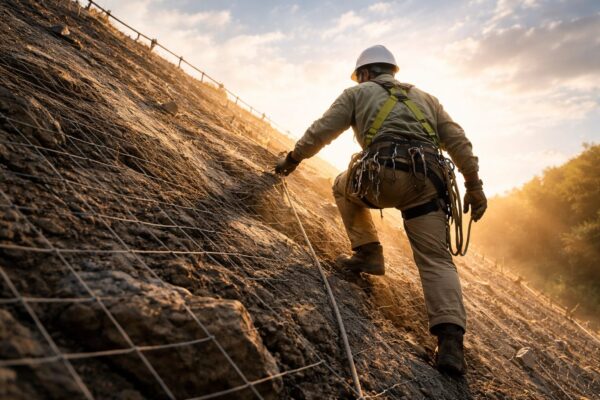
The situation going forward is quiteI'm exhausted.
We're not getting any fuel. Materials are expensive. Unit prices aren't keeping up. We're short-staffed.
It feels like I'm being squeezed from all sides. (Can't resist this, can you, masochists!?)
But getting back to the topic of comfort zones...
It is precisely in situations like this that,Staying “business as usual” is the riskiest optionThat's right.
This is the trap of the comfort zone.
It's exhausting, so I end up thinking, "Let's just keep doing things the way we always have."
But if we keep doing things the way we have been, we'll gradually find ourselves in a tight spot.
It's on the decline!
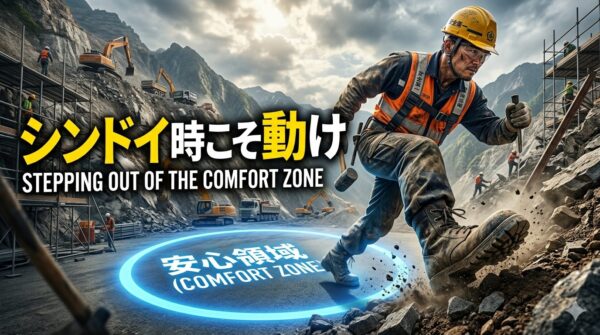
You don't have to wait until you have time to spare to try something new.
Actually, nobody does anything until they have some breathing room.
People who, when things got tough, realized, “I have to change this,” and took action find themselves in a completely different place three years later.
Reviewing unit prices in quotes, restructuring the outsourcing network, comparing machine ownership with leasing and rental options, learning new construction methods, and obtaining certifications.
Anything will do. I'm going to start working on something I haven't touched yet.
Basically, if you play it safe, you'll lose!!
It’s precisely at times like these that we should keep taking on new challenges!!
I’d like to work together with everyone across the country who shares this perspective to explore this further.
I'm thinking we should do some kind of event—what do you think? lol
See you later.