

Hello, everyone.
This is Enta.
With Obon just around the corner, I imagine many companies have wrapped up their work on-site for the time being.
I wonder what'll happen with us, depending on the general contractor? lol
But that's beside the point.
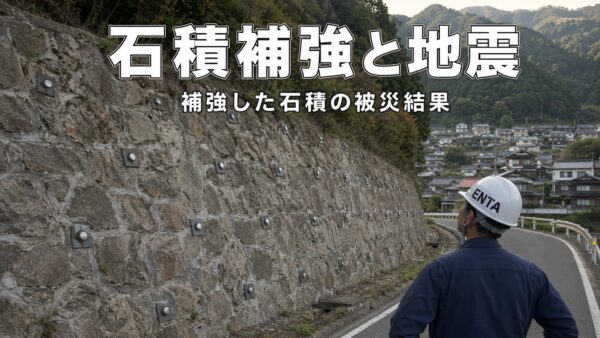
In this installment, we’ll focus on some of the areas affected by the 2016 Kumamoto Earthquake,
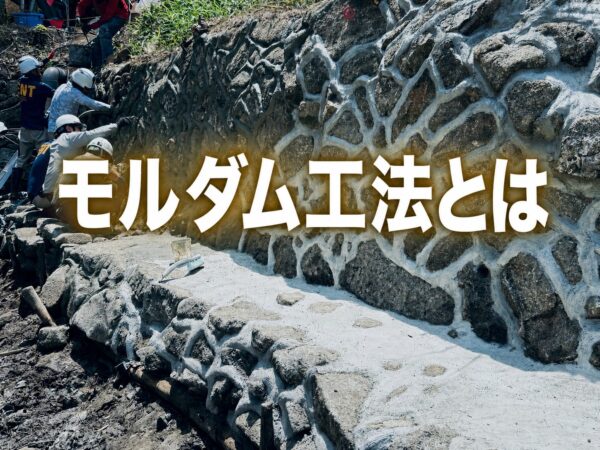
What happened to the area where the stone retaining wall was reinforced (using the Moldam method)?
Before I get to the main point, just a quick note.
The 2016 Kumamoto Earthquake affected many people, and some lost their loved ones—family members and friends.
We offer our heartfelt condolences to the families of those who have passed away, and we extend our sincere sympathies to all those who are still coping with the scars of that time.
As someone who works in civil engineering, I believe that my small part is to keep thinking of ways to protect lives and livelihoods from disasters—and to keep sharing those ideas.
For beginners, I’ll be writing about the topic, “I’ve heard that reinforcing stone walls makes them more earthquake-resistant—but is that really true?”
Findings from Emergency Inspections of Areas Restored After the Kumamoto Earthquake
According to a blog post published by Kyushu Disaster Prevention Maintenance Co., Ltd.,
In Mashiki Town, an area affected by the 2026 Kumamoto Earthquake, an emergency inspection was conducted on a stone retaining wall that had been restored using the company’s “Moldam Method” for reinforcing stone masonry, and the results showed that,
We were informed that no abnormalities were found at any of the inspection points.
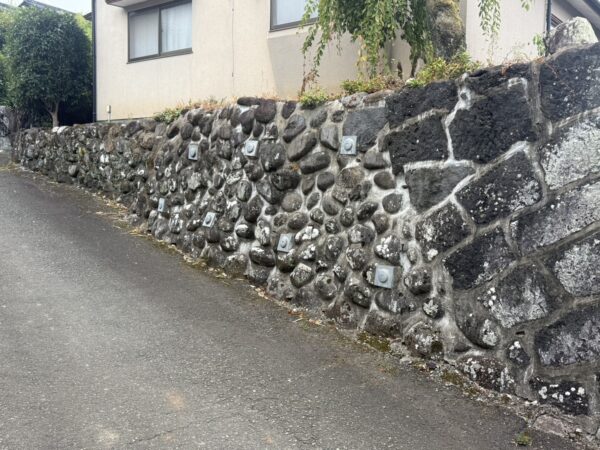
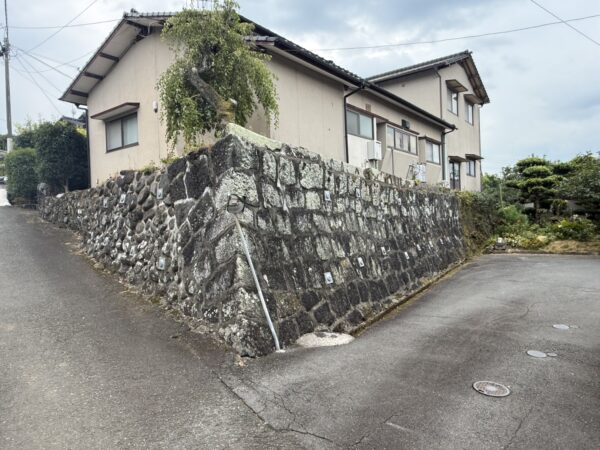
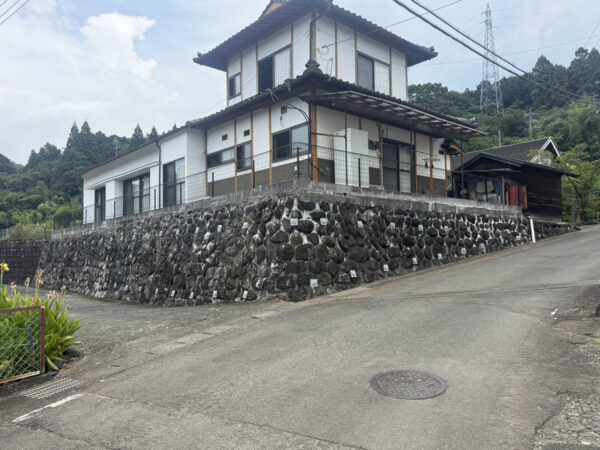
In addition, we have been informed that no abnormalities were found in the sections we constructed in Hinaku, which is the closest to the area affected by the disaster.
I’d like to point out one thing here: this is merely a report on a self-inspection conducted by the contractor itself, and the data has not been verified by a third-party organization.
So please don’t take this as a definitive statement that “it will never collapse if reinforced,” but rather as a case study showing “this is how it was at one particular site.”
That said, as professionals working in the field, we’ve gotten into the habit of not taking good reports at face value, so I’d really like to see some more detailed photos lol.
I hope to go and investigate myself once things have settled down a bit more.
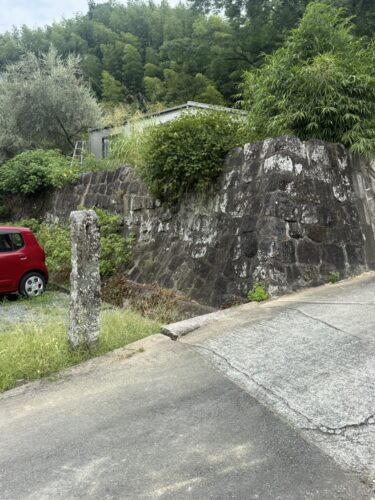
Why Are Areas Reinforced with Stone Masonry Less Prone to Collapse?
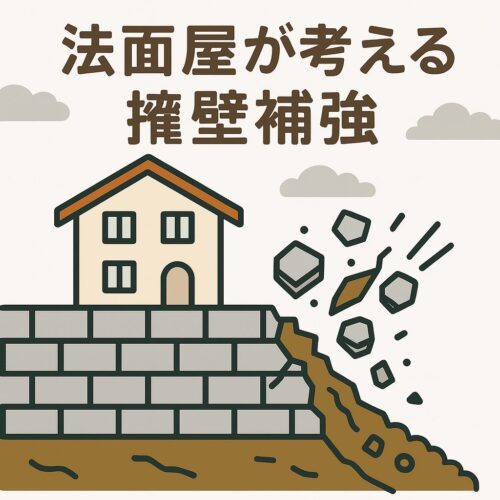
A typical cause of stone retaining wall collapse is not the seismic shaking itself, but rather,
It is often said that rainwater seeps into areas where joints or backfill have become loose due to an earthquake, leading to further collapse.
Stone masonry reinforcement methods, such as the Moldam method, involve injecting reinforcing material into the gaps between stones or behind them to integrate them into a single unit, thereby preventing joints from loosening and stones from falling out.
By enhancing the integrity between the stone pieces, resistance to deformation and loosening is improved.
This is what I often write about on my blog: that bringing individuals together as a group prevents collapse.
I think it’s easier to understand if you think of stone retaining wall reinforcement as a method that prevents the “stacked stones” from shifting and maintains the entire surface as a single plane, while slope anchoring and rebar insertion are reinforcement methods that secure the “natural ground” itself.
Whether it’s stone wall reinforcement or slope stabilization, these measures are more effective at “stopping the chain reaction of collapses that occurs after the ground has been loosened by shaking or rain” than at “stopping the shaking itself,” but,
It has, of course, been proven that this construction method is fully capable of withstanding external forces such as earthquakes.
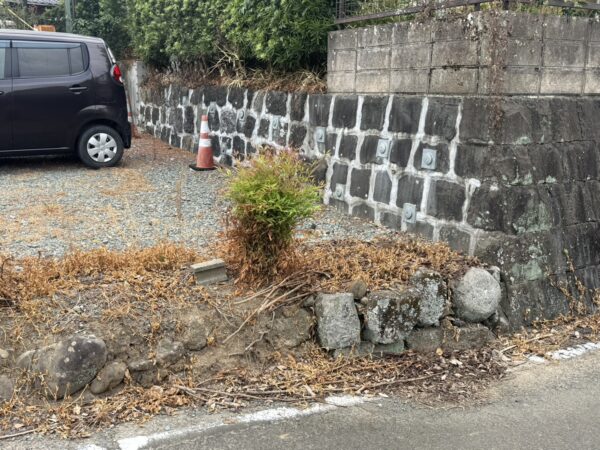
Also, I often design and construct using rock bolts in combination with other methods, and this site is no exception—it also incorporates bolts.
Once the bolts are in place, the resistance of the natural ground itself increases dramatically, bringing the construction even closer to perfection.
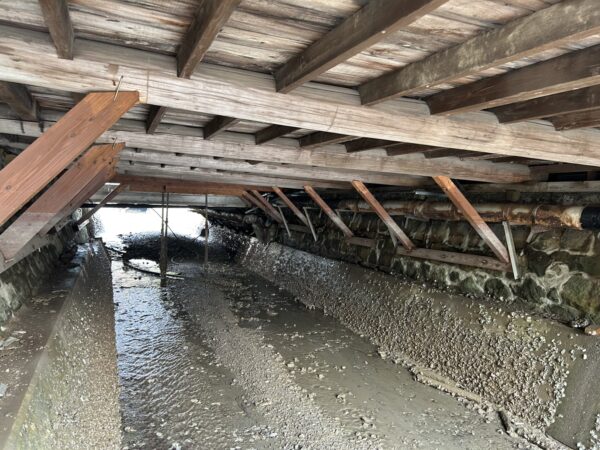
Bridge substructures—they’ve been especially common lately!
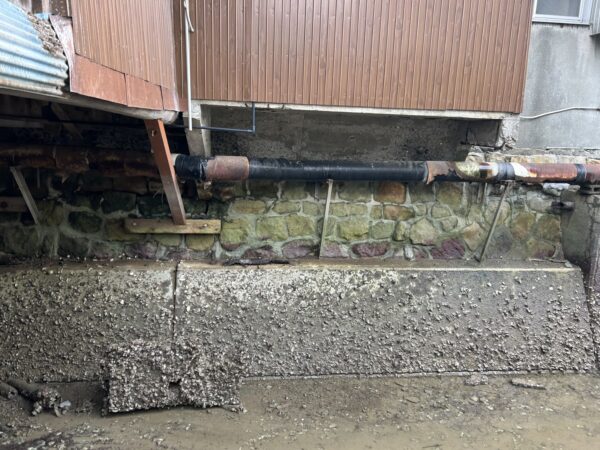
It functions reliably as a unit without falling apart.
Points That Beginners Often Misunderstand
After reading this far, you might think, “As long as I reinforce the stone wall, I’ll be safe even during an earthquake,” but you need to be careful here.
Reinforcement measures have a design-based load-bearing capacity; however, in the event of seismic motion exceeding design assumptions or a disaster of such magnitude that the foundation soil beneath the retaining wall itself collapses significantly, these measures alone cannot completely prevent damage.
In addition, the effectiveness of the reinforcement varies significantly depending on the condition of the masonry, the natural ground, and the surrounding soil conditions.
Even though the term “stone masonry reinforcement” is used, the expected effectiveness will likely differ depending on whether the method involves only grouting or also includes the installation of rock bolts.
Before we begin reinforcing, it would make it much easier for us to explain and carry out the work if you first understood that “reinforcement does not mean it will never collapse under any circumstances, but rather is a measure to reduce the likelihood of collapse—in other words, disaster mitigation.”
Ultimately, the case of the recent Kumamoto earthquake is classified as a factual example of “a section that had been reinforced with stone masonry and ultimately held up.”
It's important not to jump to sensational conclusions, but to take a steady, methodical approach to examining each case one by one.
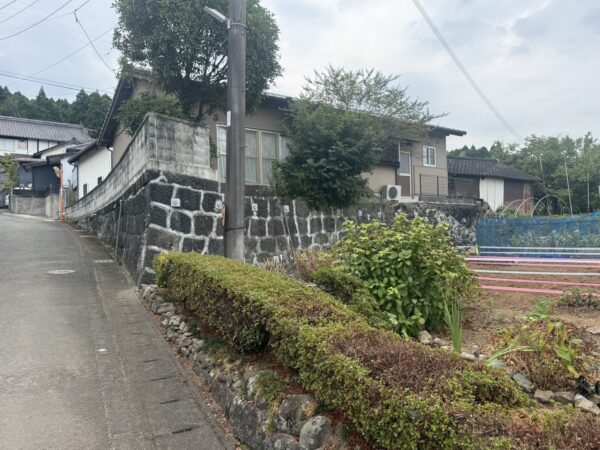
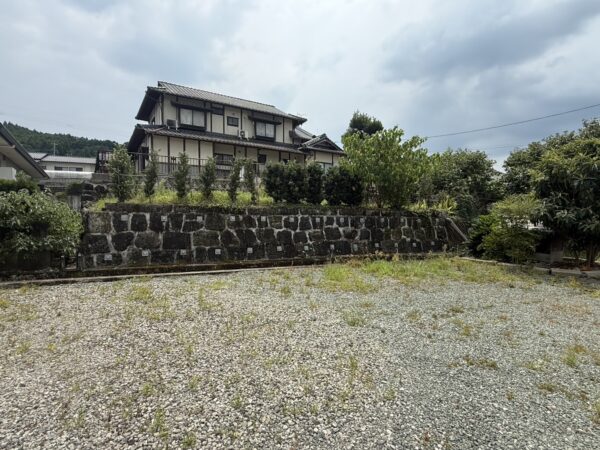
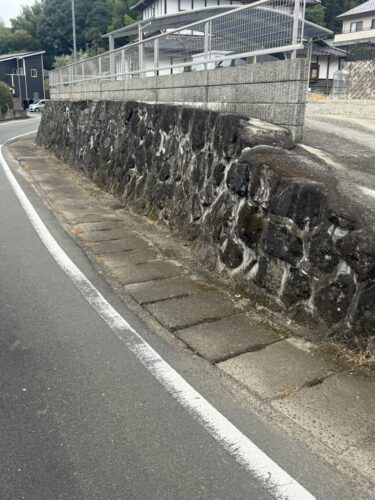
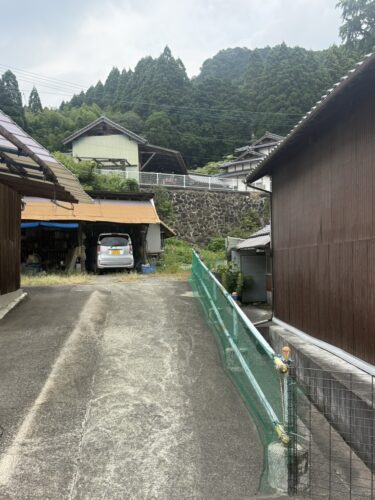
This is just my personal opinion, but I still think that using mortar and inserting rebar is the best approach for reinforcing masonry.
For low walls under 2 meters, the impact isn't that significant, but for stone walls taller than that, it's worth considering.
We will publish the data as soon as it becomes available.
See you later.
Kyushu Disaster Prevention Maintenance Co., Ltd. Blog
A Slightly Unconventional Stone Masonry Reinforcement Project | For Private Sector Projects