

Hello, everyone.
This is Enta.
Now that we're into the second half of July, it's already unbearably hot on construction sites during the day, isn't it? ^^
Concrete is just like people—if you leave it alone during this time of year, the water will keep draining out.
But that's beside the point.
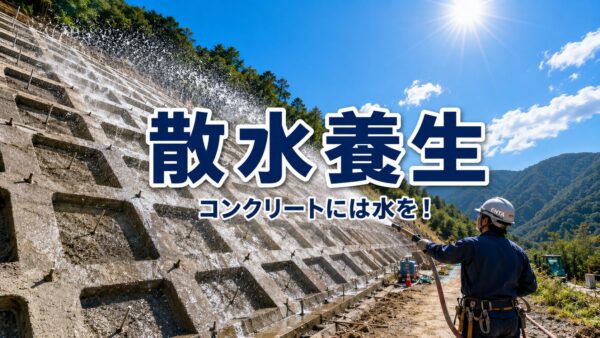
In this post, we’ll discuss “Why You Should Water Concrete.”
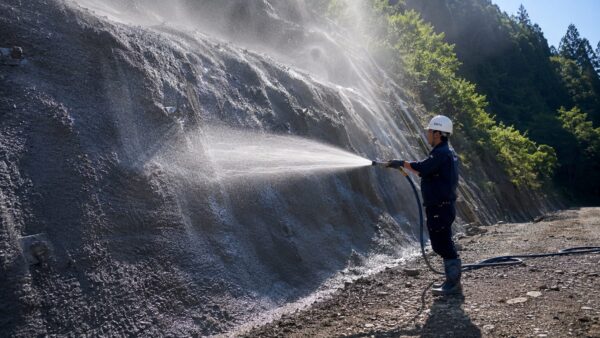
You often spray water on spray-applied formwork and during the curing process for sprayed concrete, don't you?
This probably goes without saying for experienced professionals, but I’ll take the liberty of explaining the reasoning behind “why watering increases strength.”
This post is aimed at beginners and tradespeople on the job site, so experienced folks, feel free to skip it lol.
To begin with, concrete “hardens when mixed with water.”
Let's start with the most common point of confusion.
Concrete and mortar don't actually "dry and harden," lol.
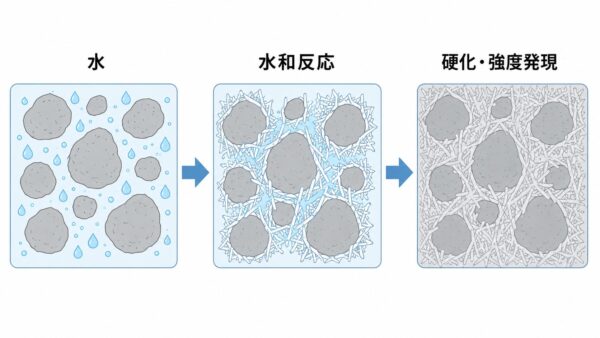
Cement and water undergo a chemical reaction and harden.
This reaction is called a hydration reaction.
It’s like when water comes into contact with cement—it gradually hardens over time as it forms hard crystals.
It's completely different from when clay dries and hardens, isn't it?
Once you get this, you'll understand everything that comes next lol
In other words, if there isn't enough water while the mixture is setting, the reaction will stop.
Once the reaction stops, the strength will not increase any further.
Therefore, it is necessary to ensure that the hydration reaction proceeds all the way to completion by keeping the water supply steady.
This is what is known as “curing,” and one aspect of it is watering.
After spraying or pouring, the water drains away all at once.
The problem occurs immediately after the concrete placement (spraying) is completed.
As the surface begins to harden, the moisture inside rapidly evaporates and escapes from the surface.
You should be especially careful during the summer, like right now, or on windy days.
Since a slope is an inclined surface that doesn't face directly upward, it gets plenty of sun and wind.
It's also nice to feel the sun's warmth.
Furthermore, with spray application, the finish is applied in a thin, wide layer, resulting in a large surface area that dries even more quickly.
The frame is also relatively thin for a concrete structure.
When the water on the surface evaporates, the hydration reaction in that area stops.
As a result, the surface becomes porous, or cracks may appear due to drying shrinkage. (Most of the time, this shows up as cracks, right?)
Watering is a process designed to prevent this “drying out” and ensure that the concrete achieves its intended strength.
Rather than saying that watering magically increases the strength, it might be more accurate to say that without watering, it’s difficult to achieve the material’s full strength.
That's why the more experienced people are the ones who keep saying, "Keep spraying water, keep spraying water!" over and over again lol (it also helps prevent cracks).
Well, as long as the mountain doesn't collapse, lol
When Should You Start Watering? The Timing Varies Between Summer and Winter
That brings us to the question, “So, how many hours from now should I do it?”
I'll be precise here.
The Standard Specifications for Concrete do not specify a fixed time such as “○ hours after placement,” but rather state that “once the surface has hardened to the point where it will not be damaged, it should be kept moist by sprinkling water or similar means.”
The reason is simple: it’s no good if it’s too early or too late.
If you do it too early, the water will damage the surface, which is still soft.
If you wait too long, it'll dry out first and it'll be too late.
So, the basic rule is to make your judgment based on the surface hardness rather than a fixed time.
In the summer, temperatures are high, so both curing and evaporation occur quickly.
Once you’ve confirmed that the surface has hardened, move on to watering as soon as possible; until then, use a shade cover or tarp to prevent it from drying out.
It's important not to let it dry out too quickly, isn't it?
Actually, during the summer, it will harden in about three hours, but watering it too soon could cause efflorescence (calcium deposits) to appear, so I think it’s best to wait a day or two.
In winter, on the other hand, the hardening process is slower, so the timing for starting watering is pushed back.
However, this applies only to regions where it doesn't freeze.
Incidentally, the Standard Specifications for Concrete includes a table of curing periods as a guideline for how long water should be retained.
For ordinary Portland cement, the standard curing periods are 5 days when the daily average temperature is 15°C or higher, 7 days when it is 10°C or higher, and 9 days when it is 5°C or higher.
With fast-setting cement, the curing time is shorter, while with Type B blended cement, it is longer.
Well, it’s not a problem to just leave it alone during the winter, though.
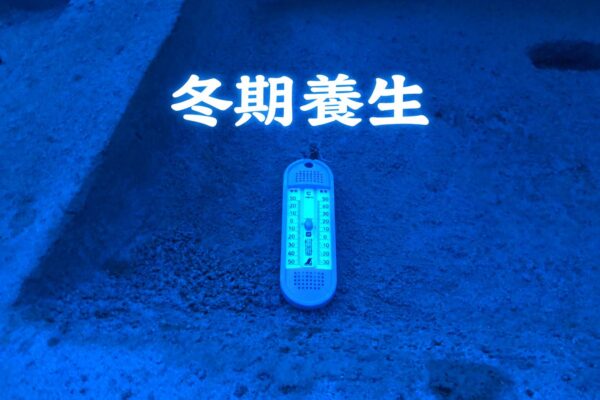
Protection Methods Other Than Watering, and "Insulation" in Areas Prone to Freeze Damage
Curing isn't just about watering.
There are two approaches: one that “replenishes” water, and one that “prevents water loss.”
This is supplemented by watering and misting.
Some effective methods to prevent this include covering the area with protective mats or waterproof sheets, applying a damp mat as a compress, and applying a film-forming protective agent or a penetrating protective agent to prevent evaporation.
We combine these elements based on the situation on site.
And the thing you need to be most careful about is areas prone to frost damage in winter.
If you water your lawn in a cold region, the water you spray may freeze.
If water freezes during the early stages of hardening, it expands and damages the concrete from the inside.
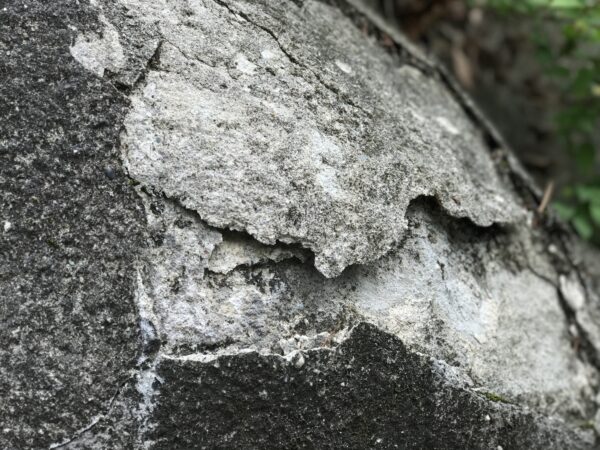
This is known as "initial freeze damage," and it is generally believed that once this damage occurs, the material's durability cannot be restored.
In other words, in areas prone to frost damage, watering may actually be counterproductive.
Therefore, in areas prone to frost damage, we will switch from watering to heat retention, insulation, and heat supply.
The idea is to prevent the concrete from cooling down by covering it with insulating sheets or heating it with jet heaters.
During periods when the daily average temperature falls below 4°C, concrete is considered to be poured in cold weather, and measures must be taken to maintain the concrete temperature above a certain level.
Please keep in mind that even though it’s the same “winter,” in regions where the ground doesn’t freeze, you simply postpone watering, while in regions where it does freeze, you switch to keeping the water warm.
Be sure to let it cure thoroughly for at least 5 hours after spraying!
Watering the plants is actually kind of a hassle, isn't it? lol
To be honest, watering the plants over and over again on a hot day is a real drag. (If only there were something like a sprinkler system on site...)
But once you understand the hydration reaction, I think you’ll realize that that extra step is actually “what’s needed to achieve the material’s full strength.”
There’s a difference in the quality of the work between watering because you understand the reasoning behind it and watering simply because you were told to.
I think it’s little things like this that make up quality control.
I used to be one of those people who just did things because I was told to, lol.
Doing those small, mundane tasks steadily and diligently, with an understanding of their significance.
It may seem like a small thing, but I think it’s details like this that lead to good work.
See you later.