


Somewhere in the country, a new employee is probably making all sorts of mistakes at work today and getting scolded by their boss.
If you make a mistake, all sorts of negative rumors start circulating—such as the company labeling you as “useless” or losing the trust of the craftsmen.
"Work is tough," "I want to quit my job"—you might find yourself thinking things like that. But having made countless mistakes myself, I can say without a doubt thatFailure Is a Valuable LessonThat's the point.
“Whether or not you can ”embrace failure” is a major key to your personal growth as a construction manager.
Today, I’d like to write about a major blunder I made and what I learned from it.
My First Assignment as Site Manager
I was first appointed site manager when I was 30 years old.
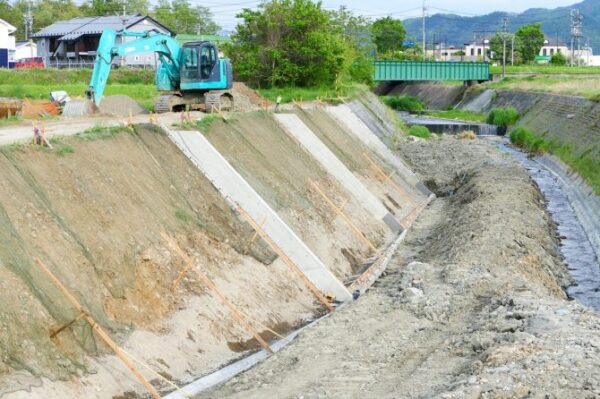
The project was a river improvement project involving bank reinforcement. Since this was my first time doing anything like this, I drew up a budget and the construction work actually began.
I remember that back then, even though we had drawn up an operational budget, it wasn’t reviewed at all; senior management simply asked, “Can we really pull this off with this?” and, without any basis for my answer, I replied, “We’ll do it.”
To cut to the chase, it was a huge loss.
Not only did the labor rates I had budgeted for differ significantly from the actual costs during construction, but expenses for temporary facilities also ended up being higher than I had anticipated. To make matters worse, a mistake on my part in the scheduling caused a halt in the supply of materials, resulting in a significant delay beyond the originally scheduled completion date.
As a result, expenses mounted, and instead of turning a profit, we ended up having to cover the costs out of our own pockets, resulting in a massive loss.
Words spoken during the apology
At that moment, I felt pretty down. I was disheartened by the realization that I was such a failure and that I had run up a deficit.
Somehow, the construction work was finally completed, so I went to the headquarters and apologized to upper management.
"I'm truly sorry for what happened."
I bowed my head, prepared to accept whatever they might say. However, the response I received from upper management was unexpected.
"I knew we'd end up in the red, and since other projects are covering it, it's not a problem. However, you need to review your budget for this project again and thoroughly understand what went wrong."
Reflecting on My Mistakes
As I was told, I took a look back at my budget and how the construction work was progressing. As I did so, one challenge after another came into view.
The labor costs in the budget I put together aren’t reflected at all in the construction schedule. Even for work items listed in the construction unit price table as requiring 100 square meters per day, when I worked backward from the schedule, I found numerous instances where the number of days didn’t match up.
Furthermore, because we hadn’t held thorough meetings with the craftsmen during the planning stage, the construction sequence differed from what I had envisioned, which caused delays in the delivery of materials—and other problems began to surface one after another.
I realized that, even though I hadn’t understood it at all before the construction work began, my failure has actually helped me understand more specifically what I should have done.
Young Engineers, Don't Be Ashamed of Failure
Responsibility comes with any job, not just in the construction industry. If you make a mistake, that responsibility falls on you.
Sometimes, you might end up making a complete fool of yourself in front of a large crowd, just like I did. But I want you to understand that the bigger the failure, the more it contributes to your personal growth.
I completely understand the desire to avoid being scolded or having your pride hurt. But you should let go of that mindset.
Of course, it’s important to reflect on your mistakes, but if you can develop the mental resilience to actually find joy in them, your rate of growth will increase dramatically.
What matters most is what happens after a failure. If you thoroughly understand why you failed, you can take preventive measures and implement solutions for the next project.
The more people who have that knowledge, the better equipped they’ll be to handle emergencies without panicking. Having experienced massive losses on-site in the past, I’ve lost my fear—in a good way.
No one sets out to fail. While we’d all prefer to live a life free of failure, I believe that never failing is proof that we’re not taking on any challenges at all.
I think this is true not only in this industry but in other industries and fields as well—isn’t it the case that we acquire new skills as we take on new challenges?
If, by any chance, there is a new employee who has never made a mistake at work, they should actually be concerned. Making mistakes is nothing to be ashamed of.
Also, if any of you veterans in the construction industry have experienced a major blunder, please share your stories in the comments section—it’ll be encouraging not only for the younger generation but for me as well, so I’m looking forward to lots of comments (lol).