



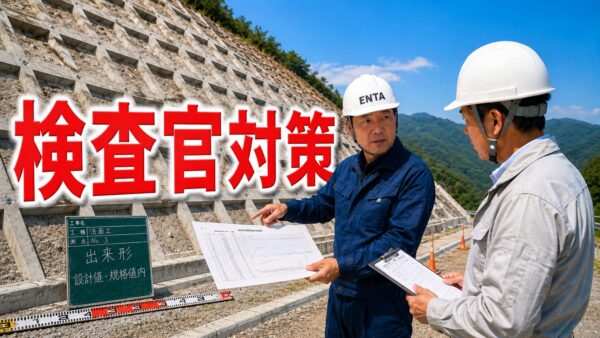
When Inspectors Are Too Demanding During Final Inspections | Evaluating Workmanship Based on “Specifications” Eliminates Subjectivity
Hello, everyone. This is Enta. The first half of the fiscal year is over, and summer is really kicking into high gear. It’s hot on site, paperwork is piling up—to be honest, this is the toughest time of year, lol. And once summer passes and fall and winter roll around, the final inspection is waiting for us. So, here’s something I’ve been thinking about for a while, lol. But enough of that…

Are ICT Slope Construction Methods Really Practical on Site? | Considering 3D Surveying and As-Built Management from a Hands-On Perspective
Hello, everyone. This is Enta. In recent years, the construction industry has been flooded with buzzwords like ICT, DX, AI, and 3D data, hasn’t it? To be honest, I think a lot of people working on-site wonder, “Can we really use that on a slope?” Well, the foreman is…
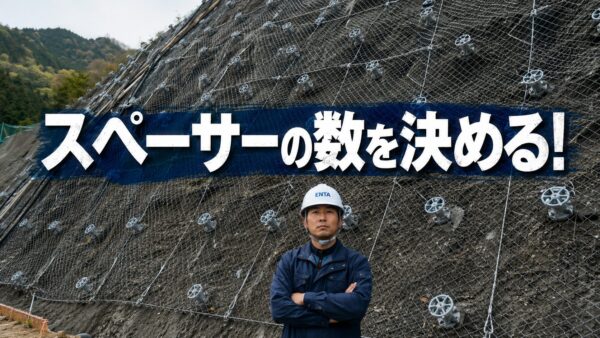
What’s the Right Number of Spacers for Slopes? | An Empirical Guide to Estimating Quantities Not Specified in the Specifications
Hello, everyone. This is Enta. Sometimes, the younger guys on the job site ask me, “So, how many spacers should we actually put in?” The more experienced guys tend to rely on instinct, so when they try to explain it in words, they get stuck lol. I thought I’d clear this up once and for all this time…

What is the best order for someone coming from a different field to learn construction management as a supervisor? (Part 2)
Hello, everyone. This is Enta. What’s the best order for someone coming from another field to learn construction management as a supervisor? (Part 1) This is a continuation of the previous post. ⑤ The basic rule is to “always document” any discrepancies between the drawings and the site. This is extremely important. There are almost no construction projects where the drawings and the site match perfectly. Especially when it comes to slope work…

Quality Control! Standards for Measuring Spray Thickness
Hello, everyone. This is Enta. I received a question the other day about quality control for sprayed concrete thickness, so I’d like to answer it here. Normally, sprayed concrete thickness looks something like this, right? The question was, “Is there a standard for this square shape?” But these days, even the standard specifications…
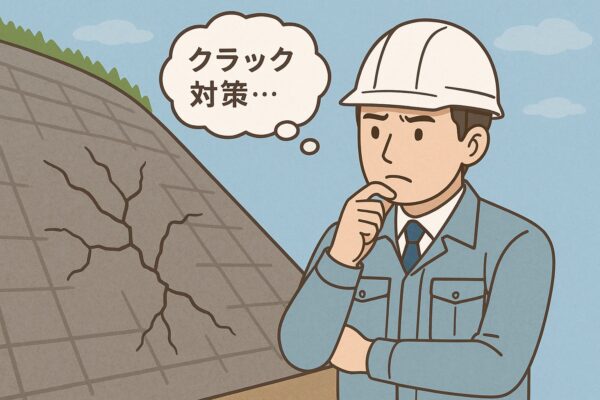
Here are the causes of cracks in sprayed mortar applications—and the measures to prevent them!!
Hello, everyone. This is Enta. I’d like to write about why cracks form in sprayed mortar and what can be done to prevent them. I’ll list the causes of cracks below. Material Factors: The water-to-cement ratio is too high…
Construction Methods for Technical Intern Trainees (Part 4): Mortar Spraying and Concrete Spraying
Hello, everyone. This is Enta. Construction Methods for Technical Intern Trainees (Part 1): Slope Cleaning Workers Construction Methods for Technical Intern Trainees (Part 2): Lath Installers Construction Methods for Technical Intern Trainees (Part 3): On-Site Sprayed Formwork Workers Following up on the previous post, this time we’ll cover mortar sprayers and concrete sprayers. Mo…
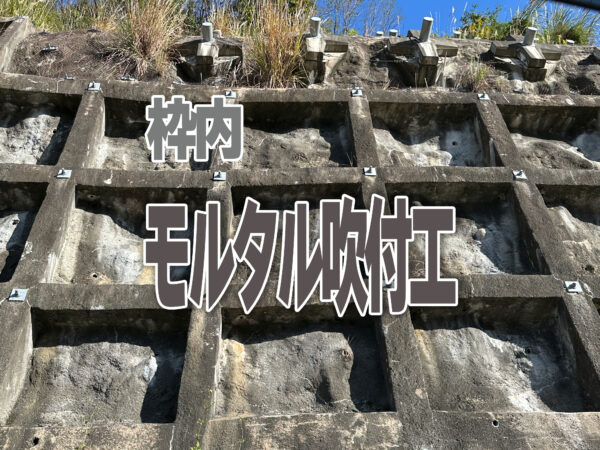
For formwork spray application, if the material inside the formwork is mortar, spray it at the same time!
Hello, everyone. This is Enta. Do you spray the formwork and the mortar inside the formwork separately? Or do you spray them together? How do you determine the finished shape? “Since they’re different types of work, you must do them separately, right!?” That’s a common topic of conversation. The finished shape is determined in advance when assembling the formwork…
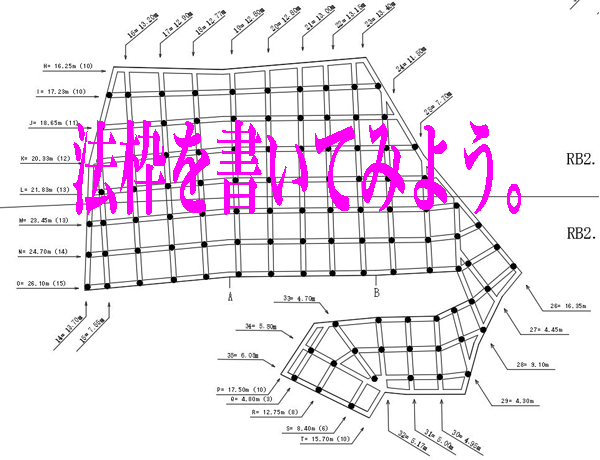
How to Draw Slope Construction Drawings, Part 3
Hello, everyone. This is Enta. I meant “how to draw” a blueprint, not “how to write” one, right…? Japanese is tricky, isn’t it? I’ll be more careful from now on ^^ But anyway… This time, it’s “How to Draw a Blueprint, Part 3.” “How to Draw a Blueprint, Part 1,” “How to Draw a Blueprint, Part 2”—I’ve covered everything up to the title block…