Hello, everyone.
This is Enta.
Why Do Cracks Form in Sprayed Mortar?
So, what are we going to do about it?
I'm going to try writing about that.
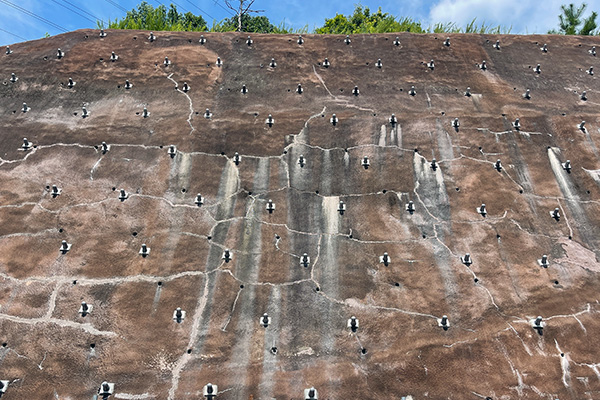
I'm going to list the causes of cracks in bullet points.
Material Factors
- The water-to-cement ratio is too high (shrinkage due to excess moisture)
- Excessive cement content (increased shrinkage during hardening)
- The aggregate gradation is inappropriate (too much fine aggregate, or the aggregate specific gravity is too low)
- Insufficient mixing or improper use of admixtures or fibers
- Water containing impurities or water that is unsuitable for mortar
Construction Factors
- Insufficient or excessive mixing time (separation)
- The mixing time is too long, and the material is applied too early in the curing process (resulting in a crumbly texture)
- The ground where the concrete is being poured is either wet or too dry
- Improper handling at the weld joint (weld crack)
- Use of Plastic Spacers
- Uneven Spray Thickness
Environmental Factors
-
Construction in High Temperatures (Rapid Evaporation Causes Shrinkage Cracks)
-
Construction in Cold Weather (Microcracks Caused by Freeze Damage)
-
A mix of dry winds, direct sunlight, and shade
-
Uneven drying due to differences in ambient humidity
-
Incomplete curing due to external vibrations or loads
Design and Structural Factors
-
Uneven placement thickness causing stress concentration (excessive unevenness in the subgrade)
-
Stress caused by differences in thermal expansion between different materials (plastic spacers and wire mesh)
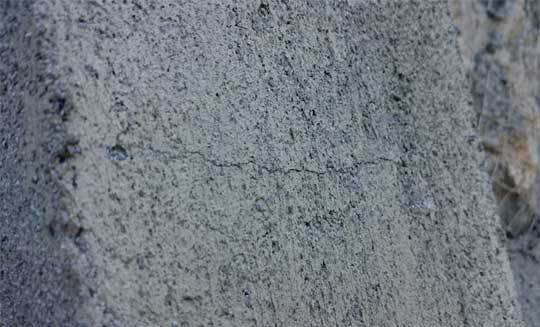
Material-Related Factors and Countermeasures
-
The water-to-cement ratio is too high (shrinkage due to excess moisture)
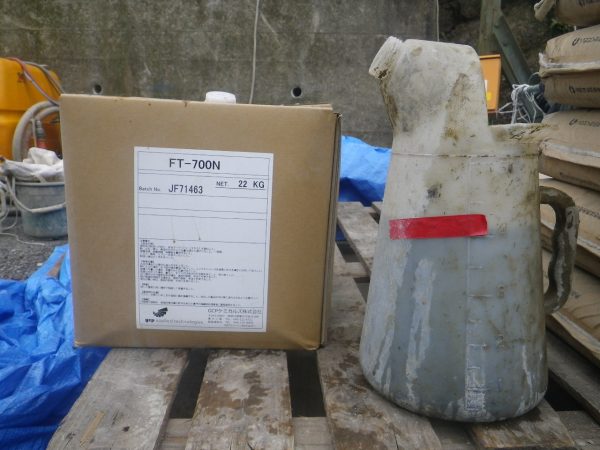
→ Maintain the proper water-to-cement ratio (typically around 40–55%). Use water-reducing agents as needed, and do not adjust the mix with excess water. (In hot weather, use FT700N to slow curing.) -
Excessive cement content (increased shrinkage during hardening)
→ Use a cement content appropriate for the required strength and avoid excessive mix proportions. Limit the mix to the minimum necessary to meet the design strength requirement. (When sprayers were smaller and the capacity was 37.5 kg, there was some variation.) -
The aggregate gradation is inappropriate (too much fine aggregate, specific gravity too low)
→ Check the particle size distribution of the aggregate and use it at the appropriate mix ratio. Limit the use of low-density aggregate (lightweight aggregate) to specific applications. (This can be challenging because there are regional variations; if the density is too low, it can lead to insufficient strength.) -
Insufficient mixing or improper use of admixtures or fibers
→ Use admixtures appropriately in accordance with the mix design specifications. Select admixtures suited to the construction conditions (high temperatures, low temperatures, long-term strength).
Stir the fiber thoroughly to prevent clumping (during the summer, it’s best to use less than 1% FT700N, but this increases costs significantly). -
Water containing impurities or water that is unsuitable for mortar
→ Use water of the highest possible quality. If using groundwater, well water, or river water, check the pH, salinity, and presence of organic matter. (Mixing water test)
Construction Factors and Countermeasures
-
Insufficient or excessive mixing time (separation)
→ Follow the specified mixing time (since this varies slightly depending on the sand, measure the time at each job site to verify the materials). Avoid overmixing. -
The mixing time is too long, and application occurs during the early stages of curing
→ Use mixed mortar as soon as possible. Do not remix (retend). -
The ground where the concrete is being poured is either wet or too dry
→ Before pouring, check the condition of the ground; if it is too dry, moisten it with a high-pressure washer; if it is too wet, install a permeable sheet (insert the drainage pipe from the back). -
Improper handling at the weld joint (weld crack)
→ Clean the joint surfaces with compressed air, then use a high-pressure washer to remove the laitance—it’ll look great! -
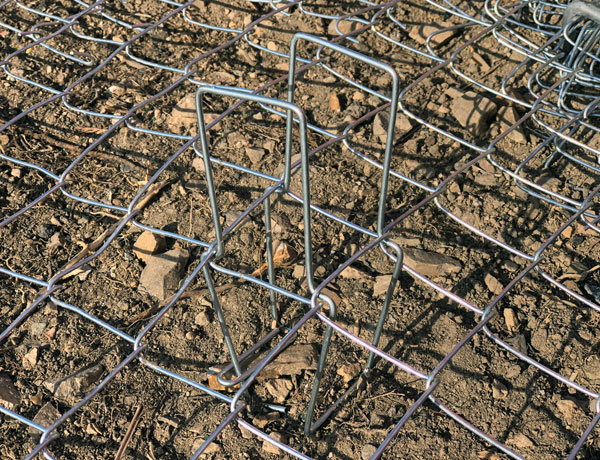
Use of Plastic Spacers
→ Use steel spacers, such as PC spacers, that have a coefficient of thermal expansion as close as possible to that of mortar. -
Uneven Spray Thickness
→ Before spraying, properly install the lath and wire mesh to ensure the specified thickness. Install pins to check the thickness and finish the surface as uniformly as possible. (Depends on the craftsman’s skill.)
Environmental Factors and Countermeasures
-
Construction in High Temperatures (Rapid Evaporation Causes Shrinkage Cracks)
→ After pouring, perform water curing or sheet curing. Adjust the construction schedule to early morning or evening. (In practice, this requires difficult decisions and increases construction costs.) -
Construction in Cold Weather (Microcracks Caused by Freeze Damage)
→ Avoid application when the temperature is below 5°C. Dilute with hot water. If application is unavoidable, take measures to protect against the cold (e.g., covering with sheeting or heating). -
A mix of dry winds, direct sunlight, and shade
→ After pouring, protect the surface with a moisture-retaining sheet to prevent rapid drying. (In practice, this requires a difficult judgment call and increases construction costs.) -
Uneven drying due to differences in ambient humidity
→ Take into account the effects of localized shade and wind direction, and apply protective covering uniformly across the entire surface. Pay particular attention to corners and edges. (In practice, this requires quite difficult judgment and results in higher construction costs.) -
Incomplete curing due to external vibrations or loads
→ Avoid loads and vibrations during the initial curing period (approximately 24 hours after placement). Take measures to mitigate the effects of adjacent construction work and machinery operation.
Design and Structural Factors and Countermeasures
-
Uneven placement thickness causing stress concentration (excessive unevenness in the subgrade)
→ Level the ground in advance to ensure uniform thickness. Use wire mesh or a thin layer of base mortar (low-mix) to smooth out any unevenness before proceeding with the main construction. (Cost ↑↑) -
Stress caused by differences in thermal expansion between different materials (plastic spacers and wire mesh)
→ Combine materials with similar coefficients of thermal expansion. When using dissimilar materials, provide joints or allow for dimensional allowances to relieve stress.
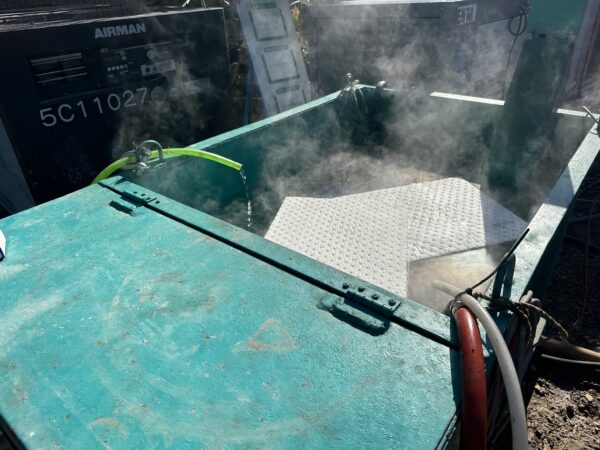
Here are some causes and solutions that come to mind right away.
In particular, there’s nothing we can do about the regional variations in materials like sand.
In cases like that, maybe you could reduce the amount of sand? Or increase it? There are actually surprisingly many regional variations in the mix ratios.
I think it's important to figure that out as we go.
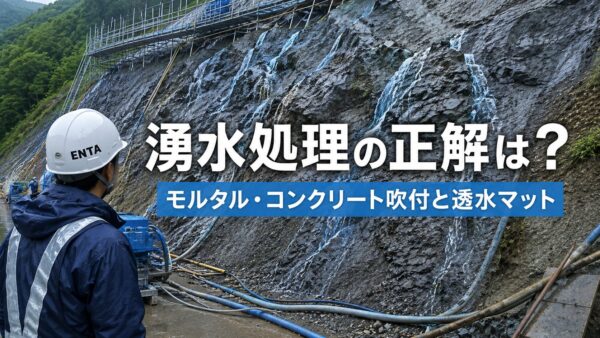
Also, please be careful, as water can often be a problem as well.
See you later.