Hello, everyone.
This is Enta.
Last time,"Three Reasons Why Public Works Companies Don't Make a Profit"I wrote it.
There are many service providers, going independent isn't worth the effort, and the industry lacks a business management framework.
Complaining won't get you a single yen lol
So, this time,How Small and Medium-Sized Construction Companies (Especially Specialized Contractors) with Annual Sales of 300 Million or Less Can Turn a Profit...as the foundation of business management in the world, and,
I’d like to write about the realities of the construction site from the perspectives of civil engineers and slope engineers, comparing their viewpoints.
I'm not talking about the big companies.
This is the story of a small-to-medium-sized construction company like ours, where the president handles on-site work and sales while the company generates annual revenue of 100 million to 300 million yen, lol.
Even if I were writing this, I wouldn't say for a second that it's finished lol
I’m sure there’s a bit of my idealistic thinking mixed in here, but please bear with me!
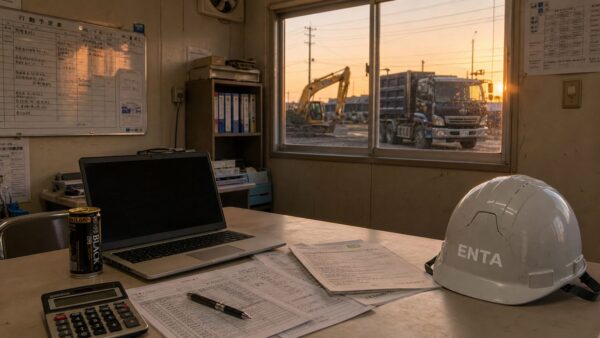
How Small and Medium-Sized Construction Companies Make a Profit | There’s Just One Basic Formula
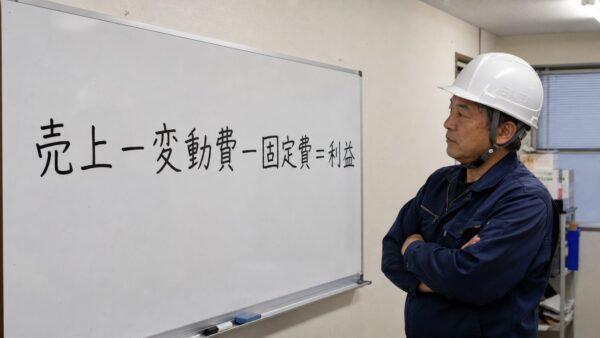
Ultimately, this is the only way to make money that people talk about.
Profit = Revenue – (Variable Costs + Fixed Costs)
Of course lol
But if you break it down, there are only three ways to make a profit.
① Increase sales, ② reduce variable costs (cost of goods sold), ③ reduce fixed costs. That's all there is to it.
According to the Construction Industry Information Management Center (CIIC)’s “Summary of Management Analysis of the Construction Industry (Reiwa 5 Fiscal Year),”
In fiscal year Reiwa 5, the operating profit margin for the construction industry as a whole fell to the 3% range, while the gross profit margin remained generally between 20% and 25%.
Furthermore, as a trend observed in this document,The larger the tier, the higher the operating profit margin; the smaller the tier, the lower the margin.It says that very clearly, lol
Well, I already knew that, but it just goes to show that what I’d been sensing is actually backed up by the data.
① Strategies to boost sales are the least effective for small and medium-sized construction companies, lol.
In business books these days, “First, increase sales” is a common refrain.
But you know, if a small or medium-sized civil engineering or slope stabilization company tries to do this, they’ll pretty much be screwed lol
The reason is simple: in this industry, increasing sales requires a proportional increase in personnel, machinery, and worksites.
For example, suppose a slope construction company with annual sales of 150 million yen pushes itself to reach 300 million yen in annual sales.
The number of sites has increased several-fold, the number of staff has doubled, outsourcing has doubled, and machine utilization has doubled. Naturally, mistakes have doubled, and the probability of a site running at a loss has doubled too lol.
And thenAs sales volume increases, the gross profit margin decreases.That is a characteristic of the construction industry.
According to management analysis data from the Construction Industry Information Management Center, the gross profit margin for construction projects with sales of less than 50 million yen was 34.59 percent, whereas for projects with sales of 2 billion yen or more, it dropped to 15.16 percent.
*Survey by the Construction Industry Information Management Center
*I have not personally cross-referenced this with the relevant pages in the original CIIC source. This is provided solely as an indicative figure based on industry data.
The reason is that the larger the project, the fiercer the competition, which leads to lower unit prices and a higher percentage of outsourced work. (And if the total amount increases, the ratio of overhead costs to direct labor costs also decreases.)
In other words, the idea that small and medium-sized construction companies will turn a profit if they double their sales is pretty much a myth.
Setting a sales target of 300 million and increasing your gross profit margin is a surefire way to boost the company’s net income!
② Reducing Costs | The Proven Way for Small and Medium-Sized Construction Companies to Turn a Profit
Variable costs = material costs, labor costs (including outsourced labor), and direct expenses.
This is what is known as the construction cost in the construction industry.
This is the main factor that determines gross profit in the construction industry.
Specifically, when it comes to slope construction,
・Directly purchase cement, sand, rebar, anchor materials, and other items(Just skipping one trading company can change the TP3T by 2 to 51.)
・Reduce shipping costs(We want to increase the utilization rate of our company's trucks; while we'd like to have large trucks, they actually end up being quite wasteful—for slope work, a 4-metric-ton truck is the safest bet.)
・Reduce the Outsourcing Ratio(Increasing the percentage of in-house construction work will dramatically boost gross profit.)
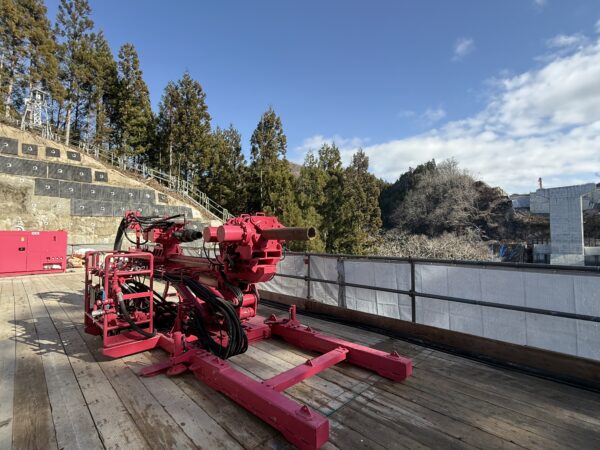
・Increase Machine Utilization(Idle drilling machines and spray machines could become money-losers.)
There are a lot of construction business owners who suffer from “machine fever”—even though they don’t actually need them! (Me)
However, we’re also faced with the contradiction that without it, we can’t even take orders!
Especially the machine utilization rate at the end.
There are actually quite a few companies that only run their drilling machines—which cost tens of millions—for five days a month, lol.
Depreciation, maintenance, storage fees, and interest—it all adds up.
Just because I haven't been using it, I'm in the red every month。
I really feel bad about it, lol.
👇👇👇 It hasn't been used even once yet... (I took it with me but couldn't use it, so I packed it up.)
③ Reduce Fixed Costs | The Greater the Impact on Profits for Small and Medium-Sized Businesses
Fixed costs = office space, company vehicles, leases, insurance, and indirect labor costs.
According to the Small and Medium Enterprise Agency’s “Preliminary Report on the Reiwa 4 Basic Survey on the Status of Small and Medium-Sized Enterprises,” the average annual sales per small and medium-sized enterprise were approximately 180 million yen, and the average annual operating profit was approximately 8.71 million yen. This translates to an operating profit margin of approximately 4.8 percent.
If you take a closer look at this,If we could cut fixed costs by 1 million yen per month, our annual profit would increase by 12 million yen.That's the story, lol
Cutting fixed costs by 12 million is 100 times easier—and more reliable—than increasing sales by 12 million.
Specifically,
・Terminating leases or selling unused leased equipment
・Review the number of company vehicles (Do we really need one per person?)
・Excess inventory・Excess staffing
・Number of administrative staff at the company; system usage fees
It's plain.It's really plain.。
But it makes a difference in the numbers. This is especially true for small and medium-sized construction companies.
Executive compensation is not something to be “cut,” but rather something to be “designed”
I’ll mention one thing here that’s often misunderstood.
For accounting purposes, the president’s salary (executive compensation) is also classified as a fixed cost, butThis is completely different in nature from lease payments or office rent.。
There are three reasons.
① For tax purposes, executive compensation isFixed Monthly SalaryThere is a rule that requires you to continue paying a set amount for one year, starting within three months of the beginning of the period.
If you reduce the amount midway through the period, there is a risk that the reduced amount will not be deductible (Corporate Tax Act, Article 34). You cannot make flexible reductions, such as cutting the amount in half starting next month.
② When a bank evaluates a loan application,Executive compensation is viewed as a reflection of the company's financial flexibility.. It is common practice for banks to assess their actual profitability based on “operating income plus executive compensation.”
Companies that pay executive compensation are viewed as being able to “cut those payments if necessary to free up funds for repayment.”
Conversely, companies with excessively low executive compensation are often viewed as having “no room for further cuts—no leeway,” which puts them at a disadvantage.
③ From the perspective of an individual’s take-home pay, lowering executive compensation means more profits remain with the company, which translates to corporate income tax.
"Increase" = individual income tax + social insurance premiums.The Problem of Optimizing Corporate and Individual TaxesSo, simply lowering your salary doesn't necessarily mean your take-home pay will go up.
Therefore, executive compensation is not a “target for cuts,” but rather, every fiscal period,Items to Be Designed at the Start of the Period。
Lower it when you want to keep working capital in the company, adjust it before the fiscal year-end if you want to secure a loan, and raise it if you have a personal mortgage.Strategically Determined FiguresI guess so, lol
Please consider this separately from unused company cars and unnecessary leases.
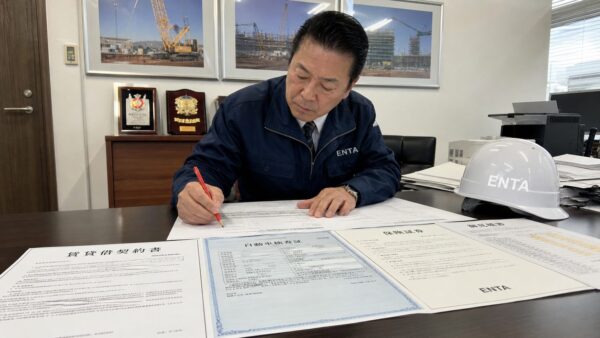
For small and medium-sized civil engineering and slope stabilization firms, the key is “winning contracts based on unit price.”
Conclusion: If small and medium-sized construction companies want to turn a profit while operating within the 300-million-yen limit, the only way forward is..."Take on the same work at a higher rate"It's as simple as that.
But to do that, the reason not to buy at a low price is—Technology and Track Recordis needed.
・Construction capabilities to handle challenging job sites (steep slopes, spring water, cold weather, nighttime)
・Documentation capabilities that give general contractors peace of mind (comprehensive expertise in ICT, photo management, as-built documentation, quality, and construction processes)
・The ability to move as a team with a sense of unity (ability to work together as a team)
It would be great if we could show the general contractor why they should choose us even if our price is 20% higher than our competitors'.
"It's expensive there, but they don't have any accidents, their paperwork is in order, and in the end, it's faster if I just leave it to them, so I'll go with them," he said,
The moment the general contractor’s office manager tells you that is when small and medium-sized construction companies start turning a profit, lol.
Contractors who never have accidents are seriously the best!
Common Characteristics of Profitable Small and Medium-Sized Construction Companies
Profitable small and medium-sized slope construction and civil engineering firms have something in common.
- Capable of cost management
- Looking at the gross profit margin
- High in-house construction rate
- The machine isn't idle
- Low fixed costs
- The CEO can keep an eye on both the front lines and the numbers
On the other hand, struggling small and medium-sized construction companies focus solely on sales.
"I was so happy that sales were up from last year," but when I looked at the financial results, it turned out to be a loss. That happens all the time lol.
The construction industry isn't the place for getting rich quick.
Reduce production costs by 1%, reduce fixed costs by 100,000, and raise the unit price by 5%. I just have to keep steadily saving a little bit every month.
Those "rules for doubling sales" you see in business books out there basically don't work for small and medium-sized civil engineering and slope stabilization companies.
The way we make money is a lot more down-to-earth, lol.
It's not flashy, but I want to keep plugging away steadily, lol.
I believe that’s how we slope contractors manage to stay in business.
See you later.