



Hello, everyone.
This is Enta.
Has the typhoon passed yet?
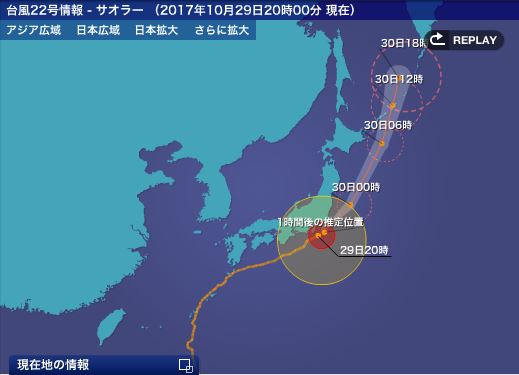
This didn't really affect us that much, but the earthwork is going to be delayed, after all...
When it rains, we can't work the soil → If we can't remove the excess soil, we can't build the slope →
The slope contractors are also on standby → The burden is falling on the slope contractors...
A vicious cycle, as it were.
At times like that, the site supervisor is on edge.
How to shorten the construction schedule depends on the supervisor's ideas and skills.
We hope that we, as contractors, can be of some help!
But that's beside the point. Back in the day...
Craftsmen often say, “Being a foreman is easy, so it’s a great job, isn’t it?”
The director can't even do it himself, but he acts like he knows what he's talking about when he gives orders, lol.
"Well, then, you try it!" and stuff like that—that's what they told me lol
I hear that a lot, especially from young craftsmen who aren’t familiar with the work of a supervisor.
As expected, veteran craftsmen are seasoned professionals in this area as well, so they understand.
That said, while the director seems a bit reluctant to follow the book to the letter, the logic holds up.
Ultimately, it’s important to follow the standards.
You're not wrong. It's the job of the supervisor and the craftsmen to find a compromise and proceed with the construction.
Actually, being a director is physically easier. (Slightly.) However,Directors work long hours, so their salaries are higher.
There are plenty of managers out there who, depending on the location and circumstances, work twice as hard as the craftsmen.
Site supervisors are really amazing!(From a former site supervisor, lol)
What does a director do?
(In no particular order)
1. Construction Management
Manage and supervise the job site in accordance with the drawings and specifications.
The drawings include the site boundaries and other details, so we must fully understand them before proceeding with construction, and
Management of all aspects, including community briefings, road use permits, and meetings to plan detours
2. Photo Management
Take photos of every step of the process on site.
Basically, these include photos that illustrate the progress of the construction work, as well as as-built photos and quality control photos.
In addition, all photographs serving as evidence, including those showing ingenuity, detailed shots of hidden areas, photos of materials, and photos taken during the inspection
3. Quality Control
Ensure that the quality of structures and other items meets the specified standards.
Material quality, manufacturing methods and specifications, JIS compliance, NETIS registration, and installation in accordance with quality specifications
4. Process Management
We will determine staffing and assignments by considering the entire process to ensure completion within the scheduled timeframe.
Using the schedule to inform the site and prepare compliance reports for government agencies
Considering the staffing levels and progress for each trade, when is the best time to schedule the next phase of construction?
We'll plan our trip with the possibility of delays due to rain or other factors in mind.
5. Cost Management
Calculate the costs associated with the construction project and manage subcontracting fees, material costs, and other expenses, including profit.
Design and cost estimation for modification projects, as well as the determination and calculation of profit margins
6. Safety Management
Create an environment where construction can be carried out safely and comfortably on-site.
Above all else, while this takes precedence over all other management considerations—which does tend to make on-site construction a bit more difficult—
When an accident occurs, operations at the scene are sure to come to a halt. And delays are inevitable.
We carry out construction at the fastest possible pace while prioritizing safety above all else.
That’s a rough overview of a supervisor’s job, but a competent manager would never limit themselves to overseeing just one worksite.
It’s perfectly normal for us to manage two or three sites. It’s practically unheard of for one person to handle just one site! (And that’s while looking out for junior colleagues and subordinates.)
And once the construction is finished, I have to deal with the massive pile of completion paperwork while making arrangements for the next job site, and,
We will develop a construction plan, prepare a budget, and source subcontractors.
Since we have to do all of that at the same time, the end of the fiscal year is absolute hell.

I totally understand how you feel!
A long time ago, I used to wonder if there were any reliable craftsmen out there.
By "reliable," I mean someone who can take a few photos (of the site) and carry out the work safely according to instructions.
If there were craftsmen like this on the job site, the foreman would be able to get the work done much faster.
That said, there's practically no one like that, lol.
That's because employee management isn't just about taking pictures. It's practically impossible to get it right after just one lesson.
Something's off. It really does prove the old saying: "Leave it to the experts."
The progress and quality of the work on-site are the result of a tag-team effort between the craftsmen and the foreman.
I'd like to work on making the necessary adjustments.
See you later.




This camera... brings back memories~~ (^^) We used to attach the film to that orange rubber part of the strap, didn't we? lol
Thank you for your hard work.
It brings back memories, doesn't it?
There was a time when I used to run around on set with about two of these, lol.
Nowadays, that's been replaced by smartphones, lol.