

Hello, everyone.
This is Enta.
Who do you think is most likely to make a mistake at a construction site?
Newcomer? Mid-career? Or veteran?
I’m going to write this in a candid way, including some personal stories of my own.
My younger days were full of mistakes and failures, so I could talk about my failures all day long, lol.
The Theory That Newcomers' Mistakes Aren't Really "Mistakes"
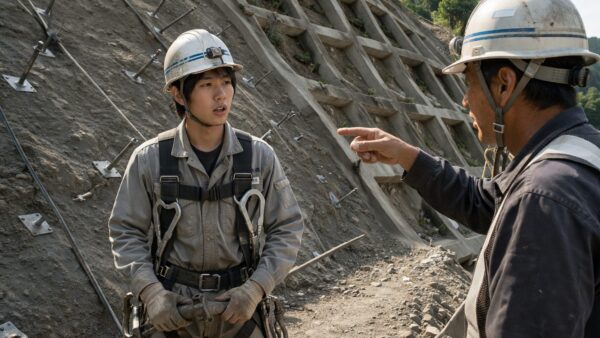
Let's start with the new hire.
When it comes to new employees,I don't even know what the right answer is to begin withThat's right, isn't it?
That's why, even when they mess something up, they often don't even realize they've made a mistake.
It sounds a bit like a riddle, but saying “I don’t even know if it’s a mistake” isn’t really a mistake in a sense.
For example, if you haven’t been taught why it’s necessary to monitor drill hole diameter and depth, even if there’s a gap in the records, you’ll probably just wonder, “Was there a problem?”
This isn't so much a problem with new employees as it is...Issues on the Teaching and Management SidesThat's it.
Just saying, “Make sure to check this,” isn’t enough—if you don’t know what to check or why, it’s not really a check.
In that sense, mistakes made by new employees are often discovered while they’re still at a “stage where they can be recovered from.”
Any mistakes made by new employees are entirely the fault of their senior colleagues and supervisors!
Newcomers, feel free to make mistakes! Minor mistakes help you gain experience and grow.
Mistakes by mid-level employees stem from “insufficient verification”; they tend to use busyness as an excuse

The most common mistakes made by mid-level employees are, as expected,"Insufficient Verification"That's it.
I've been getting the hang of the job.
I understand the process, too.
My junior is tagging along, too.
Once you're in that position, it inevitably turns into an "assembly-line" process.
When I'm laying out the formwork as I usually do, I sometimes realize that it's encroaching on neighboring property or that there aren't enough tiers for the required cross-section.
You’ve probably heard stories like this at your own job sites, right? You work on something for half a day, then realize a mistake and have to start all over again…
I end up thinking afterward, “I should’ve just checked,” but,
Realistically, it's tough to check everything in the midst of a busy work environment.I can see why.
That’s exactly why it’s important to decide on the “timing” for checking right from the start.
Detailed instructions to the craftsmen, on-site guidance during downtime, and written instructions.
Before construction begins, before switching to a different type of work, and after a change in instructions.
Just keeping these points in mind makes a big difference.
It’s also important to identify the areas where you’re most likely to make mistakes ahead of time!
Veterans' "Assumptions"—These Are the Most Troublesome
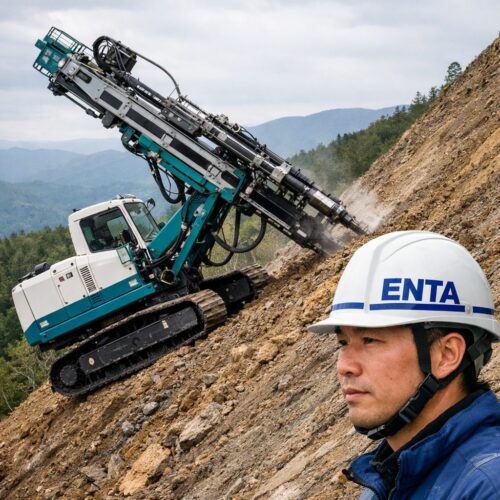
This is actually about me, lol.
As you gain more experience, you start to develop a sense of certainty—a feeling that “it’s always like this, so it’ll be fine.”
This in itself isn't bad. It speeds up decision-making, streamlines the process, and allows you to give clear instructions to younger staff.
The only problem is—
Assuming, "It's the same this time, too"That's it.
"It's usually like this" and "It's the same this time" are two completely different things.
This was a long time ago, but I once messed up the rebar for a 300-frame structure, lol (the design called for D13, but since there were bolts, I just assumed it was D16 on my own).
There are so many cases of misunderstandings or not checking drawings, specifications, and special specifications thoroughly, aren't there?
Looking back on it now, it really gives me the chills.
Assumptions + Zero Verification: This Combination Is the Most Dangerous
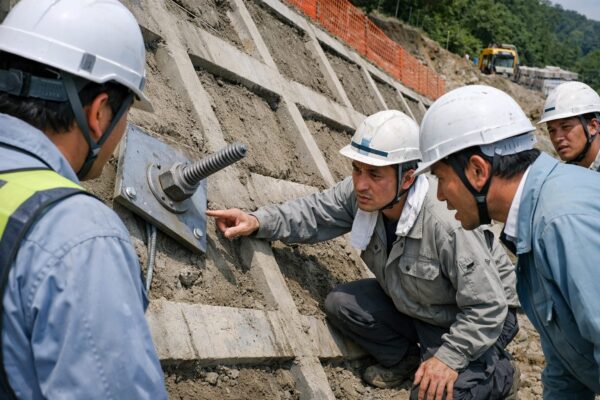
(This picture had me laughing so hard—I was like, "A bolt right here!?" lol)
If it were just a misconception, that would be one thing.
As long as we check, we can still stop it.
The worst-case scenario is when “a veteran’s assumptions” combine with “a failure to double-check, as mid-level employees tend to do.”But that's really bad.
"Believing without a doubt that I am right" + "Completely omitting the act of verification"
When these things happen at the same time, it leads to a major mistake.
Moreover, when it comes to slope construction, mistakes canCannot be recoveredThat happens more often in this field than in other types of civil engineering work, doesn't it?
Construction on a slope can sometimes make it physically difficult to make adjustments midway through the process.
If we take down the temporary scaffolding, rebuilding it will cost a fortune... That's scary!
When construction defects are discovered during an inspection, the resulting losses aren’t limited to the cost of repairs—they also include lost labor hours, project delays, and damage to the contractor’s reputation with the general contractor, all of which come crashing down at once.
We can recover some of the data, but if we can't, it's going to be a real disaster.
It would be great if insurance could cover it, but it’s really hard to regain trust beyond that, isn’t it!?
Trust is more important than money! (This is an absolute must!!)
Luckily, I've never been in that situation, so I've gotten off pretty scot-free lol
So, what should I do?
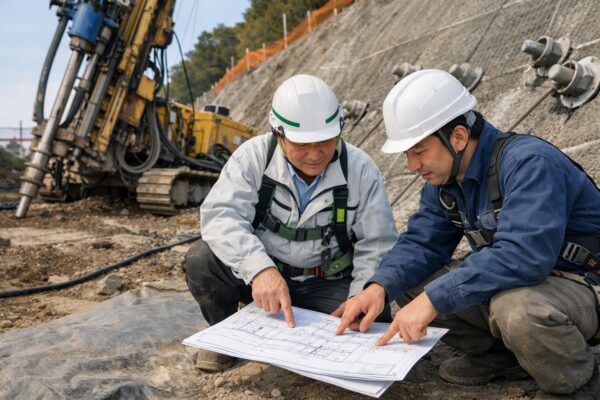
The solution is simple.
① Use experience as a “reference,” but don’t treat it as the “answer.”
"This is how it was last time" is simply a fact; it does not serve as a basis for saying, "We'll do it this way again."
Rule of thumb is a useful tool, but it’s dangerous to rely on it as your sole criterion for judgment.
② Make checking a routine part of your day
Not "I'll do it when I feel like checking," but rather,Decide that "I will always check at this point"。
For us, it’s definitely two days before drilling—two days before the work starts. The day before is a no-go!!! lol
Just by making it a rule to “always check” this one thing, you can prevent a lot of major mistakes.
③ Consciously look for what’s different this time
The more experienced someone is, the more they tend to stick to their usual routine.
That’s exactly why, before starting construction, you should take just five minutes to think about, “What’s different about this job site compared to usual?”
Ground conditions, design specifications, and changes to instructions. We simply can’t move forward without verifying these from scratch—that’s all there is to it.
It’s essential to verify everything on-site—drawings, column diagrams, designs, special specifications, and so on.
Or maybe things like the terrain, the location of the office, or what it’s like on rainy days?
Who makes the most mistakes on the job?
The answer to that question is, in my opinion,"Someone who failed to double-check despite having experience"That's what I think.
Mistakes made by new employees are a training issue.
Mistakes by mid-level players are a matter of habit.
Mistakes made by veterans stem from overconfidence.
While none of these can be completely prevented,The moment you think, “I’ll be fine,” is the most dangerous.。
Check and double-check to avoid mistakes.
Trust your own experience, but don't be overconfident.
It's easy to say, but it's actually really hard, lol.
I mess up all the time, too! Maybe my brain is getting smaller as I get older...
See you later.