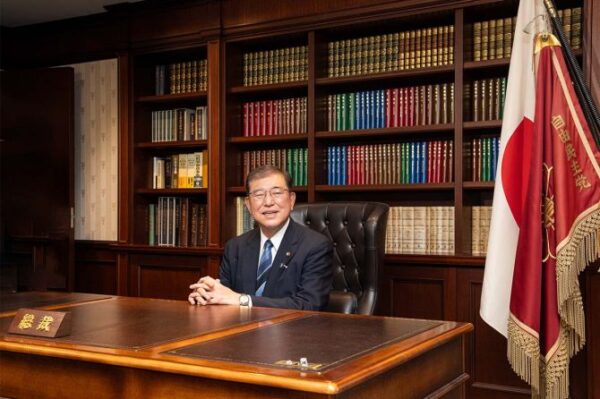
Shigeru Ishiba (67), who was elected the 28th president of the Liberal Democratic Party, was nominated as the 102nd prime minister during the extraordinary session of the Diet convened on October 1, and formed a new cabinet on the same day.
Although the new Prime Minister Ishiba is renowned as a policy expert, his proposals for the construction sector are also remarkably substantial. For example, the creation of a “Ministry of Disaster Prevention (tentative name)” that will take sole responsibility for everything from preparedness to recovery. To address the imminent threat of massive natural disasters and the increasing frequency and severity of wind and flood damage in recent years, and to protect the lives, physical well-being, and property of the public, the ministry will promptly and significantly expand its personnel and budget.
First, he proposed establishing a “Disaster Prevention Agency” during fiscal year 2026, led by a full-time minister responsible for maintaining comprehensive preparedness at all times, with the aim of using this as a stepping stone toward establishing a Ministry of Disaster Prevention. Guided by the principle of prioritizing human life above all else—particularly in the event of an earthquake directly beneath the capital or a Nankai Trough earthquake—the plan aims to ensure a comprehensive response to future massive natural disasters and wind and flood damage by thoroughly implementing preemptive disaster prevention measures that make maximum use of ICT technologies such as AI and digital twins, and by advancing crisis management capabilities.
The government also emphasized the shift toward a domestic demand-led economy. It will establish the “Headquarters for Creating New Regional Economies and Living Environments” (tentative name) to address issues such as the declining birthrate, aging population, and rapid population decline, appoint a minister in charge, and develop and implement intensive, comprehensive measures over the next decade. Specifically, to transition to an economy characterized by small-volume, high-variety, and high-value-added production, the government will maximize the potential of regional agriculture, forestry, fisheries, construction, tourism, and service industries, thereby facilitating the relocation of 3 million people from urban areas to attractive regional communities.
At a press conference on September 30, the new party leader, Ishiba, announced his policy, stating, “It is important for the new administration to seek the people’s judgment as soon as possible. If conditions permit, we will dissolve the Diet and hold a general election on October 27.” He outlined plans to hold the general election with the campaign period beginning on the 15th and voting and ballot counting taking place on the 27th.
Prime Minister Ishiba has previously been open about his political stance and policy positions in works such as *Conservative Politician: My Policies, My Calling* (written by Shigeru Ishiba, edited by Atsuo Kurashige) and on his website. This book further compiles his thoughts on disaster prevention and regional revitalization, as expressed during press conferences.
Commitment to the Recovery of the Noto Peninsula: Funded by Contingency Funds
At his press conference on September 27 as the new LDP president, Ishiba cited the earthquake on the Noto Peninsula and measures to address the recent heavy rains as urgent issues. “We cannot wait for a supplementary budget to be drafted, so we will use reserve funds to address these issues. If measures can be put in place to ensure the reserve funds are disbursed quickly and smoothly, we will make further efforts. We would like to discuss the supplementary budget within the LDP and the LDP-Komeito coalition,” he said.
Next, questions were raised at the press conference regarding the establishment of a Ministry of Disaster Management. “I don’t think establishing a Ministry of Disaster Management will be easy. However, the Cabinet Office’s current staffing and budget for disaster management are critically insufficient. Expanding personnel and the budget can be done immediately, and that will lead to the creation of an Agency for Disaster Management—or even a Ministry of Disaster Management—as an external agency of the Cabinet Office,” he said.
On the same day, a commercial television station held its first party leader debate with Yoshihiko Noda, the new leader of the Constitutional Democratic Party of Japan, the largest opposition party. New Leader Noda stated, “Using reserve funds for the initial response is a valid option. This is because disasters are difficult to predict. However, the practice of drawing on the contingency fund as many as six times appears abnormal. Given the extensive damage caused by the recent torrential rains, this is not a matter of the amount; rather, the proper course of action is for the ruling and opposition parties to thoroughly discuss the situation in the affected areas, draft a supplementary budget, and pass it as soon as possible.” In particular, since the new LDP President, Ishiba, has proposed the establishment of a Ministry of Disaster Prevention and has shown great interest in disaster prevention, I hope he will return to the proper course of action.”
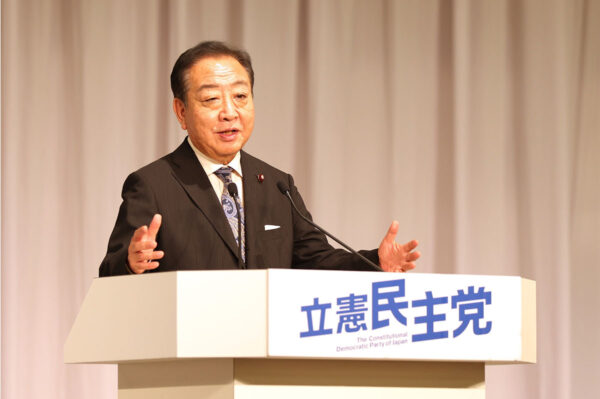
In response, the new party president, Ishiba, stated, “The contingency fund is the most immediate solution. However, it is also true that those on the ground have not felt the impact of measures taken using the contingency fund. “I have no intention of using the allocation of the contingency fund as an excuse to shirk responsibility. Ideally, the fund should be used in a way that makes disaster victims feel, ‘Ah, they really understand our situation,’ but that does not seem to be the case. The government will approach the use of the contingency fund—including its execution—with a commitment to ensuring it is utilized swiftly and appropriately.”
In response, the new party leader, Noda, criticized the government’s stance, stating, “Measures that take effect immediately and boost morale in the disaster-stricken areas should be discussed by both the ruling and opposition parties, and a budget to support those areas should be allocated; the use of reserve funds runs counter to fiscal democracy.” He added, “A supplementary budget should be drafted to provide the public with the information they need to make an informed decision.”
My 15-Year Quest to Establish a "Ministry of Disaster Prevention"
Returning to the topic of the Ministry of Disaster Prevention, the new Prime Minister, Ishiba, has been advocating for its establishment for the past 15 years. Prime Minister Ishiba, who argues that effective response is impossible when a disaster strikes unless preparations—such as information gathering, budget allocation, procurement, stockpiling, training, research, and development—are made in peacetime, published an anecdote in his book *Conservative Politician: My Policies, My Destiny* that he heard directly from the U.S. Federal Emergency Management Agency (FEMA) upon assuming the post of Minister for Regional Revitalization. That agency oversees response and relief efforts during major disasters. To maximize the effectiveness of its response when a disaster strikes, it also works to minimize damage during peacetime.
Currently, Japan has a Cabinet Office division responsible for disaster management; however, with disasters occurring so frequently, the current response system is stretched to its limits, making it difficult to begin formulating plans for disaster prevention and mitigation regarding the three major natural disasters: the Nankai Trough earthquake, an earthquake directly beneath the capital, and the eruption of Mount Fuji.
Next, it will serve as a central organization for accumulating, sharing, and passing down knowledge regarding earthquakes and other disasters. Officials at the Cabinet Office are seconded from various ministries and agencies, and in many cases, they are transferred after about three years. “Unless it is a specialized ministry with its own career staff, it will be impossible to accumulate expertise on a national scale,” he said, expressing a sense of urgency.
Furthermore, it is said that there is considerable variation in disaster response across the 1,718 municipalities in Japan’s 47 prefectures. While local governments whose mayors and staff have a high level of awareness regarding disaster prevention and possess expertise in disaster response are able to respond swiftly, those that do not may face the risk of catastrophic disasters. To bridge this gap, a national agency is necessary, and the National Governors’ Association has proposed the creation of a dedicated ministry—the “Ministry of Disaster Prevention.”
In his book, the new Prime Minister Ishiba warns that “Japan’s disaster prevention system remains unchanged since the Great Kanto Earthquake,” highlighting that a crisis is looming.
Shigeru Ishiba’s Mentor, Kakuei Tanaka
The new Prime Minister, Ishiba, learned the ropes of politics from Kakuei Tanaka. The ties between the Ishiba family and Kakuei Tanaka date back to Jiro Ishiba, the new Prime Minister’s father. Before serving as governor of Tottori Prefecture and as a member of the House of Councillors, Jiro joined the Ministry of Construction (now the Ministry of Land, Infrastructure, Transport and Tourism), where he rose through the ranks to become Director-General of the Urban Development Bureau, Chief of the Secretariat, and Vice Minister. Throughout his career, he worked closely with Kakuei on the development of numerous policies.
Jirō and Kakuei were both from poor farming backgrounds, which forged a strong bond between them. Jirō served four terms as governor of Tottori Prefecture over a period of 15 years, went on to become a member of the House of Councillors, and later served as Minister of Home Affairs and Chairman of the National Public Safety Commission in the Yoshiyuki Suzuki Cabinet; however, all of these political endeavors were made possible with Kakuei’s backing.
After Jiro’s death, the new Prime Minister Ishiba was asked by Kakuei to enter politics, where he was thoroughly drilled in the ins and outs of campaigning. He has been learning from the “Archipelago Remodeling” initiative, figuring out how to carry it forward through trial and error, and I imagine his theories on regional revitalization also stem from the legacy he inherited from Kakuei.
In fact, although it didn’t receive much attention among the new Prime Minister Ishiba’s policies, he explicitly stated the goal of raising the minimum wage to “a national average of 1,500 yen in the 2020s.” While this is a policy the Communist Party has long advocated, it reflects the “Kakuei-style” DNA of being willing to flexibly adopt good ideas even if they come from the opposition.
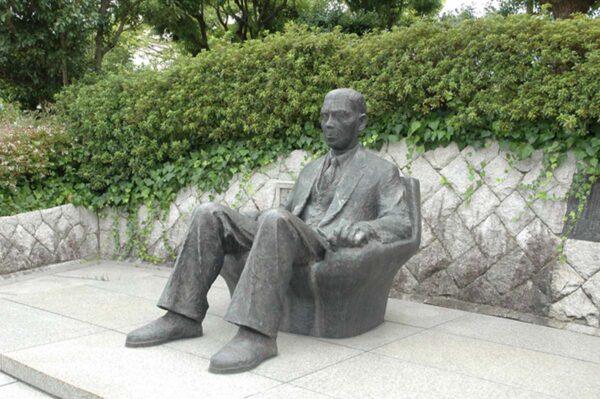
In the 1970s, when Kakuei was at the height of his influence, progressive forces—including the former Socialist Party and the Communist Party—joined forces, leading to the emergence of numerous progressive local governments in Tokyo, Kyoto, Osaka, and other areas. Shojiro Kawashima, Kakuei’s close ally and former LDP Vice President, predicted to Kakuei that “the latter half of the 1970s would be marked by a showdown between the LDP and the Communist Party.” In response, Kakuei implemented a strategy that both kept a watchful eye on the progressive forces and incorporated their policies into his own platform, thereby setting a precedent for curbing the influence of progressive local governments.
For a detailed account of the confrontation between conservatives and progressives during this period, see *The Novel: LDP vs. Communist Party* (by Inotake Togawa). By the 1980s, the conservative-centrist coalition of the LDP, Komeito, and the Civic Party had become the mainstream in Japanese politics, and the progressive forces began to decline in earnest.
This is just my personal opinion, but I suspect that the new LDP President, Ishiba, sensing that the party is facing a very tough election, has been striving to incorporate policies from across the political spectrum. Following the extraordinary session of the Diet convened on October 1—which included budget committee hearings in both the House of Representatives and the House of Councillors, as well as a debate between the leaders of the ruling and opposition parties—the party decided to dissolve the Diet and call a general election, with the schedule set as “candidate registration on October 15, and voting and vote counting on October 27.”
This is just my personal opinion, but I am convinced that the new party leader, Ishiba, believes he would win without a doubt if an election were held right now. The reason is that the opposition parties have not yet established a united front. If the opposition parties field a multitude of candidates, it will work to the advantage of the LDP-Komeito coalition, giving them a significant edge in single-member districts. There is no doubt that they will move into election mode soon, before the opposition can establish a cooperative framework. While some observers believe that the new Ishiba administration would be advantageous for the opposition, under the single-member district electoral system, an overwhelming victory for the ruling coalition is expected unless the opposition parties can form a united front.
To Become Prime Minister, One Needs a “Divine Mandate”
In his book, he also quoted Kakuei’s words: “Becoming Prime Minister is a matter of divine providence.” “Anyone can become a minister once. It takes effort to become one twice. It takes extraordinary effort to reach the LDP’s top three positions: Secretary-General, Chair of the Policy Research Council, and Chair of the General Affairs Council. However, when it comes to becoming Prime Minister, no matter how hard you try, you simply cannot achieve it. That is a matter of divine providence,” he reportedly said.
In his book, Prime Minister Ishiba writes, “If someone like me were ever to become prime minister, it would likely be at a time when the Liberal Democratic Party or Japan as a whole had reached a major impasse. Moreover, that is something decided by heaven. Unless I am granted a divine mandate, it is unlikely to happen.”
It is true that Japan is now approaching a major turning point, as the new Prime Minister Ishiba has stated. Issues such as the declining birthrate and aging population, as well as regional revitalization, are piling up, and all are becoming increasingly serious. Against this backdrop, the construction industry plays a significant role, particularly from the perspective of disaster prevention.
Torao Terada, a physicist and disciple of Natsume Sōseki, wrote the following in *Natural Disasters and National Defense*: “While national defense measures against enemy nations that threaten the security of the state are likely being studied with great diligence by government authorities, it is deeply unsettling that there is little clarity regarding who, within the government, is researching measures against major natural disasters—which have an equally significant potential to affect the fate of a nation—or what facilities are being prepared for such contingencies. I believe that in a country like Japan, surrounded on all sides by such a unique natural enemy, it would be only natural to establish a standing force for scientific national defense—in addition to the Army and Navy—and to prepare for emergencies through daily research and training.”
Although Torahiko wrote “Natural Disasters and National Defense” for *Keizai Orai* in 1934 (Shōwa 9), as the new Prime Minister Ishiba points out, the disaster prevention system has remained virtually unchanged since Torahiko’s time. Therefore, I believe that now, more than ever, the “Ministry of Disaster Prevention” proposed by the new Prime Minister Ishiba is needed, and that this is the divine mission entrusted to him.
The God of Construction