Hello, everyone.
This is Enta.
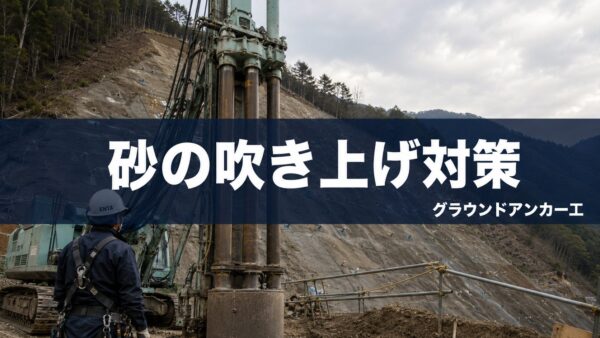
With ground anchor construction, water sometimes comes out of the head, doesn't it?
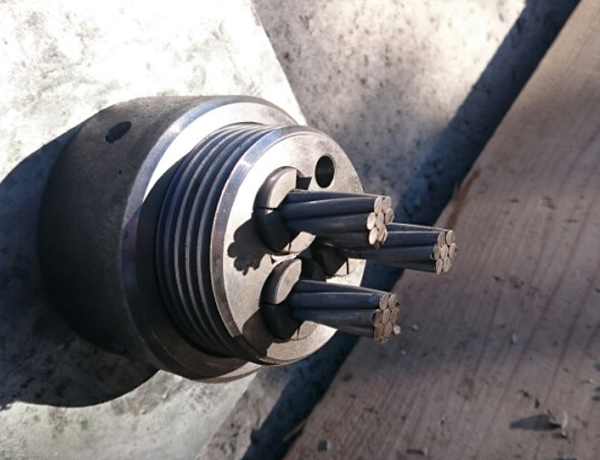
Through the gap in the PC steel strands, lol
It's surrounded by grout, so there's no way it could get out, right!?
That's what you're thinking, right?
Of course, from a product standpoint, we use epoxy to keep water out and apply grease thoroughly.
But water comes out lol
Well, I guess this is just the limit of what products can do against nature, lol.
If I had to say, I think (based on experience) that this tends not to happen with table anchors.
When the Water Comes Out
Water tends to leak most often during construction!
This is right after the anchor was inserted following the drilling.
Also, it can happen when there's a minor earthquake or something like that.
There's probably a crack somewhere in the mounting section...
Things like that, right?
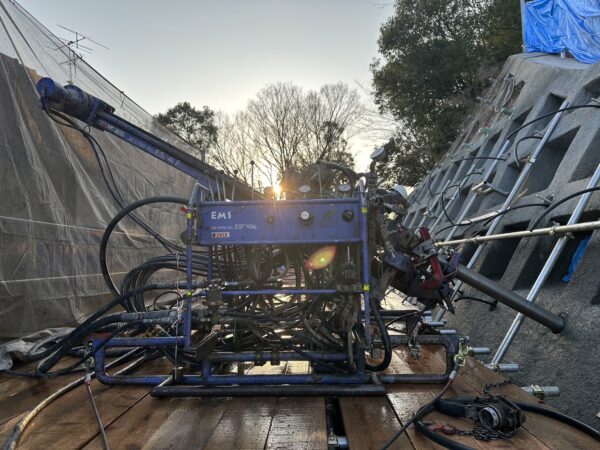
Causes of Water Leaks
The main causes are hydrostatic pressure and capillary action.
Capillary action causes water to rise through cracks that are too small to see.
And then there's intracranial pressure.
For some reason (such as an earthquake), pressurized water begins to accumulate in the anchorage area, and the gaps in the anchors become an escape route for the pressure.
Measures During Construction
When construction takes place in an area with high water pressure, we naturally have to take measures to deal with the water, but,
To begin with, the only reason you’d even consider setting up a permanent structure in a place like that is for temporary housing, so you basically don’t even think about it, lol.
However, there are some things that only become clear after drilling.
After all, the results of borehole surveys aren’t always an exact match for the actual site conditions, and the design is often quite outdated and has changed significantly from the current situation.
In cases like that, soaking is better than replacement injection.
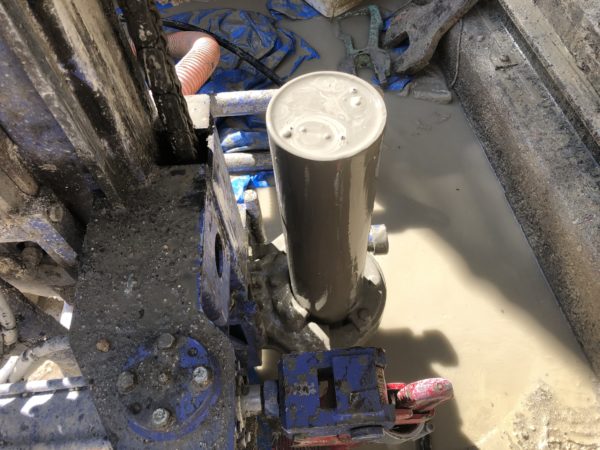
Displacement Grouting: A method in which an anchor is inserted into a drilled hole, and grout is injected from the bottom to displace water and other substances inside the casing.
Grout Injection: A method in which grout is first injected from the bottom after drilling the hole, and the anchor is inserted only after the grout has fully filled the hole.
It's basically a "dobuzuke," but if you add dobuzuke, it gets incredibly dirty!
It's really hard work because we have to do the installation while spilling grout.
So, I think replacement injections are the mainstream approach these days.
The scaffolding doesn't get dirty easily, and it doesn't make a mess of things, lol.
Next time, we'll cover post-construction measures...
See you later.