Hello, everyone.
This is Enta.
What Does a Slope Engineer Think Is the Right Career? How Can You Figure It Out? (Part 1)
What Does a Slope Engineer Think Is the Right Career? How Can You Figure It Out? (Part 2)
This is the final installment. Lately, I've been finding it easier to write longer stories.
At first, I couldn't draw at all, but once I started letting AI handle the illustrations I attach, I've gotten really good at it!
I realized that, surprisingly, drawing is the biggest hurdle when it comes to writing a blog.
That said, there are still a lot of aspects of capturing the work in progress that are challenging.
So, last time I talked about the idea of “just giving it a try and deciding whether it’s right for you or not.”
Well thenWhat exactly does “whether it’s right for me or not” mean?I’ll try to write about that from my perspective.
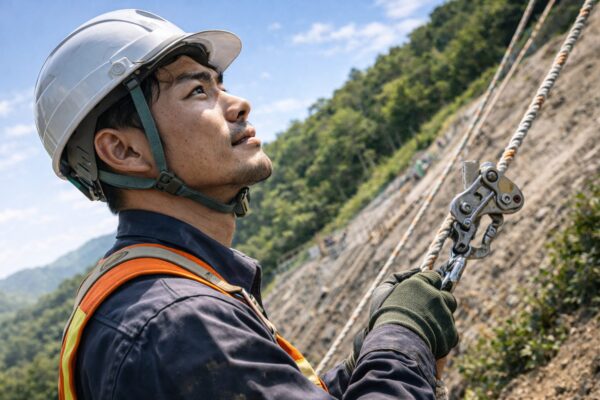
"Can or cannot" is not a criterion for judgment
I think everyone has moments at work when they think, “I can’t do this.”
When it comes to slope construction,
"I didn't realize there were so many high places."
"I just can't seem to remember any of the rope techniques."
"The installation procedure for ground anchors is too complicated."
It's something like that.
But this,It’s not that “I’m not cut out for it because I can’t do it.”
As I mentioned last time, anyone can get the hang of a job to some extent if they put in the effort. Whether it takes a while or not is another matter.
Even among slope-construction workers, there are definitely some who, despite people wondering, “Is this guy any good?” during their first few years, end up becoming the most skilled workers ten years later.
There are plenty of them around me, too lol
Even the technical interns have become incredibly skilled craftsmen.
Even though I couldn't do anything at all back then.
Whether or not something is possible is a question that time will answer.
That's why you shouldn't use this as a criterion for determining the right career.
As I’ve mentioned before, there’s a term called “ryōgeiko.”
This is a phrase used in Kabuki and martial arts: unless you put in the volume, you won’t achieve quality or originality.
By repeating the basics over and over again, you break the mold (break the mold / originality)
Apparently, this has been said for hundreds of years.
Also, you often hear about the 10,000-hour rule, don't you?
It is said that it takes 10,000 hours of practice in a given field to become a top-tier expert.
There is data indicating that it takes 2,000 hours to reach a certain level along the way.
| Level Reached | Estimated Time | Definition of a State |
| Moving Beyond the Beginner Stage | 20 hours | Understands the basic mechanisms and can perform simple operations. |
| Intermediate Level | 200–500 hours | You can enjoy it as a hobby or perform basic practical tasks with assistance. |
| Level of Independence | 2,000 hours | Fully qualified as a professional. Equivalent to one year of practical experience. |
| World-Class Master | 10,000 hours | A leading expert in that field. |
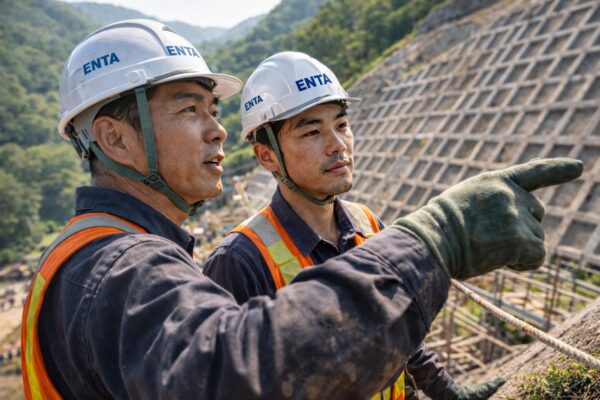
"Whether it's fun or not" is actually a useless question
Next, “Is it fun or not?”
This is also hard to use when determining the right career path.
The reason is that,Whether it's fun or not depends on the "environment," so...That's it.
Even in the same slope-construction business, if your foreman is the worst, it’s hell; if your team is the best, it’s heaven.
There are some bosses who just won't shut up, aren't there? That really gets on your nerves.
Even at the same job site, things can be completely different depending on how well you get along with the general contractor's representative.
If you have a good relationship with the general contractor, it becomes “nothing but rewarding,” but if unreasonable demands keep coming, it turns into “I just want to quit.”
You can't control your environment.
Especially when you're young, you're often in a position where you can't choose your own environment.
So, if you base your decision solely on whether something is “fun or not,” there’s a chance that every time your circumstances change, you’ll end up thinking, “This wasn’t the right job for me.”
That's such a waste.
There are good days and bad days. It’s the same with the work environment—just as there are sunny days, there are also rainy days, pollen in the air, and even yellow dust.
The environment is constantly changing.
However, in the case of very small organizations, while the work environment may change, interpersonal relationships tend to remain the same, so caution is needed.
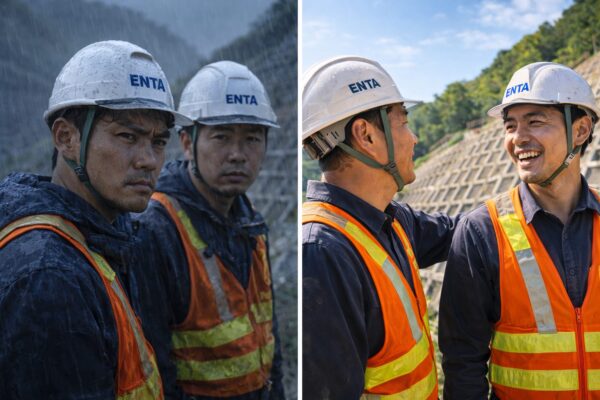
"Whether it suits my nature" is the only criterion
So how do we decide?
"Whether it suits me"That's it.
I believe this is everything.
What does it feel like when something “suits you”?
It's not a matter of liking or disliking, but rather,"Does it feel right?"It feels similar to that.
When it comes to slope construction,
Is it really "no big deal" to head into the mountains every morning? lol (Though getting up early is a pain, of course.)
Whether you can accept that a job subject to the whims of the weather is “just the way it is.”
Whether or not you “mind” being physically active.
Whether you feel a sense of satisfaction when a project is completed and a tangible result remains.
It doesn't have to be "love.""I don't mind," "It's no trouble"...This level is sufficient.
In my opinion,You'll know within six months to a year whether it's a good fit for you.That's what I think. (The 2,000-Hour Theory)
Every morning on my way to work, is my body saying, “I don’t want to,” or “Oh, well, I guess so”?
This is the most honest indicator.
Even if you went only out of a sense of responsibility, you still feel refreshed on the way home, right?

Once you figure that out, finding the right job is surprisingly easy.
Once you understand the "conditions for a job that suits your personality," finding the right career actually becomes quite simple.
I like being outside.
I love nature.
I love the mountains.
I like machines.
I want to get some exercise.
And,I want to create something tangible.
This is exactly what a slope contractor is like, lol.
(Feel free to contact us anytime lol)
The sense of accomplishment when you see a slope that’s been spray-applied with mortar and finished beautifully.
The sense of relief you feel when you drive in a ground anchor and securely anchor it to the natural ground.
That sense of having “created” something when the greenery from the sprayed vegetation substrate takes root.
People who find this "irresistible" are well-suited for a career in slope engineering.
There are a lot of similarities with civil engineering in this area, aren't there?
This is what people commonly refer to as the manufacturing industry (the construction industry)!
To put it another way, finding the right job is...The process of observing “the moments when you unconsciously feel satisfied”I think that might be the case.
It was my experience working on-site as a slope-construction worker that made me realize I love making things.
It wasn't until I tried it and kept at it that I realized, "Oh, I actually liked this."
Almost no one knows what their ideal job is right from the start.
The reality is that you realize things as you go along.I think so.
I’ve written about this over the course of three posts, but ultimately, it all comes down to this: “Just give it a try and spend six months figuring out if it’s right for you.” That’s all there is to it.
Don't overthink it—just give it a try.
If it doesn't work out, just move on to the next thing.
There are jobs that are a good fit and others that aren't, depending on the field.
The key to success in life is to take on challenges.That's what all the great people have been saying for ages!
The world of slope engineering—I'm waiting for you, lol (even if you're an experienced manager).
See you later.