When Working Women Face Legal Barriers.
In places that used to be lumped together under the term “blue-collar,” we’re seeing more and more women working up a sweat, operating heavy machinery, and poring over blueprints.
This is something I actually heard someone say, but,
"It makes me happy to see the work I've done preserved on a map."
"Bridges are pretty cool, aren't they?"
I think it's really cool.
I see this all over the place, but,
Women's Participation in the Workforce
Gender Equality
A Radiant Society
That's how people are cheering them on.
However, that doesn't apply to every job.
No matter how much they want to work, there are times when an “invisible, massive wall” appears right in front of them.
The Distortion That Says, “It’s OK to Be the One Who Makes Plans, but Not the One Who Does the Hard Work”
There are still some unreasonable rules in force within the laws and regulations.
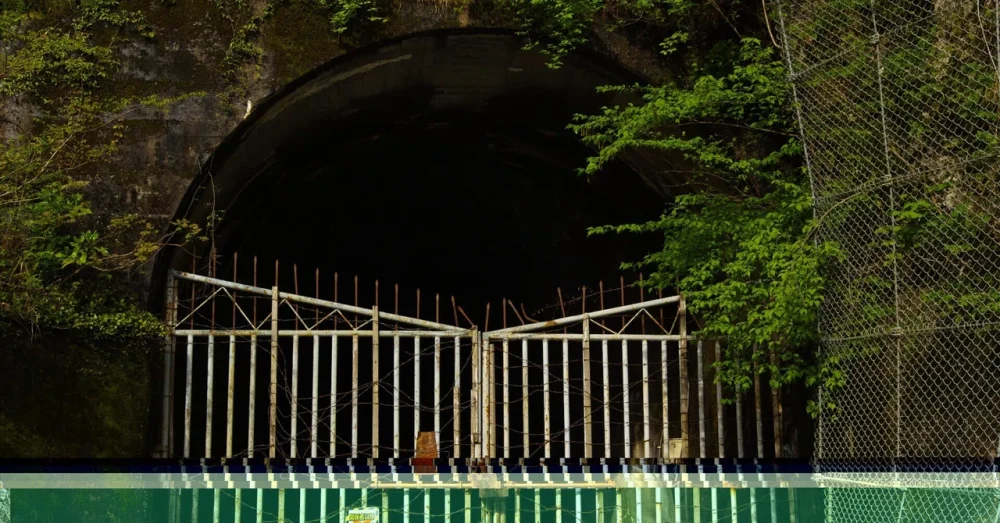
A typical example might be a “tunnel work” site, such as a tunnel.
Tunnel construction today is vastly different from how it used to be; it is evolving into a “smart” environment where massive, state-of-the-art heavy machinery operates and excavation proceeds safely via remote control.
It seems that even for industries struggling with labor shortages, the addition of this new workforce of women is very welcome.
Labor Standards Act
(Restrictions on Underground Work)
Article 64-2 An employer shall not assign women falling under any of the following items to the duties specified in those items.
一 Pregnant women and women who have not yet reached one year since giving birth and who have notified their employer that they will not engage in work performed underground All work performed underground
二 Other than the women listed in the previous issue,Women 18 years of age or older Among the operations conducted underground, excavation work performed by hand and otherWork deemed harmful to women as defined by an ordinance of the Ministry of Health, Labor, and Welfare
What does “as specified by an Ordinance of the Ministry of Health, Labor and Welfare” in paragraph 2 mean?
I often hear people say that laws and regulations are a hassle because they keep changing this way and that.
You're absolutely right.
The items specified by the Ministry of Health, Labor and Welfare Ordinance are as follows.
(Scope of Restrictions on Underground Work)
Article 1 The duties specified by the Ordinance of the Ministry of Health, Labor and Welfare under Article 64-2, Item 2 of the Labor Standards Act (hereinafter referred to as the “Act”) are as follows.
一 Work involving the manual excavation or extraction of earth, stone, or minerals (hereinafter referred to as “minerals, etc.”)
二 Operations involving the excavation or mining of minerals and other materials using mechanical power(Excluding those performed remotely.)
三 Operations involving the excavation or extraction of minerals, etc., using blasting
四 Work performed in conjunction with operations such as the excavation or mining of minerals, including the transport of earth, materials, etc., or the placement of concrete for lining(Excluding the preparation of plans, process management, quality control, safety management, security management, and other technical management tasks related to the excavation or mining of minerals, etc., as well as the technical guidance and supervision of persons engaged in the excavation or mining of minerals, etc., and persons engaged in tasks incidental to such excavation or mining.)
In fact, the law has also “progressed.”
It has been determined that female "engineers (supervisors)"—who perform tasks such as remote-controlled excavation, tunnel planning, construction management, and safety inspections—can enter the mine and work there without any issues.
However,
"I'm going to pour concrete on-site, too!"
"As a craftsman (skilled worker) who hauls materials, I'm out there on the front lines, getting my hands dirty!"
Just because a woman raises her hand doesn't mean the law will say yes.
It says, “People who do the actual work can’t do it because they’re women.”
Women in management roles are okay, but women who do the hard physical work on the front lines are not.
I feel like there's a strange disconnect here, as if I were looking at some kind of distorted mosaic.
Am I being protected, or am I being kept at a distance?
Of course, the law isn't rejecting them out of malice.
The underlying rationale is the noble cause of “protecting mothers.”
Couldn’t this be seen as a form of kindness—an effort to protect women from heavy labor and harmful environments, taking into account the medical implications for their bodies and their future pregnancies and childbirth?
However, I feel that today’s construction sites have become mechanized, evolving from the “life-threatening physical labor” of the past to “work that relies on skill and teamwork.”
If laws intended to protect them have, without anyone realizing it, ended up robbing them of the career choice to say, “This is how I make a living,” then it seems to me that this is not “protection” in the true sense of the word, but rather “exclusion.”
Even with the change in the law, there are still things missing
For example, even if this law were amended tomorrow—so that “anyone could freely take the stage based on their own merit”—I don’t think that would solve the problem either.
In the world of workwear and protective gear, there are now more and more products designed to accommodate gender differences.
But are there women's restrooms at a worksite deep in the mountains?
Where can I find a changing room where I can change clothes comfortably after working up a sweat?
We don't have that at my worksite.
There are still many workplaces where the working environment has not been designed with women in mind.
Thanks in part to increased government subsidies, large construction sites often feature comfortable restrooms and even hot showers, but the reality is that this isn’t the case for jobs that involve moving from place to place every day—such as repair work, surveys, and inspections that are completed in just a few days.
We just need to chip away at the legal barriers.
I feel that women's issues are currently at a major turning point.
It seems to me that the laws and regulations simply haven’t kept pace with those voices and the speed at which working conditions are improving.
Starting in April 2026, the Act on Promotion of Women’s Participation in the Workforce will undergo further changes, ushering in an era in which many companies will be strictly required to disclose the extent of the gender pay gap.
Society is seriously pressuring companies to "eliminate inequality."
But isn't the real issue here something other than just making the numbers add up?
Isn’t it important to bridge the gap between construction workers—who love the job site, wear hard hats, and try to fend for themselves—and laws and regulations that seem stuck in the Showa era?
I don't think any of you are just looking for "special treatment."
I, too, hope that gender differences won’t be an issue, and that we can all work on equal terms and be recognized equally.
The Reality as Seen Through the Lens of Workplace Accidents
However, there are certain realities that we simply cannot avoid addressing.
Among work-related accidents resulting in at least four days of absence, approximately 481 TP3T of falls occurred among women in their 50s or older, and of those, about 701 TP3T resulted in fractures.
That said, I don’t mean to say, “Don’t work.” Rather, I think if we could focus on creating workplaces where accidents are less likely to occur—regardless of who the employee is—it would be easier for everyone, regardless of gender, to work there.