Hello, everyone.
This is Enta.
I was writing about greening and left it alone for a while, so I forgot what I was going to write about lol
So, this "Greening" series feels a little weird, but please just overlook that part...
I guess it really is better to just keep writing...
Basics of Landscaping (Part 1)
Basics of Landscaping (Part 2)
Basics of Landscaping (Part 3)
But that's beside the point.
Water is essential for vegetation engineers.
Well, we can't exactly keep watering the slope until the soil surface becomes visible, so,
That's something we'll just have to leave up to nature, though.
A very important consideration when determining thickness...will eventually become.
We will investigate the precipitation levels in the construction area.
Japan Meteorological Agency: Various Data and Materials
I'll retrieve weather data for the past 10 years or so from that page.
Just copy and paste it into Excel and edit it a little, and it'll turn out great.
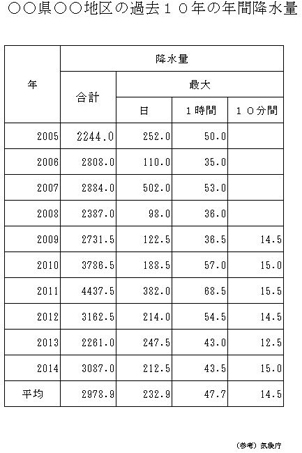
Here's how I do it.
We use this data to evaluate the thickness.
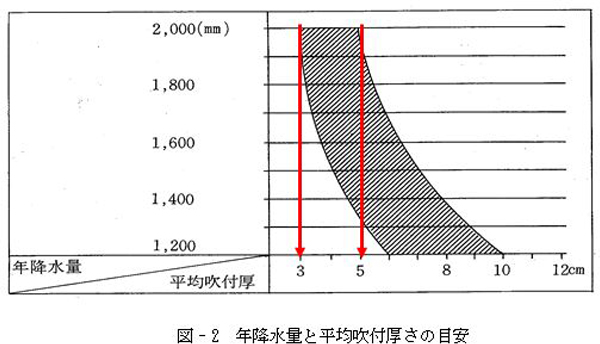
Association for Agricultural Civil Engineering: Green Design for Restoring the Natural Environment p. 108
Based on the data above, the annual precipitation is approximately 3,000 mm, so this translates to a thickness of about 3 to 5 cm.
See you later.